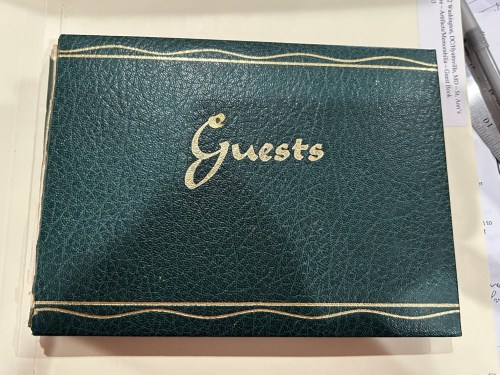
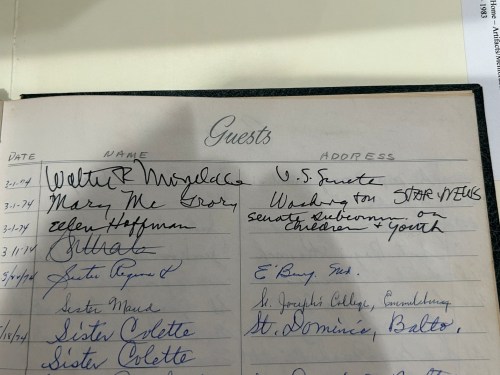
Guestbooks for major life events are keepsakes of the most important events. A day to day guestbook might not quite have the same value, but over time it can reveal some important things.
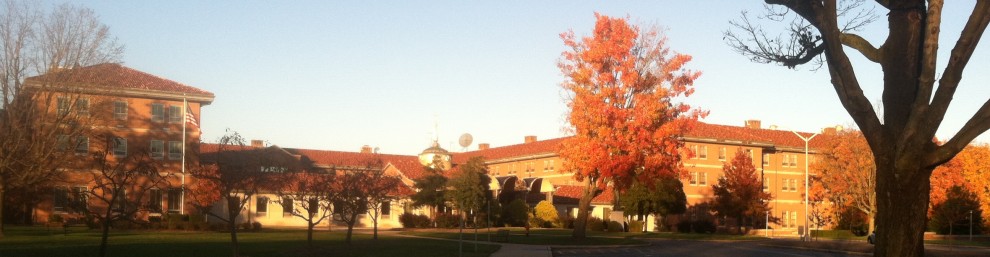
St. Ann’s Infant Home, founded in Washington, D.C. in 1860 and which later moved out to Hyattsville, Maryland in 1962 was one of the most prominent institutions of the Daughters of Charity in the capital area. It’s role of caring for orphaned children evolved into a modern day care and family service center (now fittingly called St. Ann’s Center for Children, Youth and Families).
And its guestbook shows just how prominent of an institution it was.
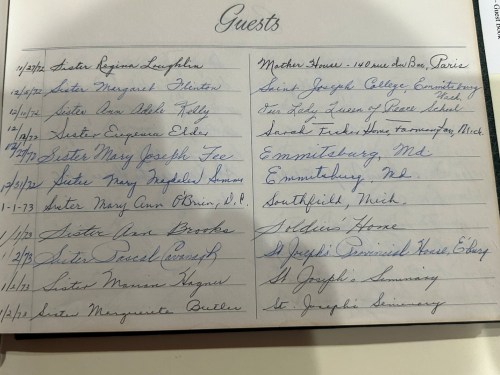
Many of the names are Daughters of Charity from around the U.S., illuminating the full range of ministries that they were engaged from the earliest date in the book, 1972, to its latest, 1983.
Amongst those visitors, though, are also Sisters from around the world, reflecting the global missionary spirit of the Daughters of Charity. There are a number of Daughters from Bolivia, Ecuador, Venezuela, Japan, the Philippines, Vietnam, Madagascar, the U.K., and France.
Several members of the local media appear, including journalists from local station WJLA, led by the trailblazer and future Emmy-winning journalist Renee Poussaint.
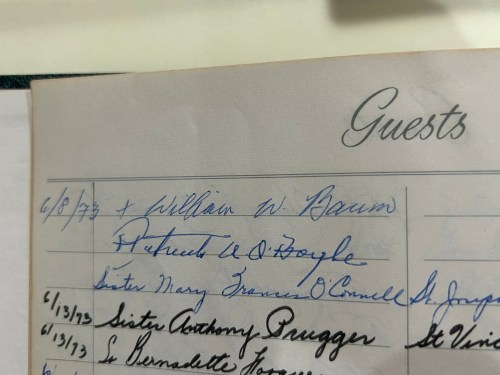
A delegation of the Bishop and Archbishops of Washington visited on June 8, 1973, consisting of Archbishop William Baum and former Archbishop Patrick Cardinal O’Boyle.
Most eye catching however, are the names of national level politicians. Just glancing through the entries we see Representative George Miller of California, Senator Pat Leahy of Vermont, and future Vice President Walter Mondale, who arrived with a cadre of reporters.
Mary 18, 1981 saw perhaps the Center’s most frequent high-profile visitor, First Lady Nancy Reagan, barely six weeks into her new role. The St. Ann’s collection highlights many high profiles visits, and this First Lady has the most folders amongst any Washington political figures.
Dating back from the founding of the Province, the Archive contains at least basic information about all the Sisters of the province. In the 20th and 21st centuries, we usually have a little more information, such as a formal obituary, a few accounts, or newspaper clippings. Sometimes we even have a few pieces of personal memorabilia about a Sister. But sometimes, we are fortunate enough that a Sister will donate pieces of her own family history, which illustrates both her pathway to the Sisterhood and brings to life a subject in its own right.
Recently, Sister Francine Brown was kind enough to donate a collection of her family materials to the Archives. Sister Francine is a second-generation American who has spent most of her ministry with and for persons with intellectual and physical disabilities and their families or as an interpreter. Her health care background, along with her knowledge and fluency in French stem from her mother and grandmother before her.
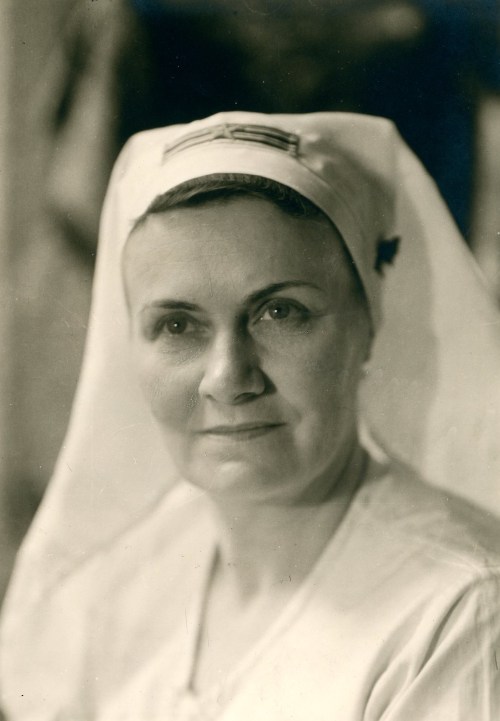
Julia Durupt Guérin, Sister’s grandmother, married Alfred Eugène Georges Guérin in 1919, after World War I, in eastern France. She began her nursing service in 1938 in Paris, on the eve of World War II, after receiving her State nursing certification. She rose to the rank of supervisor and later Director of the OB Department at La Maternité in Paris. For her hospital service during the War and the Occupation, she was awarded the Departmental and Municipal Medal of Honor in 1949 for her service at the Lariboisiére.
Julia Durupt Guérin portrait photo, 1946
Her Departmental and Municipal Medal of Honor
As an aside, Sister Francine donated many of her grandfather’s service records, including a diary with artillery sketches, to the World War I Museum in Meaux, France. The Daughters of Charity Archives does have copies, along with a bullet that he sculpted for his fiancée. The bullet is not live or active; we checked.
Madeleine Julia Guérin Brown, Sister Francine’s mother, was born in 1923 and followed in her own mother’s footsteps, receiving her State nursing diploma in 1948. In the same year, she married an American former soldier, Howard Nelson Brown and left France for the United States. She received her naturalized citizenship in 1952.
Growing up in the chaos and uncertainty of the War, Madeleine had changed schools several times. She did not have proof of completing or graduating from high school, and her nursing diploma was not considered reciprocal for receiving her nursing registration in the United States. This meant that she had to go through the arduous process of receiving letters of practice and good conduct (from oversees to boot) and obtaining a high school equivalence certificate. All of this in spite of her working in good conduct and standing, to the level that her supervisor called “of superior quality” (this letter is also in the collection). She at last received her certification as a registered nurse in 1971 for the District of Columbia.
Madeleine’s 1947 nursing school class. Madeleine is in the top row, 3rd from the right.
Madeleine’s naturalization certificate
In addition to the family history it entails, the collection is a valuable tool for looking at the professionalization of the nursing profession. The Daughters of Charity, as a French community, have their own parallel history with this subject as they confronted the increased regimen of examinations and certifications, both with the scientific subject of nursing and the waves of secularization in France in the centuries since the Revolution. They even share a history of having distinctive head coverings! Yet it also shows the human level that a person will go to fulfill their duty.
This collection, for the time, is available with the permission of Sister Francine (you may contact the Archives about access). It presents a full background of a Daughter of Charity and her family, the origins of her vocation, and her particular vocation within a religious community with a strong Franco-American history.
Navy blue and white veils with red and blue cockades worn by Madeleine during her nurse’s training (1945-47). The blue veil was worn over the white veil only when doing public health nursing visits. The cockades symbolize La Ville de Paris. Stripe on the cap signifies being a registered (diploma) nurse of France.
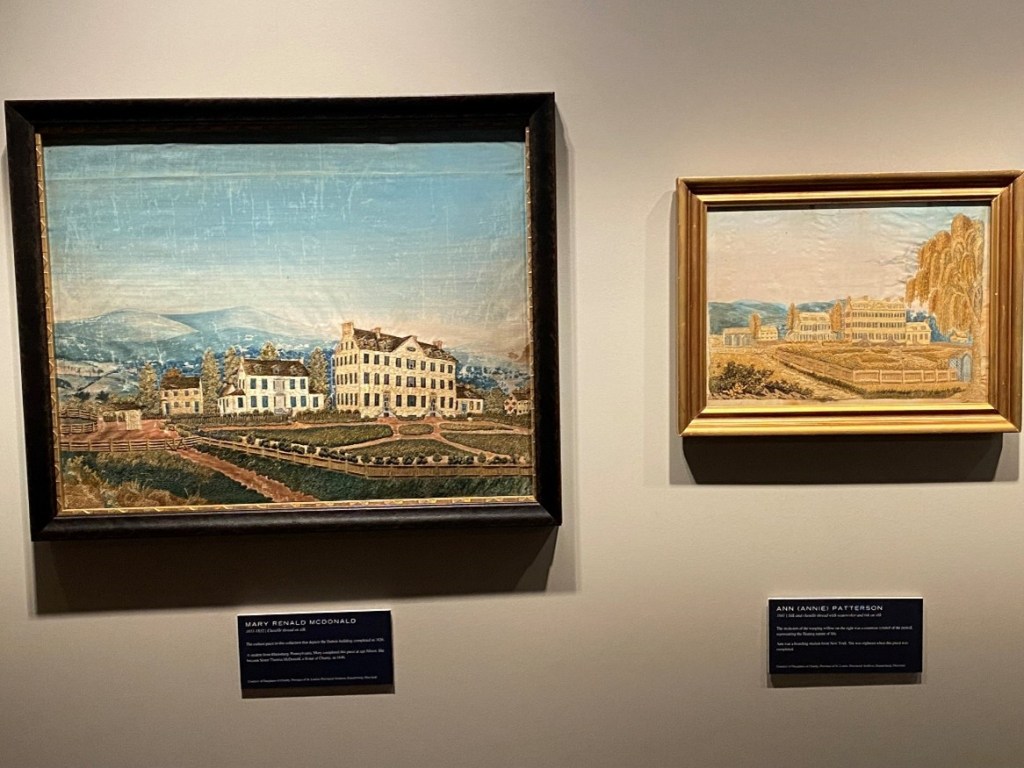
When Mother Seton started St. Joseph’s School (later Academy) in 1810, she made it a point to include the very practical skill of needlework into her curriculum for the young girls who attended the School. Many of these needleworks survive in the archival collections of the Daughters from across the span of the 19th century.
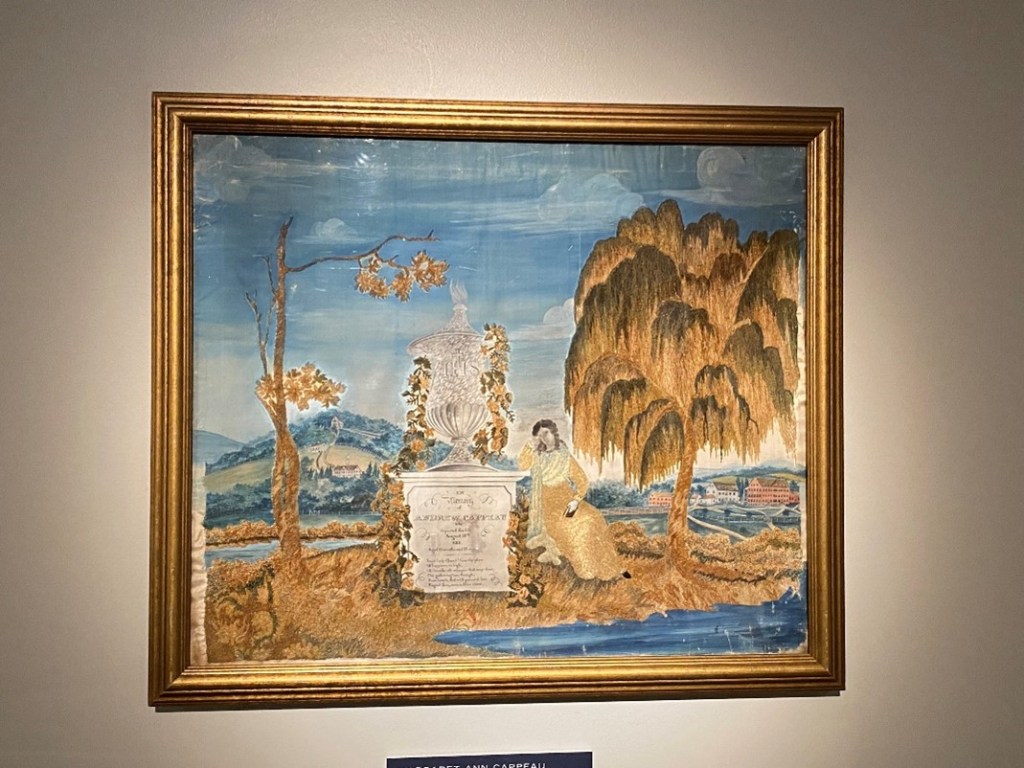
The incorporation of needlework into the curriculum served to teach skills in the arts, religious instruction, the beginnings of basic literacy, and practical skills for 19th century feminine life that prepared the girls to be proper 19th century women. Many of the needleworks in the collection combine multiple mediums, with a background painted in watercolor and the silk embroidered on top of it, as with this piece shown below by Margaret Ann Cappeau (began her studies in 1826).
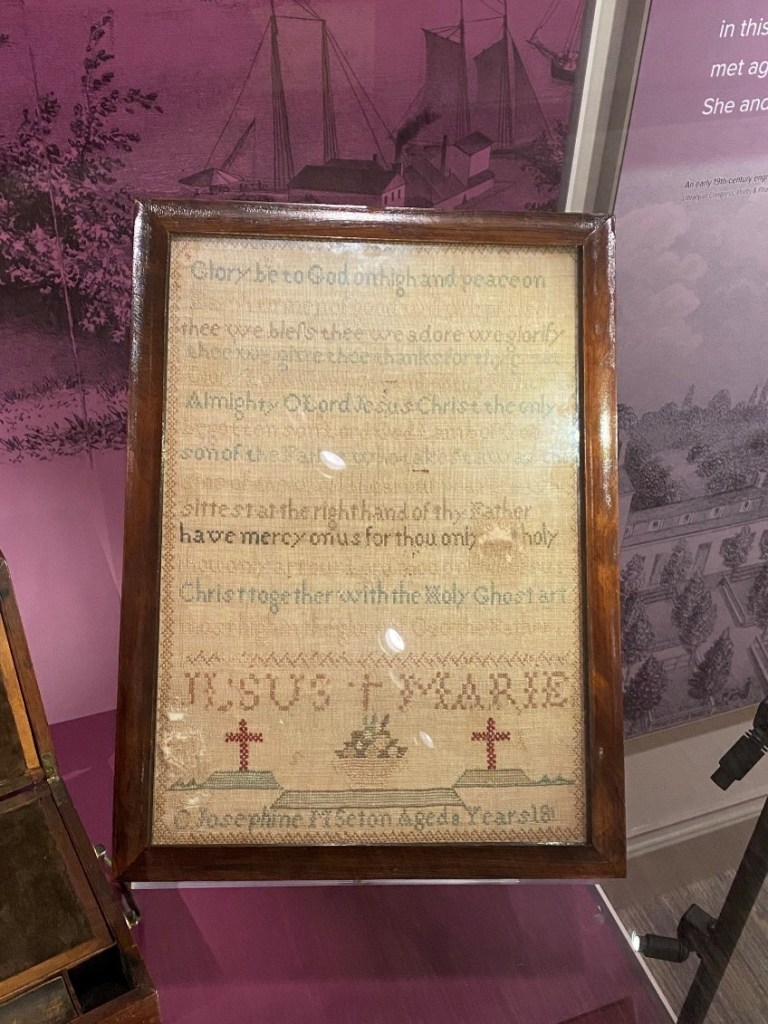
For literacy and instruction in religion, many students started with basic letters and numbers. When they had mastered these tasks, they advanced on to stitching out verses of scripture. Mother Seton even helped her daughter Catherine with her needlework and early learning on this front.
In addition to being records of the curriculum of the Academy, the needlepoints also serve as some of the earliest records of the evolution of the School’s campus. A common subject of the needleworks is a depiction of the school itself, and, in the era before photography was invented or common, the images created by the students provide the earliest visual records of how the campus grew and evolved.
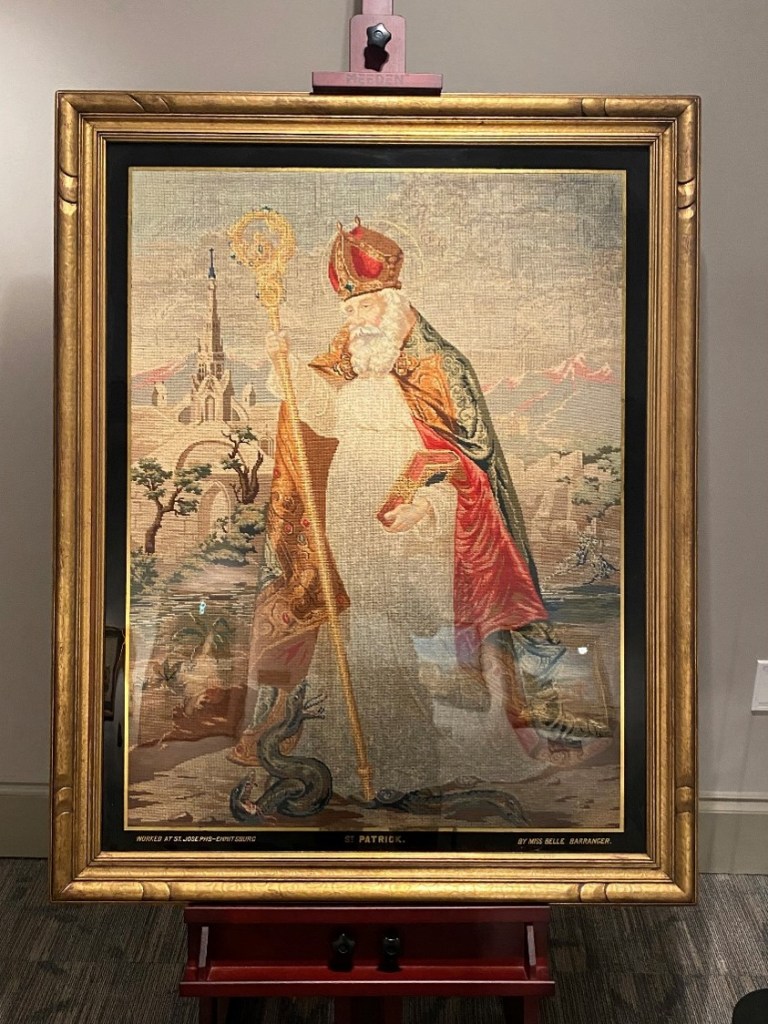
Other needleworks contain stories of their own. Belle Barranger began creating the largest needlepoint in the collection on the eve of the Battle of Gettysburg, when the School was evacuated and temporarily closed as both the Union and Confederate armies marched through town. As she tried to finish St. Patrick and his destruction of the serpents, she did not have time to finish the serpent itself! As the piece passed from one generation of her family to the next, so too did the story and what it represented, until her descendants, still knowledgeable of the Daughters, donated it back to them for posterity after their mother’s death.
These samplers were common in Maryland and have a distinctive style. Today, they are exceedingly rare and valuable, with the Daughters of Charity collection being one of the largest, with nearly 40 samplers dating from 1812 to 1940. Many of the samplers from the collection are currently on display in the Seton Shrine Museum through the end of 2024. They can be viewed both as beautiful pieces of artwork or as pieces of documenting the history of education in Emmitsburg.







 docarchivesblog.org