Category Archives: Hospitals

Films from Milwaukee

When it comes to outdated media, the Archives tries to take slow and steady steps to make the materials playable and available again.  We have the capacity to digitize VHS tapes, cassette tapes, and even reel-to-reel audio in-house.  We must however, still turn to outside vendors to make film usable again.  We have to set priorities for conservation and digitization due to our own budgetary constraints, but we try and send out a few films a year.

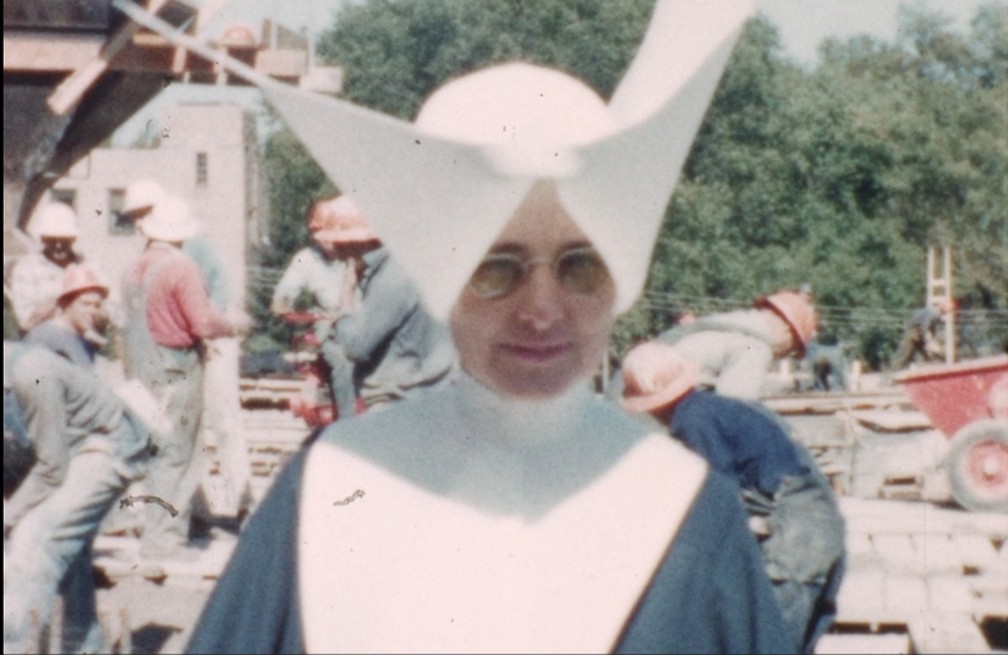
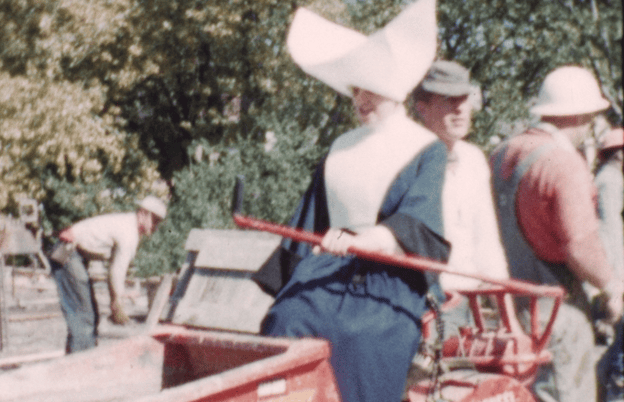
Recently, we have completed conservation on several 8-and-16-mm short films from St. Mary’s Hospital in Milwaukee, which show various pieces of the Hospital’s history.  Some of these were labeled, others had just been labeled with the name of the Hospital, so we only learned what was contained on the films once we received them back.  It turns out all of the films were silent home movies that nonetheless provide valuable glimpses into the work at the Hospital.

The pre-1964 films in bright color show the vibrancy of the old Daughters of Charity habit.  The film, titled “Construction of the North Wing,” shows exactly that in 1959.  The film alternatively shows Sister Hermine Regan, Head Administrator, overseeing the work and having a little fun on the site.

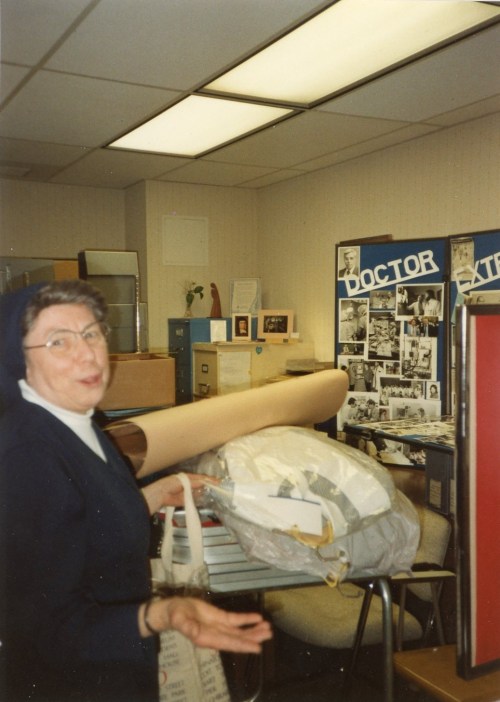
Other films show the slice of life day-to-day work of the “Medical Records Office,” complete with helpful intertitles to supplement the silent footage.

Many of the films, however, appear to be instructional, preserved and disconnected from the sound, training, or lecture.  These could have been training films for staff or could have been used as part of lectures at St. Mary’s School of Nursing.  These include a 1-minute-long film showing the setup of a camera….

…and a far more in-depth, 25-minutes depiction of a surgery in progress (images from which we are not going to share in this post due to its contents). 

The eight total films are now available to researchers, either on-site or remotely.  Although those wishing to view the films must contact us first, we no longer have to contend with old equipment or fear of damaging these artifacts to view them or make them usable!

Leave a comment

Filed under Archives, Digitized Collections, St. Mary's Hospital, Milwaukee

Sister Francine’s Family Collection

Dating back from the founding of the Province, the Archive contains at least basic information about all the Sisters of the province.  In the 20th and 21st centuries, we usually have a little more information, such as a formal obituary, a few accounts, or newspaper clippings.  Sometimes we even have a few pieces of personal memorabilia about a Sister.  But sometimes, we are fortunate enough that a Sister will donate pieces of her own family history, which illustrates both her pathway to the Sisterhood and brings to life a subject in its own right.

Recently, Sister Francine Brown was kind enough to donate a collection of her family materials to the Archives.  Sister Francine is a second-generation American who has spent most of her ministry with and for persons with intellectual and physical disabilities and their families or as an interpreter.  Her health care background, along with her knowledge and fluency in French stem from her mother and grandmother before her.

Julia Durupt Guérin, Sister’s grandmother, married Alfred Eugène Georges Guérin in 1919, after World War I, in eastern France.  She began her nursing service in 1938 in Paris, on the eve of World War II, after receiving her State nursing certification.  She rose to the rank of supervisor and later Director of the OB Department at La Maternité in Paris.  For her hospital service during the War and the Occupation, she was awarded the Departmental and Municipal Medal of Honor in 1949 for her service at the Lariboisiére.

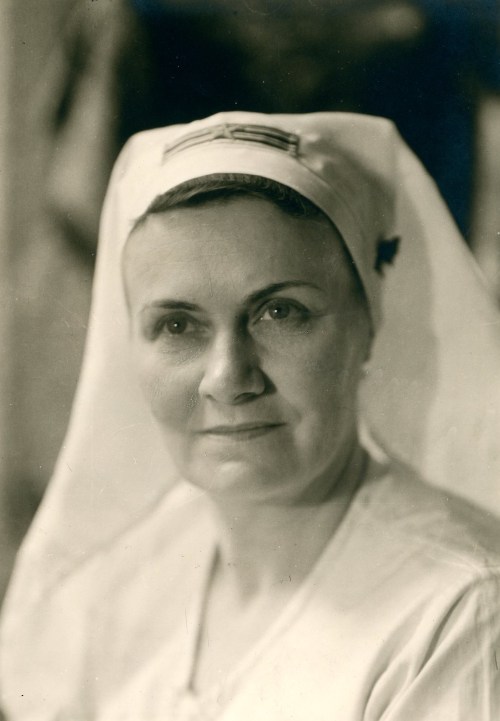
Julia Durupt Guérin portrait photo, 1946
Her Departmental and Municipal Medal of Honor

As an aside, Sister Francine donated many of her grandfather’s service records, including a diary with artillery sketches, to the World War I Museum in Meaux, France.  The Daughters of Charity Archives does have copies, along with a bullet that he sculpted for his fiancée.  The bullet is not live or active; we checked.

Madeleine Julia Guérin Brown, Sister Francine’s mother, was born in 1923 and followed in her own mother’s footsteps, receiving her State nursing diploma in 1948.  In the same year, she married an American former soldier, Howard Nelson Brown and left France for the United States.  She received her naturalized citizenship in 1952. 

Growing up in the chaos and uncertainty of the War, Madeleine had changed schools several times.  She did not have proof of completing or graduating from high school, and her nursing diploma was not considered reciprocal for receiving her nursing registration in the United States.  This meant that she had to go through the arduous process of receiving letters of practice and good conduct (from oversees to boot) and obtaining a high school equivalence certificate.  All of this in spite of her working in good conduct and standing, to the level that her supervisor called “of superior quality” (this letter is also in the collection).  She at last received her certification as a registered nurse in 1971 for the District of Columbia.

Madeleine’s 1947 nursing school class.  Madeleine is in the top row, 3rd from the right.
Madeleine’s naturalization certificate

In addition to the family history it entails, the collection is a valuable tool for looking at the professionalization of the nursing profession.  The Daughters of Charity, as a French community, have their own parallel history with this subject as they confronted the increased regimen of examinations and certifications, both with the scientific subject of nursing and the waves of secularization in France in the centuries since the Revolution.  They even share a history of having distinctive head coverings!  Yet it also shows the human level that a person will go to fulfill their duty.

This collection, for the time, is available with the permission of Sister Francine (you may contact the Archives about access).  It presents a full background of a Daughter of Charity and her family, the origins of her vocation, and her particular vocation within a religious community with a strong Franco-American history.

Navy blue and white veils with red and blue cockades worn by Madeleine during her nurse’s training (1945-47).  The blue veil was worn over the white veil only when doing public health nursing visits.  The cockades symbolize La Ville de Paris.  Stripe on the cap signifies being a registered (diploma) nurse of France.

Leave a comment

Filed under Health Care, Hospitals

The Carney Medical Manual

This is an update to our post of a few years ago about the accession we received from Carney Hospital. We wanted to share one more item from this collection that contains a fascinating look into American medical history.

This book is undated, but we estimate it to be from sometime between 1900 and 1920.  It was designed and sold as a record book, like a patient register or a phone book.  However, the doctors and nurses instead used the book as their go-to guide for different medications and treatments.  The advice included doses of different treatments, all arranged alphabetically by disease.

We admit that none of us are medical experts, and the writing sometimes descends into what could be called “doctor’s scribble,” with various medications we have never heard of.  Check out this advice for  “Nausea and Vomiting” as an example…

Nonetheless, for those who have some knowledge of medicine and medical history, it provides a valuable piece in the evolution of the way medicine has evolved and in the ways that we treat different maladies.

In addition to this usefulness, there are some specific store names with addresses included for preferred places to procure certain treatments.  They even include specific names of stores with addresses.  Check out this entry for “Hand Lotion.” 

An address in Chicago for a long-defunct store provides evidence of the network of hospitals and pharmacies throughout the country at this time, as well as the state of economics and medical commerce at this time (Incidentally, if anyone can provide dates for this store that helps us to more accurately date this book, we would appreciate any assistance you can provide!).

The Carney collection is available to researchers on-site, with plans for pieces of the collection to be digitized and made available in the future.

1 Comment

Filed under Carney Hospital, Hospitals