Tag Archives: Emmitsburg

Creating the Habit Exhibit

For about a month now, the Daughters of Charity Provincial Archives’ exhibit on the history, symbolism, and eventual change of the Daughters habit has been open. We wanted to use this opportunity to discuss some of the background that led us to the finished product of the exhibit.

The origin of the exhibit came, of course, with the planning of the renovation of the Seton Shrine Museum, when the Daughters Archive secured their own exhibit gallery, open to the public alongside the Shrine. As we thought about what would be our first opening to a large crowd, we turned to our own statistics and the number of questions we receive about the Daughters traditional habit. With the number of requests we receive on this subject, we saw an opening to appeal and educate on a popular subject. With the number of habits, rosaries, and chaplets in the artefactual collections, we saw a chance for a very material heavy exhibit.

From here, we saw five key things to focus on: the origins in the times of St. Louise, the habits and chaplets and their symbolism, making a cornette, and the change of the habit.

When it came to creating the mannequins, the showpiece and centerpieces of the exhibit, we did have to acquire a few more mannequins, but also now faced the challenge of how to prepare them for a museum-going audience. Thankfully, we were able to draw upon our colleagues at Heritage Frederick, the Historical Society of Frederick County, to teach us how to dress them properly. Their curator, Amy Hunt, had just finished leading the creation of their “Women’s Work from Farm to Fashion” exhibit, and taught us what she knew about displaying textiles and clothing.

We realized early on that we wanted something of a ‘workshop closet’ feel, both as an aesthetic and as a way to establish some separation between the visitor and the habits – hence the platform and barrier. We realized the chaplets and rosaries could easily be displayed in exhibit cases that we already had, and we already had a pulled cornette on display in our old exhibit space in a perfectly sized case. The cornette-making equipment also provided a nice show piece, and we had already digitized an instructional video of a Daughter explaining how to make a cornette into its iconic shape and image.

We also realized that something in the artifact collections, which we had in abundance but which got very little actual use could give the exhibit a much-needed feeling of fun and spontaneity – the dolls. These not only illustrated the different habits over time, even when we did not have room for more mannequins, but also provided a resonance point for guests and particularly something relatable for children.

With the big showpieces and themes covered, we could then take steps to fill the rest of the space. One staff member realized that artwork depicting the habits could entice visitors. Another realized that guests could have a personal connection with a Daughter if they were allowed to touch and handle her chaplet. All of these things helped create our first exhibit truly open to the public without restriction. We invite you in to explore the truly iconic apparel of the Daughters of Charity!

Getting in the Habit: Iconic Apparel of the Daughters of Charity is open at the Seton Shrine in Emmitsburg, Maryland. Monday through Saturday 10AM-5PM, except Wednesday when it is open until 7:30PM. Private tours can be arranged by contacting archives@doc.org or calling 301-447-6067. The exhibit will be open through the end of 2024.

Leave a comment

Filed under Archives, Exhibits, Habit

Historic Bible Collections

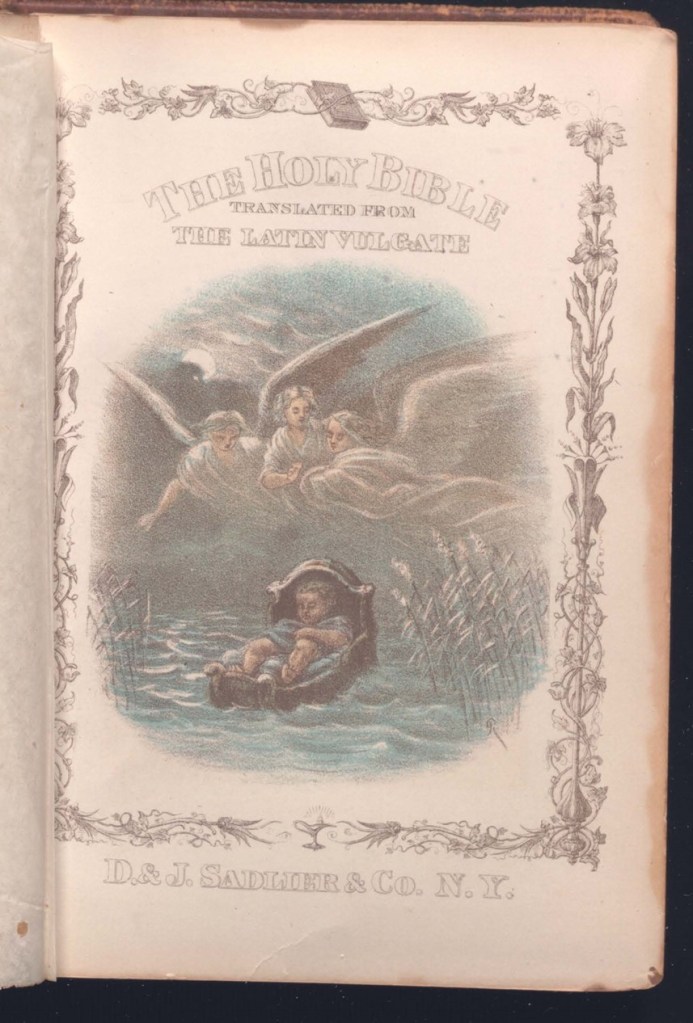
The Daughters of Charity Provincial Archives contains 12 historic Bibles published before 1900, each of them a Catholic Latin Vulgate or an approved translation of a Catholic Bible.  These Bibles offer a picture of the evolving theology of the Catholic Church throughout the 19th century based upon the unchanging foundation of the Word, a depiction of the physical ways in which the Word was made manifest, and, often, a window into the owners of these Bibles and the ways Biblical marginalia can assist with research.

In this post, we would like to highlight some particularly impressive pieces from historic Bible collections!

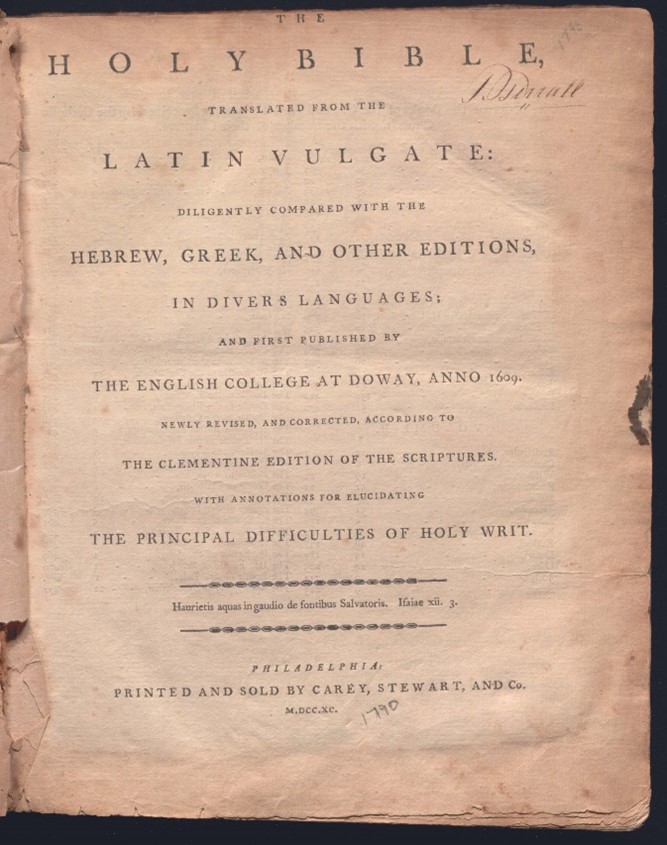
1790 Carey Bible

A Carey Bible is one of the rarest printed Bibles.  Published by the Catholic Matthew Carey out of Philadelphia, it was an English version based off of the Douay-Rheims Bible.  Most notably, it was the first English Catholic Bible printed in the United States.  Although this was not a Catholic Bible owned by Mother Seton – her personal Carey Bibles are located at Notre Dame and Vincennes, Indiana – this was the edition of the Bible that Mother Seton used.  Matthew Carey published other Bibles under the Carey name in subsequent years, but, due to its historical nature and limited initial publication, plus the fact that many surviving versions have association with prominent and historically important people, they often sell for high values at auction.  Although copies in private hands are difficult to calculate, it is almost certain that fewer than 50 remain extant today.

This Bible came to the archives via Sister Joan Marie Hoyt, who discovered it during her years as a librarian and archivist at various institutions operated by the Daughters.  It is far from pristine condition but does contain a few interesting notes.  The first is a signature on the cover page, whose name we have not been able to conclusively identify (any help anybody?).  The second is a copying of a few select verses onto the flyleaf, or the last, blank, loose page of the book.  It is interesting to note that these verses all relate to the subject of temperance from alcohol.

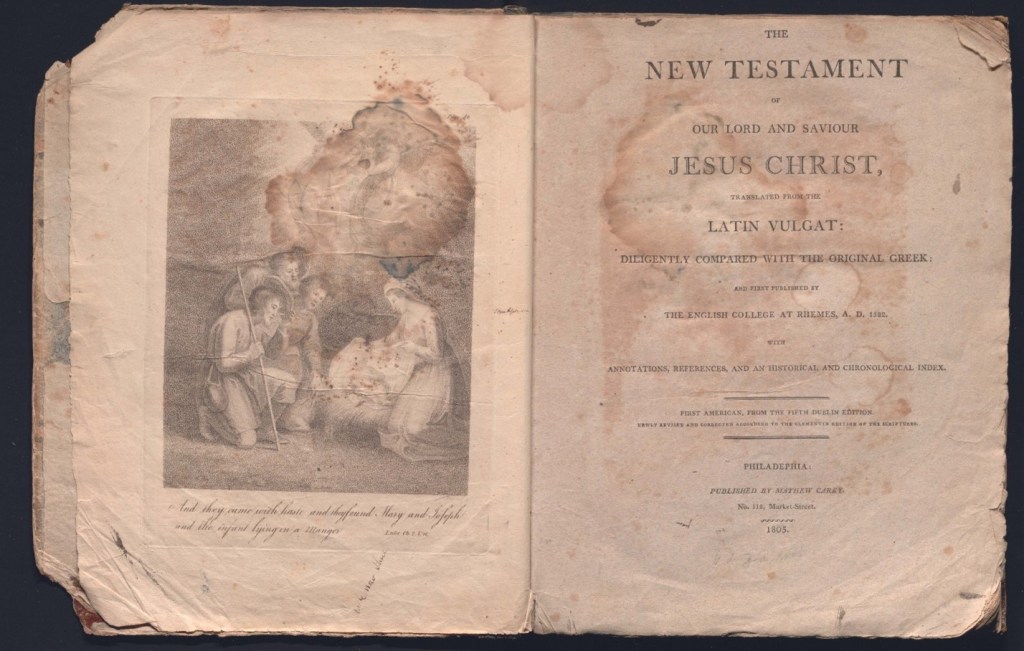
1805 New Testament – The Washhouse Bible

Monetarily, this is worth much less than the Carey Bible, although also a Matthew Carey publication.  This is an English New Testament from 1805, with plain board covers.  The entire piece shows evidence of water damage and warping.  Faded on the cover is the word “Seminary.”  On the front endpapers are the words “for the use of the Wash house.”  Between these two clues, we can place the use of the book at Mount St. Mary’s College in Emmitsburg, just down the road from the nascent community of Mother Seton, where the early Sisters had responsibilities for the Sulpician priests of the school.  The Sisters themselves did not do the washing but oversaw the enslaved women there who did.  This book was likely read by a lector to the enslaved women there, providing a rare surviving physical artifactual document to the labor of the enslaved.  It also served, however, as a record of the deaths of early Sisters and laypeople, including Alice Brennan, “children, boarders, widows, and other unknown persons who lived in Saint Joseph’s Valley in the early years of the Sisters of Charity.”

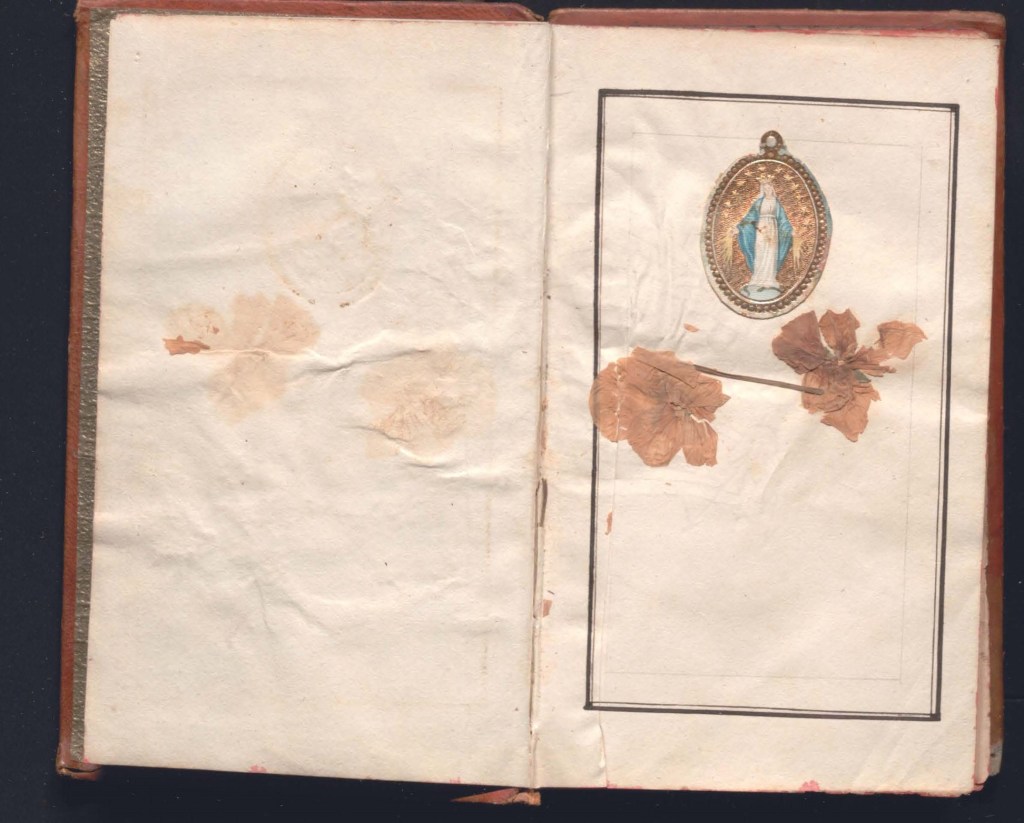
1851

This Latin Vulgate Bible is notable for what it contains in addition to the text – various bits of plant matter throughout (which have now been sleeved to prevent damage to the pages) and a hand-drawn image of the Miraculous Medal, a sacred community symbol of the Daughters of Charity’s devotion to Saint Catherine Labouré and the Blessed Mother.

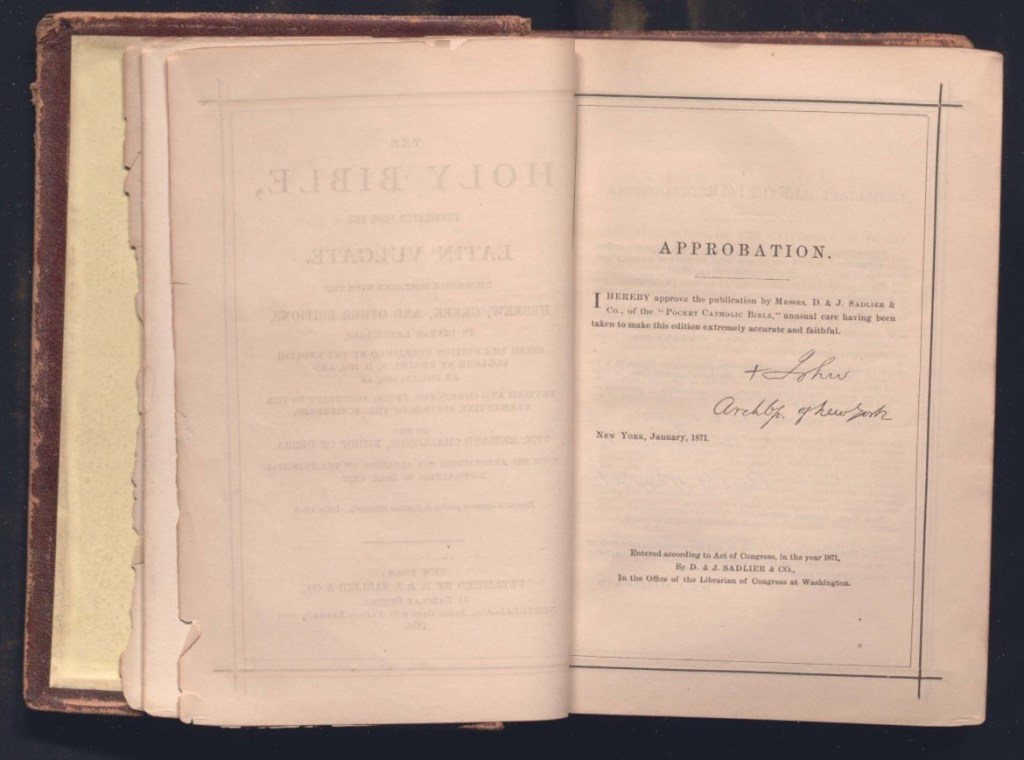
1870 Providence Hospital Bible

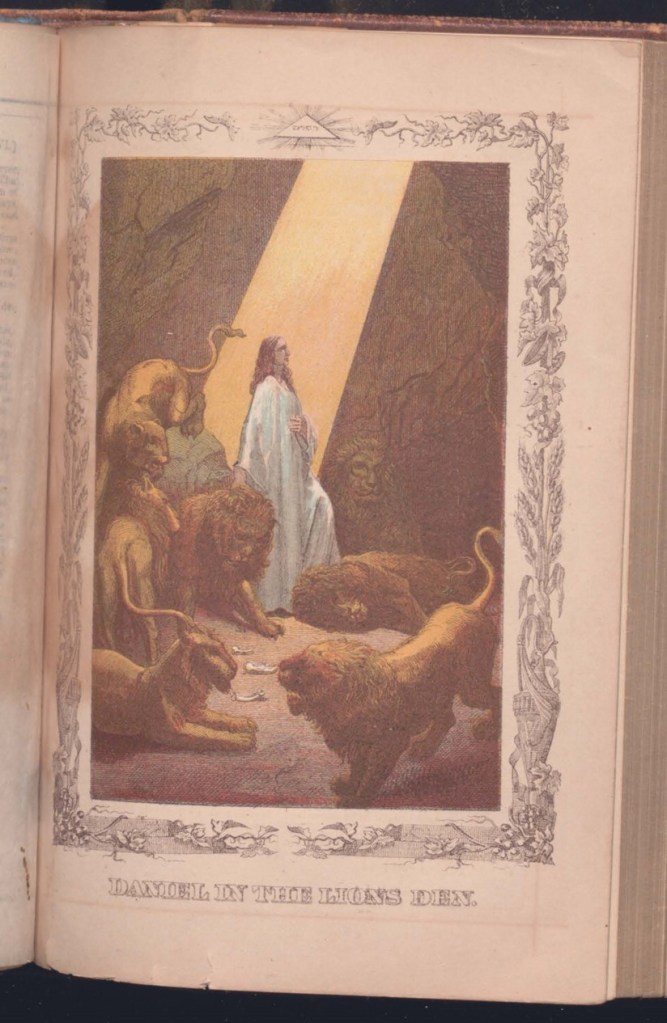
This is another Bible that contains inserted plant matter, but also begins to see the use of included illustrations.  This was not something new in religious life or even in Bibles, but that does not take away from their beauty and impressive nature.  This Bible came from the library of Providence Hospital in Washington, D.C., where it records a number of births, deaths, and signatures, including Miss Annie Farrell; William Tierney; and Archbishop John McCloskey of New York.

1880 Bible Gallery

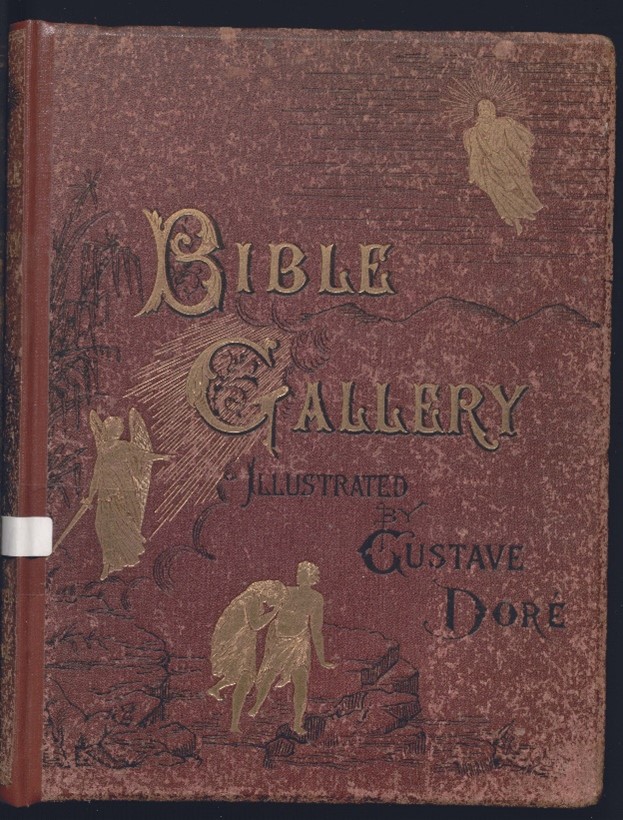
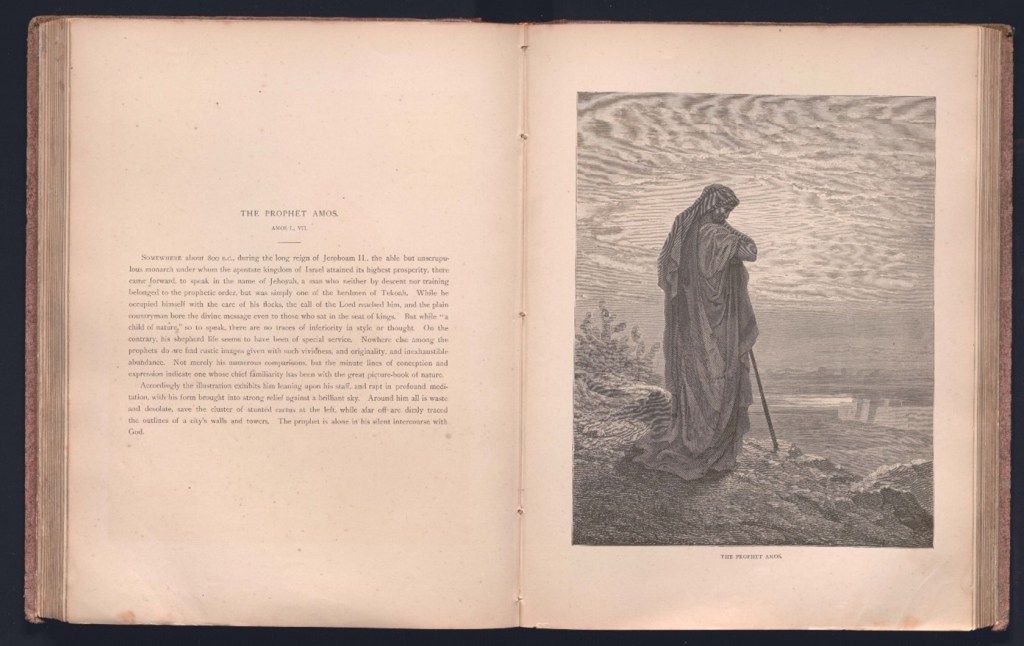
The use of images to tell Bible stories is an old one, evident in the stained glass of Medieval European Gothic churches.  This provided a way to communicate stories, theology, and values at a time when society did not have a high rate of literacy.  Although this is not technically a Bible, we included it here for the sheer magnitude of the images, all created by French artist, Gustave Doré.

All Bibles in the collection that are structurally sound enough are free to be used on-site by researchers and guests by appointment.

Leave a comment

Filed under Bibles

New Digitized Materials Available: St. Joseph College postcards

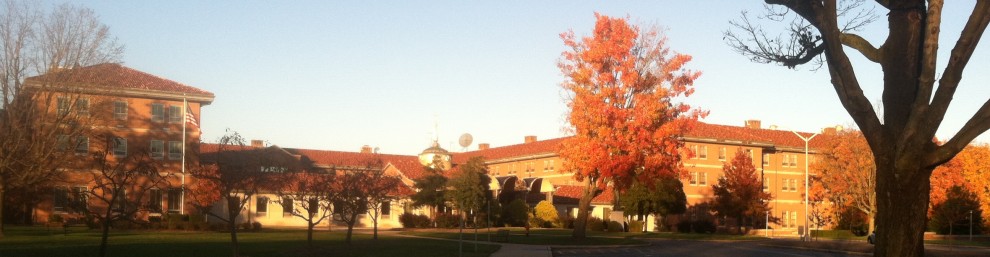
Explore the campus of the St. Joseph’s Academy and St. Joseph College in Emmitsburg through the digitized postcard collections! Now available through our partners at Digital Maryland https://collections.digitalmaryland.org/digital/collection/sjap.

Leave a comment

Filed under Announcements, Uncategorized