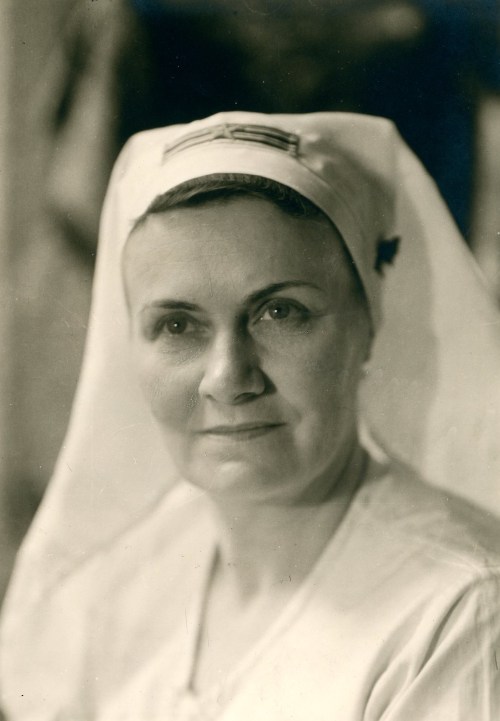
The Sisters of Charity and Venerable Pierre Toussaint

There are currently six African Americans on the pathway to sainthood.  One of them, Ven. Pierre Toussaint (1766-1853), shares a connection with the early Sisters of Charity of St. Joseph’s.

Toussaint arrived in New York City from Haiti with his enslavers in 1787.  He was permitted to work and earn money for himself as a hairdresser, becoming renowned for his skill and able to command high prices from the upper classes for his work.  When his Mistress died in 1807, he was freed through her last will and testament.  His renown grew through his connections with different members of society – the upper native classes through his work, the immigrants from the Francophone world through his mother tongue, and the Black community – both free and enslaved – through his race and life experience.  Upon his freedom, he took the last name Toussaint in honor of Toussaint L’Ouverture, hero of the Haitian Revolution. 

Toussaint’s financial success and Catholic faith inspired him to give back.  Among other charities, he was a major visitor and contributor to the Roman Catholic Orphan Asylum on Prince Street, an orphan asylum that had been run by the Sisters of Charity of St. Joseph’s since 1817.  His special concern for this cause likely came from the death of his sister, after which he took in his niece to raise her.  At one time, his donations totaled one-third of all the yearly donations of the Asylum.  This is in spite of the Orphan Asylum being, at the time, for white children only.

Among the other causes that he championed, Toussaint showed particular concern for refugees, particularly those who spoke French.  He also founded the first Catholic school for Black children in New York City, located at the Parish of St. Vincent de Paul, the city’s Francophone parish at the time. 

Toussaint was known for attending daily Mass at St. Peter’s, which was Mother Seton’s parish during her New York years! 

In 1846, the Sisters in New York City and Brooklyn withdrew from Mother Seton’s community to form the Sisters of Charity of New York, who inherited the community’s history in the Metro area up until that time.  In 1850, members of the Sisters of Charity of St. Joseph’s joined with the French Daughters of Charity, and a separate group of Sisters formed the Sisters of Charity of Cincinnati.  The New York Orphan’s Asylum forms part of the core history of the Sisters of Charity of New York and therefore, of the shared history of Mother Seton’s Daughters.

A meeting of the Sisters of Charity Federation, sometime after 1953, in front of the plaque to Pierre at Old St. Patrick’s Cathedral. 

In 1990, for his role in helping the Catholic Charities of the city survive in their early days, Toussaint was re-interred to the crypt of St. Patrick’s Cathedral.  He is the only layperson so honored.  He was declared venerable in 1996.  The Pierre Toussaint Guild and Office of Black Ministry of the New York Archdiocese actively engages in charity and sponsorship projects that they believe Toussaint would support today.

Leave a comment

Filed under African American History, Sisters of Charity Federation, Sisters of Charity of New York, Sisters of Charity of St. Joseph's

The Lee Family of Emmitsburg

Research on the Lee family has been greatly assisted by the work of the “Recovering Identity” project of the Catoctin Furnace Historical Society.  The Daughters of Charity Provincial Archives has assisted the project with resources where we were able, and we are grateful to them for the next steps they have taken and their extensive consultation of other sources.  Their full reports and summaries and be found here.

Beginning in the late 1870s and going through the 1890s, the “Talks with Ancient Sisters” sought to gather the stories of some of the oldest Sisters and community members, particularly those who had been around in the time of Mother Seton.  Speaking in 1884, Sister Helena Elder, a member of the Elder family, a longstanding, extensive landholding family of Emmitsburg, briefly mentioned a family named Lee:  “I don’t know whether his name was Charles or not.  A colored man and his wife.  They lived up there in Brawner’s place,” Sister Helena said.  Her interviewer added “I expect that’s the Lee [who] Bishop Bruté speaks of in one of his notes after Mother’s death when he says, ‘here looking across the fields from Charles Lee’s about one mile to the little wood.’”

Like several of the African American families of early Emmitsburg, a brief mention like this can begin to scratch the surface of life amongst the free and enslaved communities of Emmitsburg in a history that has only begun to receive attention within the last few years from local historians.   

Father Bruté does in fact first mention Charles shortly after Mother Seton’s death in 1821:

I again shed tears near Charles Lee’s looking from the hill across the meadows one mile towards that little wood to day [sic], 19th May, 1821

The property of the Lees, overlooking the Valley where the Sisters established themselves, had been owned by Charles since 1813 on a property appropriately called “Pleasant View.”  Charles is called in the Bill of Sale document “Charles Lee Blackman (formerly the property of John M. Bayard).”  Indeed, Charles had purchased his own freedom in 1804 for £100.

Deed identifying Charles Lee as “formerly the property of John M. Bayard” as he purchases his own land for the first time (courtesy Maryland State Archives)

Charles is remembered in the late 1880s by another local African American man, Augustine Briscoe.  The Lee property had apparently remained somewhat famous, as he said “There, Sister, there is where Charles used to live. They were old settlers about here. Charles Lee was grandfather to Martin Lee; he was free but his wife wasn’t.”  By 1810, Charles and his family were all living together, despite their mixed-freedom status, and, from 1807 to 1814, Charles purchased the freedom of his wife Hannah and children Isaac, Peggy, and Adeline from Elizabeth Brawner, another member of the Elder family.  Their later children would be born free and never bear the struggle or indignity of slavery.

It points to the complicated interwoven strands of freedom and slavery that the Lee and Brawner properties are described as being so close to each other.  Maps from the collection show their properties less than a block away from each other, and finance books show payments for activities to both families intermixed together.

1873 Atlas Map, Emmitsburg Dist. (portion)

References to the family in the Daughters’ archive pick up with Isaac, the first family member whose freedom Charles Lee purchased.  Isaac Lee receives his own page in one of the surviving financial ledgers, indicating a long-standing set of payments and transactions between the two.  From 1838-1839, the ledgers indicate that he was “employed by the month at $10 per month.”  Notes that indicate the nature of the work include that portions of his payment come from “the Quarry Acct.”  Further details emerge when one delves deeper into the transaction books to find that in addition to farm work, it includes “quarrying stones for a church.”  Indeed, this lines up with the construction of the chapel of the new Central House of the Province, which today is the chapel of the FEMA National Fire Academy!  

Chapel as it appears today as the National Fallen Firefighters Memorial Chapel

Martin Lee was not a direct descendent of Charles Lee, but married into the Lee family and chose to take his wife’s last name.  The Provincial Annals contain a lengthy obituary of him after his death on January 24, 1897.  He was described as a “faithful attache” of St. Joseph’s farm who had been devastated by the death of his wife Emily in later years.  It is also stated that the death of his friend Augustine Briscoe, another member of another old African American family of Emmitsburg, had been a particular shock to him.

Martin had also put his earnings into purchasing real estate.  He owned several small properties on the Mountain.  After his death, he offered the Daughters the first chance to buy the property from his family, although the community declined to do so.

Martin Lee Obituary from the Emmitsburg Chronicle, preserved alongside the community accounts

The research process is ongoing for details about the Lee family.  In the near future, it is our goal to better understand and describe the many financial ledgers and cash books to make them easier to use, and hopefully to shed more light on the historic African American families of the Emmitsburg area!

Leave a comment

Filed under African American History, Emmitsburg

My archivist internship experience with the Daughters of Charity

This is a guest post by Andrew Cogswell, Mount St. Mary’s Class of 2025.

I recently completed a six-week internship with the Daughters of Charity Provincial Archives. Initially, I was introduced to the staff, some sisters, the general history of the Daughters of Charity, and learned what my tasks would be. My first project was compiling clippings of newspaper articles regarding the work of Daughters of Charity from 1998 to 2011 in Indiana. These articles were originally collected by staff at the Evansville campus and document the  sisters’ contributions in Indiana. Here I spent many hours cutting out articles, reading them, and putting them in folders based off their connection to the Daughters of Charity at their ministries in the area.

Tools and setup for my Newspaper project

This was only one of a few projects. My next main job was assisting with re-appraisal of artifacts that arrived when the current province was created. This specific task was quite fun, as I got to  see what lies within these cases of artifacts and learn about the material culture of the Daughters. In this project, I got to see what sisters deemed as important, including many relics of saints (Mostly St Vincent de Paul, St Louise de Marillac, and St Elizabeth Anne Seton.), and even artwork made by the sisters. Additionally, being able to catalog and appraise these artifacts feeds into my interest of museums and how they gather artifacts for display and preservation.

My next major task was transcribing an oral history interview from Sister Sandra Goldsborough. While the video of her interview was important, the transcription helps to make the interview far more usable for researchers in the future. While the transcription process took quite a few hours for a hour-long interview, it really showed at the heart what the Daughters of Charity is. Through the many trials and hardships Sr. Sandra faced, she never faltered on her duty or love to God. For her a challenge was just part of the condition of life that she was grateful for. Which being able to listen to this interview, showed me how true to her order and to Christ she really was.

Sister Sandra circa 1963 and in 2011

While in this internship I dealt with a few different types of archival work, I found a much greater reason in it all. Seeing the work of the Daughters of Charity in Evansville, viewing the artifacts they left behind, and listening to Sr. Sandra’s interview, I have come to the conclusion that these sisters truly live out their motto. Their motto being, “The Charity of Jesus Crucified Urges Us,” is clearly reflected in everything I saw, confirming their deep love for Christ and for others. That through massive changes in all their lives and the differences the church has gone through, they have not changed their core principles one bit. Each and every sister truly is a disciple of Christ and are truly an example of holiness. If anyone wants to learn about the archival world, see some cool artifacts, and more importantly learn about the Daughters of Charity’s impact, this is a great experience one should not pass up.

Leave a comment

Filed under Archives