
Over the years, the Archives had acquired a number of framed materials, including paintings related to the Vincentian heritage, pieces created by Daughters of Charity, majestic portraits that hung on the walls of major ministries, or even copies of old photographs thrown into a frame. Often, these were marked as being placed in the “art section” and then put on the to-do list.
The problems with this system are obvious, as the art section is quite large, and eventually the time would came when something would need to be retrieved, forcing us to look far and wide, handle a larger number of artifacts, and create the potential for more damage, all while taking up more space and spreading our search over ever more items.
Eventually, we became frustrated with this, and instituted a formal project to inventory the artwork for the first time. Every single piece was touched and examined, looking at its relevance, information that we had about how it came to the Archives, its medium, and its condition. Some pieces were discarded as cheap copies of photographs that were placed in cheap frames and, more often, copies of photographs whose originals were in the collections already. Other pieces required more research, as they did not obviously relate to our collection policy until we learned about the individual artist or the donor.
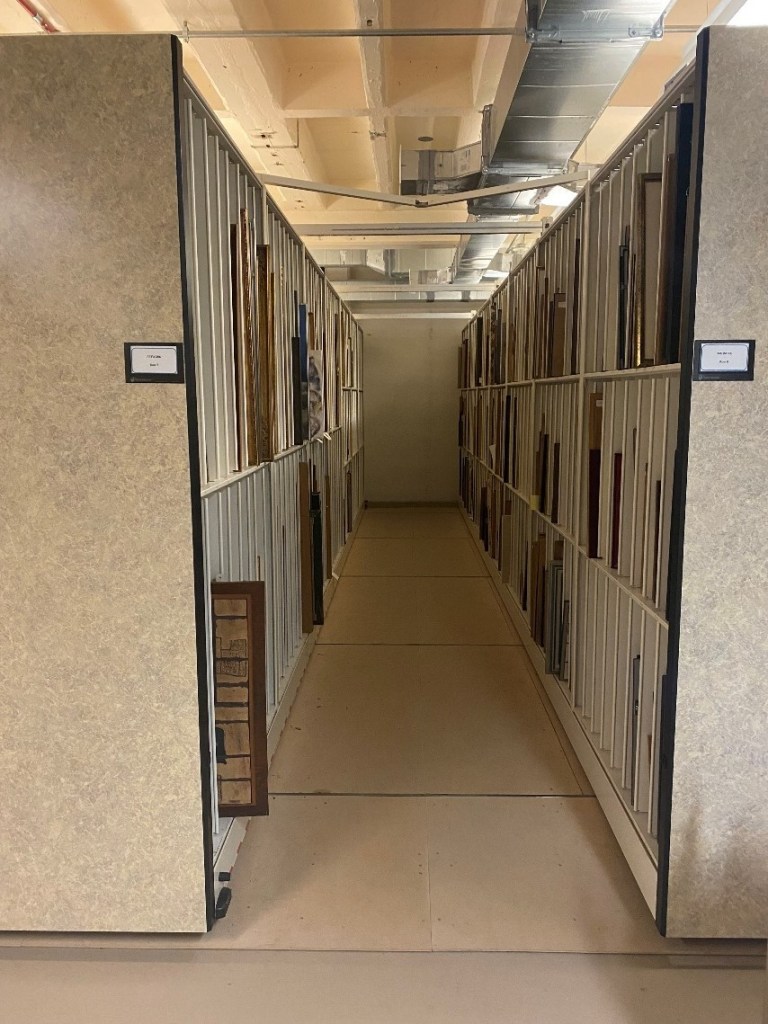

Thus, we present some examples of the major categories of framed artwork and some of our favorites.
Mother Seton and the Canonization Cause
The Seton family portraits (including her compatriots the Filicchi brothers), painted by Father Salvator Burgio, Vice-Postulator of her canonization cause, were created in the early 1950s to promote Mothe Seton’s canonization cause. They include young, pre-community Mother Seton; her husband; the Filicchi brothers; her father; and her five children.

Vincentian Heritage
This pair of portraits, depicting both sides of the Miraculous Medal revealed to Saint Catherine Labouré, a Daughter of Charity in the Paris Seminary in 1830, came from the chapel at the original St. Vicnent’s Hospital – late DePaul Hospital – in Norfolk, Virginia.

Honorable Mention

Although the label by the artist is incorrect, it is still a very nice work. This painting by Mary Eichelmann depicts the Motherhouse of the entire global community of the Daughters of Charity. Located on the Rue du bac in Paris, it only became the Motherhouse after the deaths of Vincent and Louise and after the end of the chaos of the French Revolutionary Era.
Depictions of the Daughters
Despite not necessarily being related to the American Daughters, this print of a depiction of the Daughters nursing during the Crimean War shows the universal call to service the Daughters have had since their formation and has served as an inspiration for depictions of the Daughters in later conflicts, particularly during the era when they wore the cornette habit.

Daughters’ Artwork
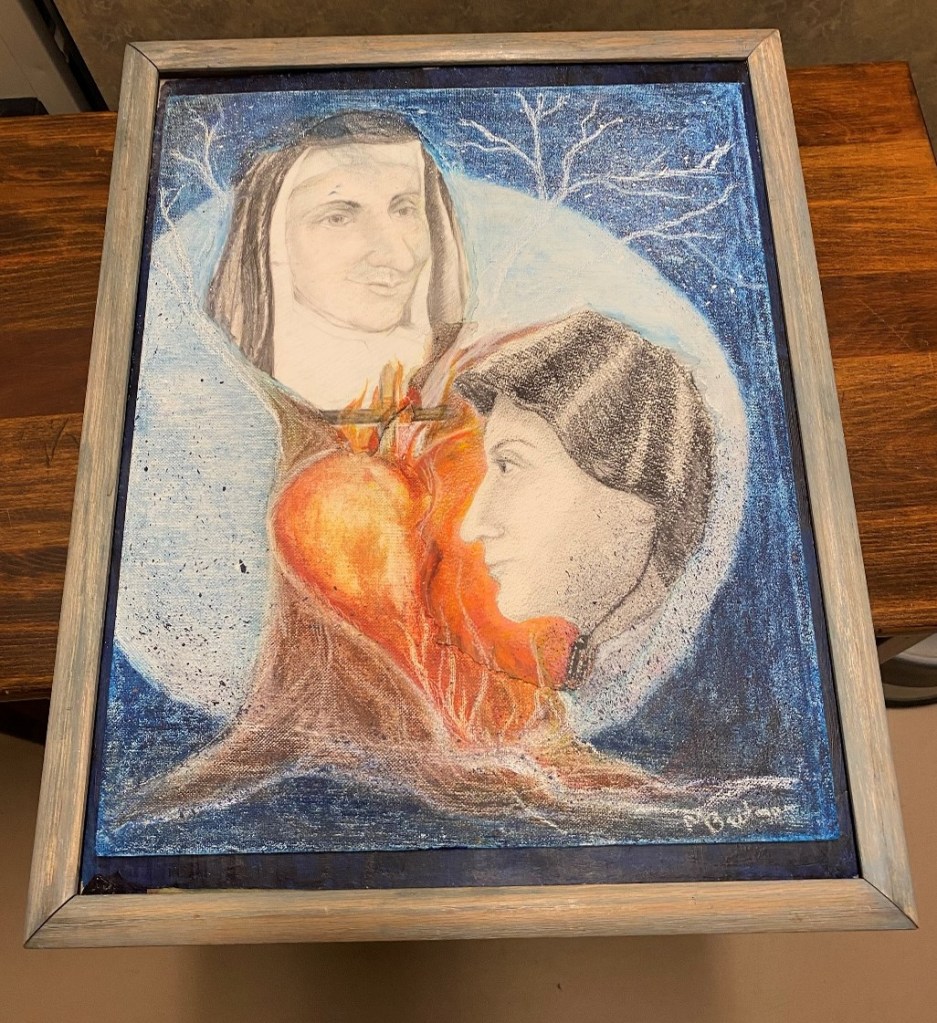
Sister Maureen Beitman created this work to show the great women of the American Vincentian tradition and their unity in the heart of Jesus, St. Louise de Marillac and St. Elizabeth Ann Seton. Sister Maureen titled this work Spirit into Infinity.
Honorable Mention
Sister Lucie Thai created this piece before she left Vietnam for the United States. Taking only a few possessions with her to remind her of her homeland, she determined this to be the best example of her work and thus the one worth taking. It was used as a model when taught girls and women in Vietnam how to craft and create, both as an artistic outlet and as a way to teach them a marketable skill. It depicts Our Lady of La Vang.

Works from Ministries
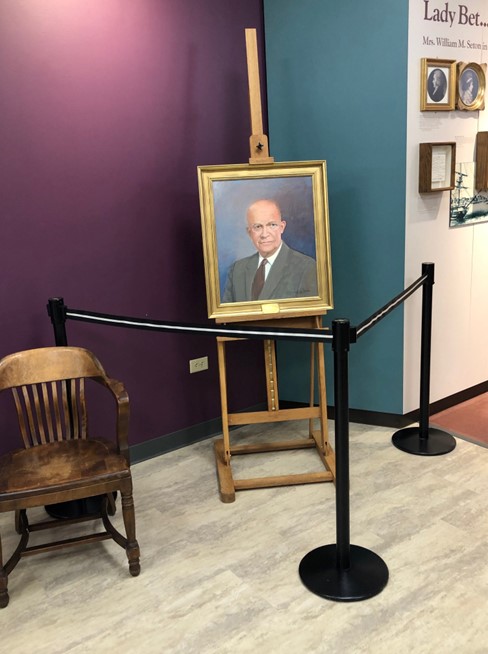
President Eisenhower was a neighbor to the Daughters of sorts, with his Gettysburg farm being right up the road from the Daughters’ St. Joseph College. After retiring, he took up painting, and gifted the College a self-portrait to return the favor for years of friendship and cooperation on social services in the District of Columbia.
Honorable Mention
The Daughters’ ministry at Carville, Louisiana for those suffering from Hansen’s Disease – more commonly known as leprosy – is one of the most unique ministries the Daughters have undertaken in the history of this country. It was a gift to Sister Dorothy Bachelot for her support of the Gillis W. Long National Hansen’s Disease Center and depicts the famous Southern Gothic architecture of the rural Louisiana hospital.




 docarchivesblog.org