The Hospital Newsletters

The Daughters of Charity were extensively involved in many hospitals over the years, dating back to 1823 in answer to a call to staff the Baltimore Infirmary.  The predecessor Provinces that combined in 2011 to form our current Province of St. Louise sponsored and/or operated many hospitals stretching from the Rocky Mountains to the Atlantic Coast. 

In the 1950s and ‘60s, almost every hospital the Daughters owned or operated began publishing a newsletter, which documented some of the special events, major changes, and goings-on among doctors, staff, and administrators.  Essentially, they functioned as the newspapers of the hospitals and, as such, contained information that is valuable both to scholars and to general researchers. 

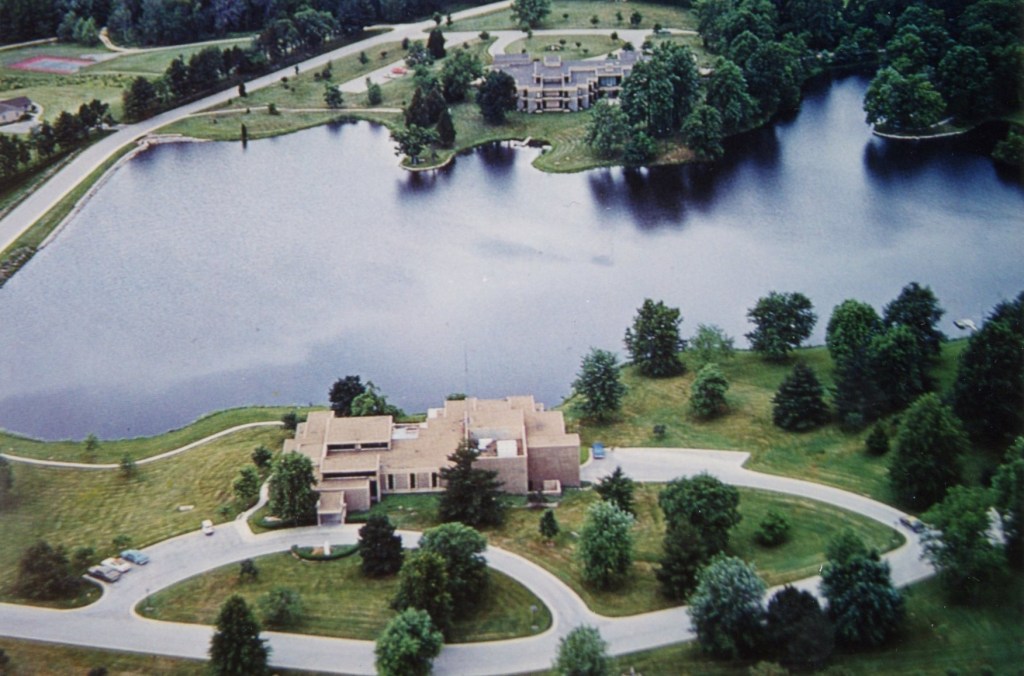
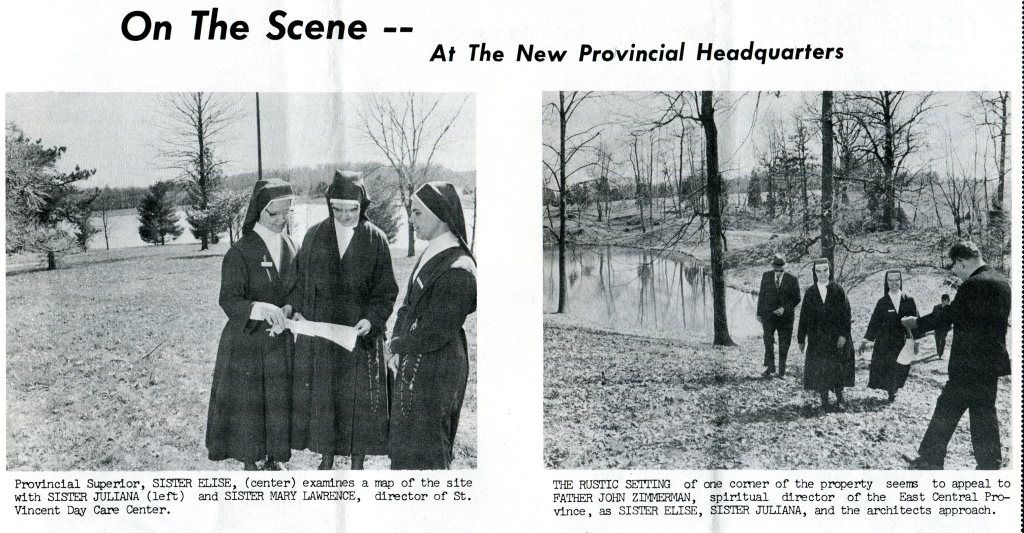
For example, the News Notes of Providence Hospital provides a chronicle of the Hospital’s move from Detroit to Southfield, Michigan over the course of 1964 and 65.

In February 1985, the Lifeline, out of Seton Medical Center in Austin, reported on the Hospital and its service during and after a rare Texas snowstorm, providing a resource to a specific event in the history of Central Texas as it related to the hospital. 

The Esprit de Corps out of Hotel Dieu in New Orleans made sure to list every new student in the Hotel Dieu School of Nursing in 1948 – one of the earliest newsletters from any of the hospitals.  For those researching a parent, aunt, or grandparent who attended the school, these newsletters continue to provide an opportunity for more information or photographs.

For those with family members who worked at the hospitals, these newsletters often mention or profile staff members, particularly those who were there for extended periods of time.

Currently, the newsletters are available on-site, but not yet available in digitized form.  However, they can easily be searched by staff with a location and a year range provided by the researcher.

1 Comment

Filed under Archives, Hospitals, Hotel Dieu, New Orleans, Providence Hospital, Southfield, Seton Medical Center, Austin

Update to Carney Hospital Accession

Back in October 2020, we published a notice of a large new accession that the Archives acquired from the basement of Carney Hospital in Boston, formerly owned and operated by the Daughters.

We are happy to announce that this collection has been processed and is now open to researchers!

This collection fills in numerous gaps in the Carney collection where evolving communities in the Dorchester neighborhood of Boston sought care, particularly as the composition of the neighborhood transitioned from immigrants primarily of European descent to new waves of arrivals from Africa, Asia, and the Caribbean. 

Of note in the collection are medical manuals from the turn of the century that provided doctors and nurses with instructions on treating different ailments, as well as a hand-written letter from former First Lady Jacqueline Kennedy from 1967.  In this letter, she thanks Sister Helen Kelly, the hospital administrator at the time, for her support in founding the Kennedy Presidential Library in the Dorchester neighborhood, an unpopular position at the time among some Dorchester residents due to effects due to the influx of tourists and increase in noise from expanded train yards.

Leave a comment

Filed under Carney Hospital, First Ladies

Newly Conserved Material Available:  The St. Joseph’s Academy Scrapbooks

Thanks to Mary Wootton, conservator in Gettysburg, PA, two of the St. Joseph’s Academy scrapbooks are available to researchers once again!  These two books had fallen completely apart at the binding, and pages had a hodgepodge of sealed and unsealed items, some so large as to be damaging the binding and some uncovered and acidic enough to slowly burn pages away.

Before restoration photo

Today, we would like to highlight one of these books, the “Tablet of Friendship” owned by Mary Teresa Devine, which was donated by Judith Cristella, a direct descendent of Mary Teresa.  She first enrolled in St. Joseph’s Academy in 1826, a few years after Saint Elizabeth Ann Seton, the founder of the school, passed away.  She spent the next few years on the growing and expanding campus.

The book itself is a dark green (Or brown? Or black?  We think green), covered and bound in sheepskin, which was the cheapest form of leather used at the time.  The book would have been a mass-produced product of the early industrial age and not been overly expensive, similar to a blank journal or diary available at a bookstore today.  It is what is inside that makes this a great relic of the Archives.

Based upon the dates included in the pieces, the book came into existence quite a while after Mary Teresa attended the Academy.  Nonetheless, this shows the networks that formed between students of the Academy and their enduring closeness.  But perhaps most importantly, many of the pieces were signed by their authors, providing us with actual written work attached to known individuals, a relative rarity of this time period for women not affiliated with high-status positions or families.  Even when only a first name exists, as in the piece below, the fact that the book contains an entire class list makes it easy to track down individual’s last name.

In addition to the students themselves, the book also provides valuable resources for researchers of Catholic and material culture in this time period, including inserted, mass-market imagery.

And on the artistic front, the book contains inserted pieces in the unique medium of leaves.  This very delicate work made of organic matter managed to survive for over 150 years until it was secured in a special case to provide support and a stable climate.

The scrapbooks are available on-site.  Although they are not yet digitized, we are hoping this can be accomplished in the near-future.

1 Comment

Filed under Announcements, St. Joseph's Academy