Category Archives: Popes

Visiting Pope Leo XIII

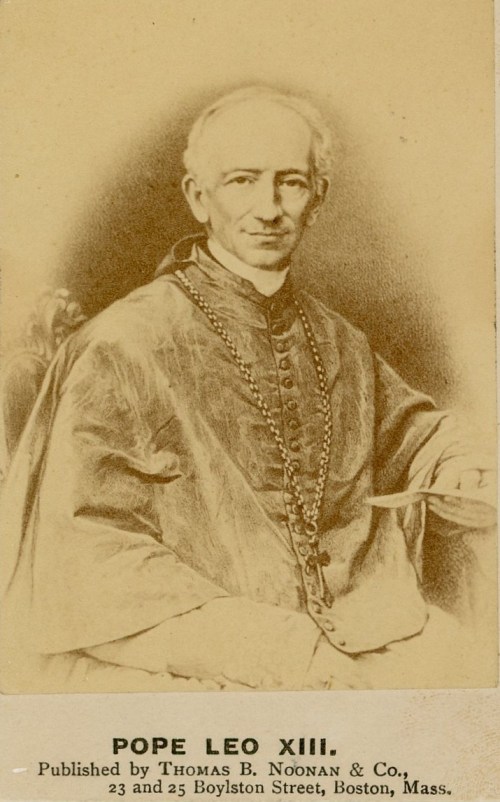
With the election of Pope Leo XIV in 2025, we thought it would be worthwhile to look into the figure from whom the new pontiff took his name, Pope Leo XIII. 

Elected in 1878, he is most well-known for his encyclical Rerum Novarum.  In this document, Leo XIII  formally articulated the principals that today define Catholic social teachings.  In this, he addressed the conditions of the working poor and what is owed to those living in poverty.  His concern for those living in poverty formed an almost natural affinity between His Holiness and the Vincentian double family: the Vincentian priests and the Daughters of Charity.

Prayer Card for Pope Leo XIII

In 1893, the Superiors of the Vincentians and the Daughters of Charity had an audience with Pope Leo XIII.  The account of this meeting is in the Archives dated January 26, 1893, held to celebrate the founding of the Vincentians.  Joining them were students of the Daughters of Charity from Rome.

Father Antoine Fiat, Superior General of both communities, provided his gratitude at the Pope’s guidance in Rerum Novarum:

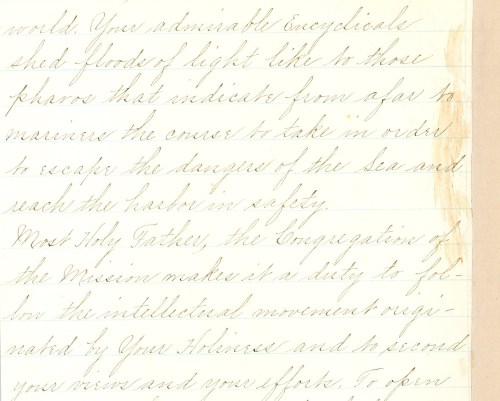
Your admirable encyclicals shed floods of light like to those pharos [lighthouse] that indicate from afar to mariners the course to take in order to escape the dangers of the Sea and reach the harbor in safety. Most Holy Father, the Congregation of the Mission [formal name for the Vincentians] makes it a duty to follow the intellectual movement originated by Your Holiness and to second your views and your efforts.

Portion of account of visit with Pope Leo XIII

In response to Father Fiat’s address, Pope Leo XIII addressed the Vincentians and Daughters in French, the language of their founders and superiors, despite himself being a native Italian.  He shows particular fondness for the schools the communities conduct around Rome, and seems to show favor toward the ongoing (at the time) cause for sainthood for Louise de Marillac.

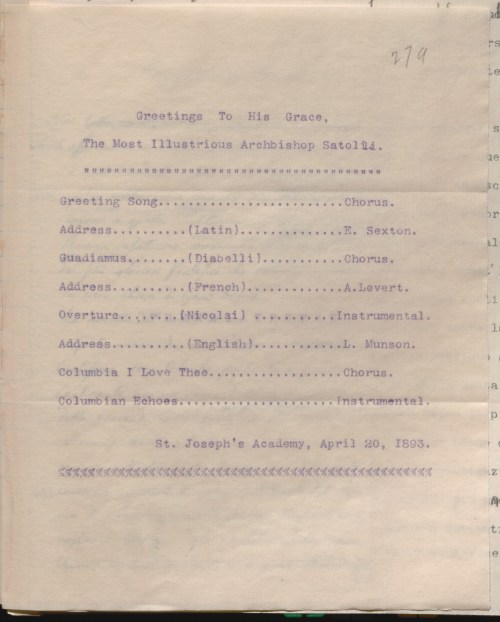
Even though no American Daughters were part of this audience, it was still celebrated in the United States.  The Provincial Annals contain a letter by Sister Caroline Eck, writing from St. Joseph ‘s Academy in Emmitsburg, Maryland.  The Sisters and students at the Academy were met by Cardinal Francesco Satoli, the first official Apostolic Delegate to the United States, who recounted the meetings between the Holy Father and the French Superiors.  The students and staff celebrated this (at the time) highest meeting of a church official with the students, emphasizing the global nature of the Daughters and the internationality represented by the Catholic Church!

Program from days' events at St. Joseph's Academy
Program from days’ events at St. Joseph’s Academy

Leave a comment

Filed under Daughters of Charity, Leo XIII, Social Justice

Saints, Blesseds, and Founders in Emmitsburg

This is part of a yearlong series about the early days of the Sisters of Charity of St. Joseph’s commemorating the 200th anniversary of the death of Saint Elizabeth Ann Seton, foundress of the community.  In 1850, the Emmitsburg-based Sisters united with the international community of the French Daughters of Charity.

Saint Elizabeth Ann Seton is the first North American-born saint recognized by the global Catholic church.  The Daughters of Charity Provincial Archives in Emmitsburg is the largest holder of writings and artifacts of Mother Seton in the world.

Brick and wrapper from Seton home on State Street, New York City

However, Mother Seton is not the only one represented in the collection recognized as a holy person by Rome, nor is she the only foundress of a community in the collections.  We can provide resources and information about a number of other individuals of this caliber!

Father Simon Bruté was Mother Seton’s spiritual director, a Sulpician priest who later became the first Bishop of Vincennes (now the Archdiocese of Indianapolis).  His cause for canonization was opened in 2005, and he was accepted as a Servant of God.  Materials of his in the archives include correspondence with Mother Seton and her family, spiritual writings, the bands he wore for his consecration as a Bishop, and his many drawings and sketches.

“Eternity, Jesus,” Father Simon Bruté, January 11, 1821

Saint Father John Neumann, CSsR,was Archbishop of Philadelphia from 1852 until his death in 1860.  He was canonized in 1977 and was instrumental in bringing the Daughters of Charity to St. Vincent’s Orphan Asylum.

Father John Neumann to Rev. Mariano Maller, C.M., Provincial Director, July 29, 1852

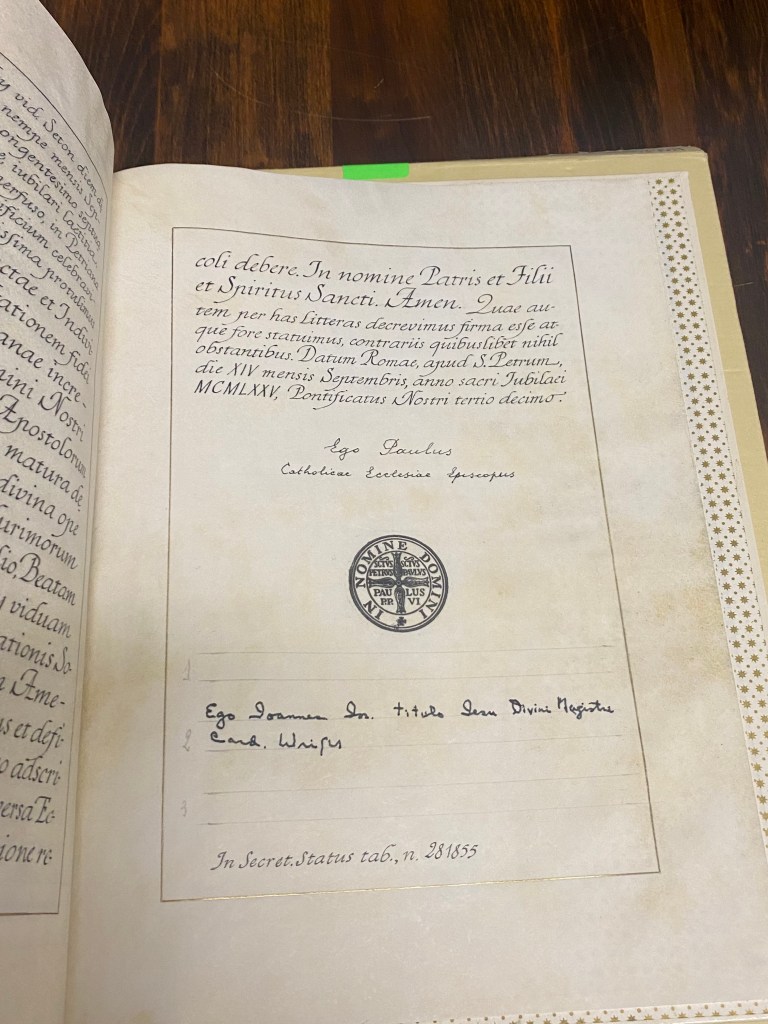
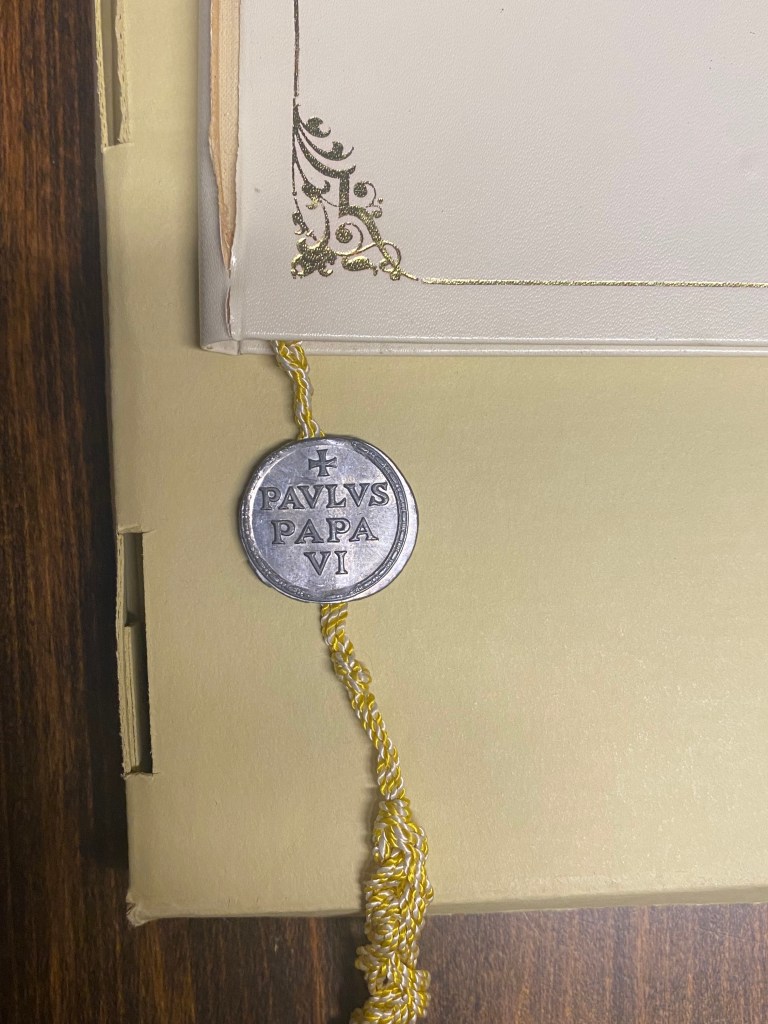
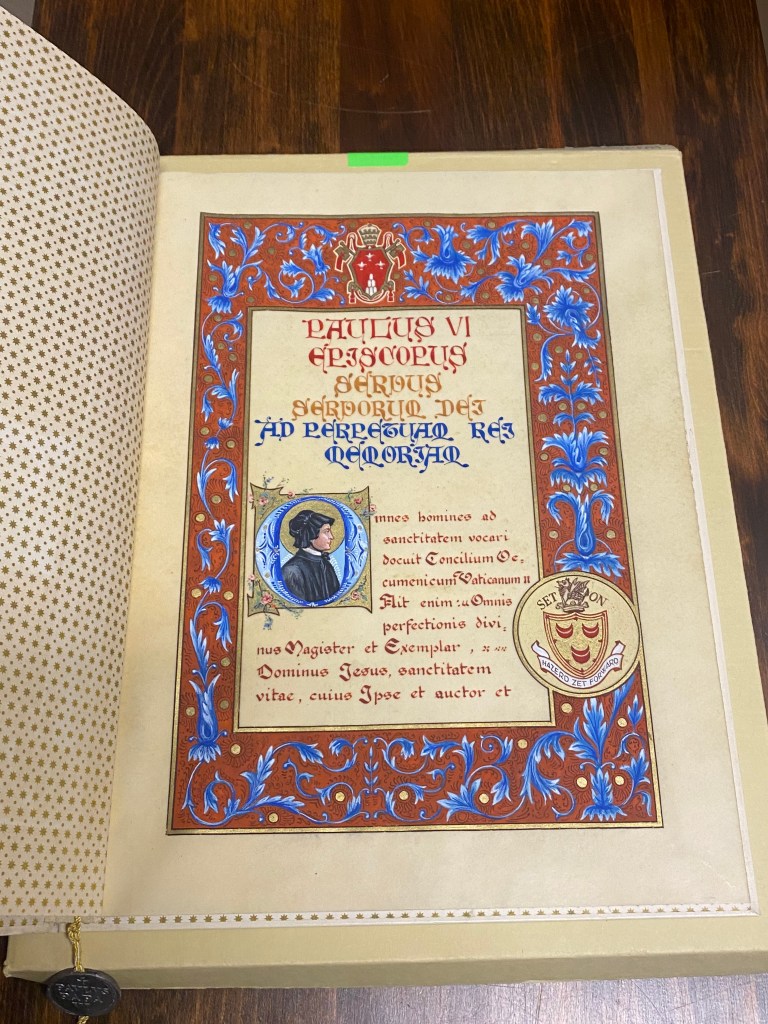
Canonized Popes Many Daughters have been lucky enough to meet the Successors to St. Peter, sometimes as part of a crowd, and sometimes in more serious business.  The most notable occasion relating to the community’s history was Saint Pope Paul VI, who canonized Mother Seton in 1975, thus making Mother Seton’s canonization bull itself a relic of a saint.

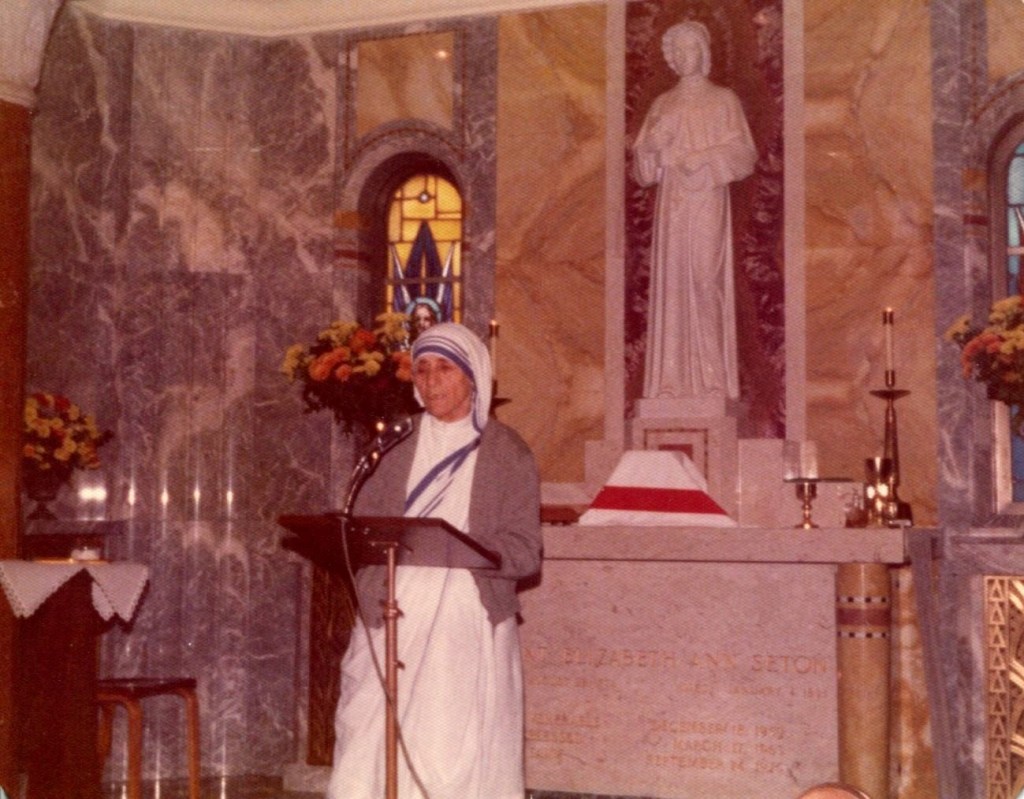
Saint Teresa of Calcutta – often still known as Mother Teresa – made a three-day tour of the United States in 1975.  During her visit, she visited the Shrine of the just recently canonized Saint Elizabeth Ann Seton alongside her more formal trips to the United Nations and Washington, D.C.  The archives contains photos of her visit.

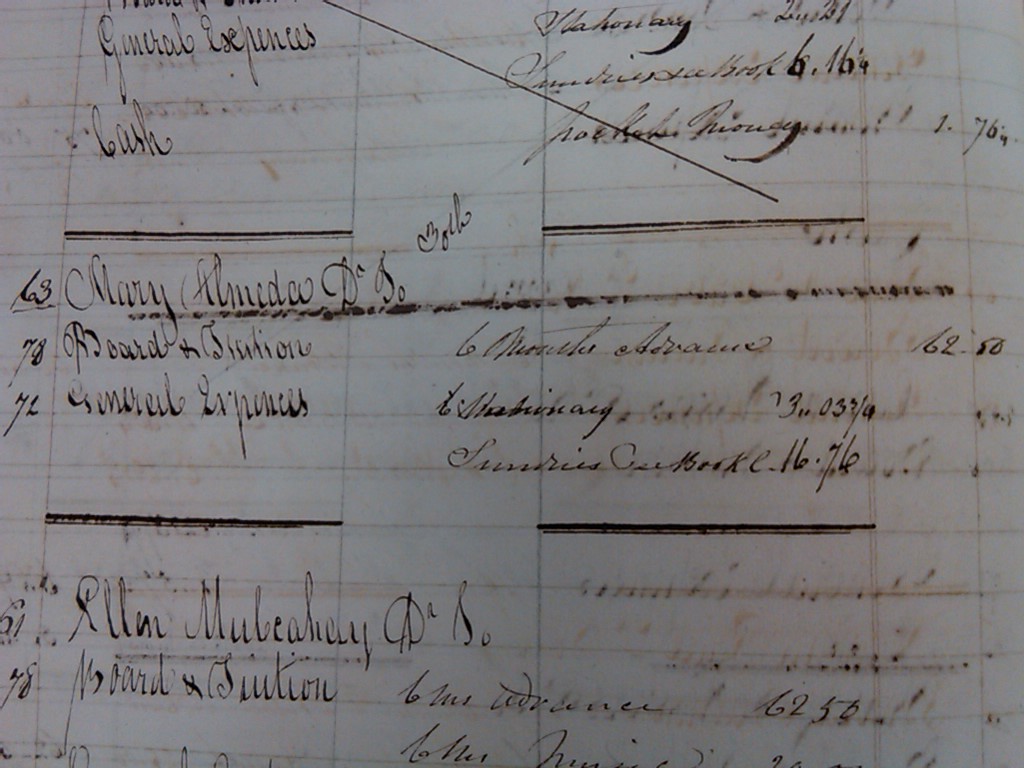
Almeide Maxis Duchemin – later known as Mother Theresa Duchemin – was a student of St. Joseph’s Academy from 1819-1823 from around ages 9-13.  She became a founding member of the Oblate Sisters of Providence in Baltimore and became the first African American Superior General of a white religious majority community when she co-founded the Sisters, Servants of the Immaculate Heart of Mary.  The archives contains records of her schooling at the Academy.

Mothers Elizabeth Boyle and Margaret George were companions of Mother Seton and members of the Sisters of Charity of St. Joseph’s who founded their own communities; the Sisters of Charity of New York in 1846 and the Sisters of Charity of Cincinnati in 1852, respectively. 

3 Comments

Filed under Canonization, Emmitsburg, Mother Theresa Duchemin, Paul VI, Simon Brute, Sisters of Charity of Cincinnati, Sisters of Charity of New York, Teresa of Calcutta

Unlocking the archival legalities of donating the Seton key

Image courtesy of Seton Heritage Ministries

Image courtesy of Seton Heritage Ministries

By Dee Gallo, Provincial Archivist

It seems impossible that anyone who followed Pope Francis’ visit to the United States did not hear that one of two gifts President Barack Obama gave to His Holiness was a key to the original door of the Stone House, St. Elizabeth Ann Seton’s first residence here in Emmitsburg, Maryland, on the property on which she founded her religious community, the Sisters of Charity of St. Joseph’s. Dating from 1809, this key appears to be like so many others of its time. Yet its symbolism sets it apart – it literally and figuratively opened the door to let in new students who would experience Catholic education and to send out women religious to care for the poor and voiceless by opening service ministries that continue on into our own century.

Up until recently, the key given to the Pope and a second one like it were under the curative care of Provincial Archives of the Daughters of Charity, just across the lawn from where the Stone House now sits. Some people have wondered how President Obama ever came in possession of the key and whether it was really his to give. Well, this key’s path from its archival home to the United States Department of State is an excellent example of the legalities which all archives and archivists must observe when transferring items from their collections.

About two months ago, my colleague, Rob Judge, Executive Director of The National Shrine of St. Elizabeth Ann Seton, told me he wanted to discuss something “confidential” with me. Now, we collaborate with the Shrine frequently to assist in loaning our artifacts for their exhibits; the “gift key,” in fact, was until recently on exhibit in the Shrine’s museum. However, the committee Rob had convened – and sworn to secrecy – was to face another challenge. He had been contacted by the State Department who wondered whether some artifact representing the life of Mother Seton might be obtained and transformed into a gift from the President to the Pope. The Shrine folks were elated – what a wonderful way to let the world know about Mother Seton and the National Shrine! For my part, I was elated as well – an artifact from our Archives would become a part of national history! But “loose lips would sink Papal gifts”; if any news leaked out, we were out of the running.

And so began weeks of closed-door meetings. I enlisted the help of one of my staff, Bonnie Weatherly, who has been working in the Emmitsburg archives for 35 years and has been assisting the Shrine museum with their displays for almost as long. We went through Archives’ collection of Seton artifacts, making lists of objects that might meet the criteria. Our little committee, however, kept coming back to the key for it had the best “narrative.” As Rob suggested, as a gift, it would be “a fitting tribute for a woman who opened the doors for so many women to serve the poor,” and for Pope Francis, “a man who has been a strong advocate for those who are poor and marginalized.”

Then came the legal transfer of the object from our Archives to the State Department.

Any item in an archives has to be “accessioned” or taken into a collection by making a record of its existence and location. This ensures that the repository has the legal “physical” right to it as property. In order to give the key to the State Department for the President to present it as a gift, however, we had to “deaccession” the key. As Provincial Archivist, I’m just the curator of the collections – the Daughters of Charity, Province of St. Louise, actually own everything in the archives. So the State Department presented us with a Donor Form, which I prepared and sent off for the Provincial Visitatrix, Sr. Louise Gallahue, to sign. In addition to acknowledging donation, the agreement also expressly stipulated that were there some change of plans and the key not be given to Pope Francis, it would be returned to the Archives. Only when that document had been completed and received was the key legally no longer part of our collections. The final step, then, was to change our records to show that one of the two keys labeled as items 1-3-#266 [“keys to the original doors of the Stone House”] was donated to the State Department. This will show to archivists (and researchers) in years to come that the Provincial Archives once possessed TWO keys to the original doors of the Stone House and what the disposition of one of those had been. The second key will go into the Shrine Museum to replace its predecessor.

The overall implications of the gift are more numerous than one can count. St. Elizabeth Ann Seton’s name has been mentioned in the national press and in almost every Mass and religious ceremony at which the Pope presided. The Daughters and Sisters of Charity who follow in her works have been highlighted as continuing her wonderful legacy. And the story of her roles as wife, mother, and widow now give refreshed meaning to Catholic family life. Ah, but to the archivist who was lucky enough to attend that first confidential meeting and to navigate the legal steps of this once-in-a-lifetime property transfer – wow! Just wow!

7 Comments

Filed under Elizabeth Ann Seton, Emmitsburg, Francis, Popes