Category Archives: Simon Brute

Sketches of a Soul: Father Bruté’s Spirituality in Art

This is a guest blog post by Leah Kanik, a Junior at Mount St. Mary’s University, class of 2027. She has been an intern with the Daughters of Charity Provincial Archives for Fall 2025 semester.

Sacred art has been a staple in the spirituality of the Catholic Church for centuries for its ability to raise the mind to contemplate the things of God. Humanity needs corporeal reminders of the supernatural to direct the mind and soul to higher truths, and art is a way in which this interiority can be reflected by the exterior. For those who use art to manifest the interior life, it is as if the longings of their soul were so strong that they must spill onto paper. Such could be said of Father Simon Gabriel Bruté, that “Angel of the Mountain” and first bishop of Vincennes whose influence transformed the places he ministered to. His drawings reveal the childlike simplicity of a priest who balanced peace of soul amidst the immense responsibilities of shepherding his people.

All of his extant drawings in the Daughters of Charity Archives predate his appointment as bishop of Vincennes in 1835 and instead cover his time at Saint Mary’s College in Baltimore and Mount Saint Mary’s University in Emmitsburg. After arriving in Baltimore from France in 1810, Father Bruté taught at St. Mary’s Seminary for two years before being assigned to teach at the Mount. In 1815, he was made president of Saint Mary’s College, but returned to the Mount in 1818 to toil in keeping the school out of debt and administering to the spiritual needs of Emmitsburg and the Sisters of Charity, of which he was chaplain.

His priestly assignment at the Mount provided him with numerous opportunities to engage in his hobby of drawing. For example, his proximity to the Sisters of Charity during his time in Maryland enabled Bruté to become friend and spiritual director to Mother Seton, and thus many of the drawings are addressed to or depict Seton or her children. Other drawings outline the world of Emmitsburg as he knew it, relate his travels to France, or are simply a recreational sketch.

Whatever its context is, Father Bruté’s drawings predominantly include a reference to the divine which is reflective of his deep spirituality even in the most mundane things. This is seen in his more lighthearted sketches that show a kind of playfulness in using pen and paper to uplift the soul. He drew animals, landscapes, buildings, and religious symbols to supplement his letters and add beauty to the quotidian task of writing. Drawings about the reality of death or which are more historically significant also include an element of joy because of his faith in God and eternal life. No situation or created thing was exempt from participating in Father Bruté’s life of faith.
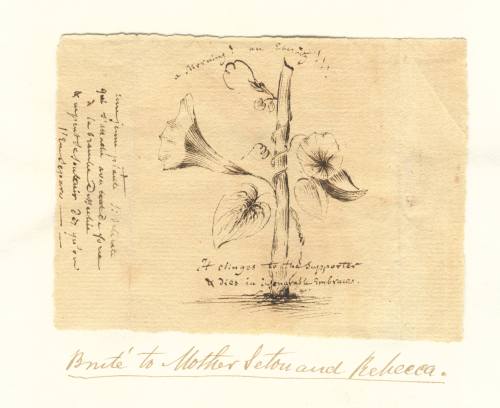
Sketch by Father Bruté called 'Morning Glories'
A leisurely sketch of a morning glory with Bruté’s call for Eternity

It is not the picture alone that manifests his interior life. Bruté uses Scripture or his own poems and prayers to pour out the aspirations of his soul. Even his historical drawings depicting the landscape of Emmitsburg or the sketch of his ship which took him to France have Scripture and prayers dispersed throughout them. They serve as reminders of his love and goal for Heaven. Indeed, a quarter of his drawings include the word “Eternity” as either central to the image or as a minor addition to a leisurely sketch. Even drawings in which the word is not explicitly written, the message of eternal life is implied by the belief in a home that transcends this world. Such was the nature of the drawings Father Bruté sent to Rebecca Seton for consolation in her illness, and this message of eternal life seemed to comfort even himself as he witnessed death within the Seton family.

Sketch of Father Bruté's: Rebecca Seton's Flight to Heaven
The flight of Rebecca Seton to Heaven amidst her mother’s sorrow

Drawing was thus an outlet for Father Bruté during his labors in Maryland, but it was the responsibility of running Saint Mary’s and the Mount, helping the Sisters, and carrying out other priestly duties that were catalysts for his sketches. Perhaps the lack of drawings during his bishopric in Vincennes is due to his advanced age and increasing responsibilities, as well as having to care for a newly established frontier diocese that spanned the entire state of Indiana. Nonetheless, he utilized his ability to draw to link the temporal and spiritual worlds on paper, and so he encapsulates the purpose of sacred art in using the material to point to the divine. Whether one possesses the ability to draw like him or not, Father Bruté’s love of sacred art reminds us of the joy of the spiritual life and the necessity of preserving artistic beauty in the service of God.

Sketch of Father Bruté's: Landscape of St. Joseph's Valley
A sketch of the Emmitsburg landscape with verses of Scripture dispersed throughout

Leave a comment

Filed under Archives, Simon Brute

Saints, Blesseds, and Founders in Emmitsburg

This is part of a yearlong series about the early days of the Sisters of Charity of St. Joseph’s commemorating the 200th anniversary of the death of Saint Elizabeth Ann Seton, foundress of the community.  In 1850, the Emmitsburg-based Sisters united with the international community of the French Daughters of Charity.

Saint Elizabeth Ann Seton is the first North American-born saint recognized by the global Catholic church.  The Daughters of Charity Provincial Archives in Emmitsburg is the largest holder of writings and artifacts of Mother Seton in the world.

Brick and wrapper from Seton home on State Street, New York City

However, Mother Seton is not the only one represented in the collection recognized as a holy person by Rome, nor is she the only foundress of a community in the collections.  We can provide resources and information about a number of other individuals of this caliber!

Father Simon Bruté was Mother Seton’s spiritual director, a Sulpician priest who later became the first Bishop of Vincennes (now the Archdiocese of Indianapolis).  His cause for canonization was opened in 2005, and he was accepted as a Servant of God.  Materials of his in the archives include correspondence with Mother Seton and her family, spiritual writings, the bands he wore for his consecration as a Bishop, and his many drawings and sketches.

“Eternity, Jesus,” Father Simon Bruté, January 11, 1821

Saint Father John Neumann, CSsR,was Archbishop of Philadelphia from 1852 until his death in 1860.  He was canonized in 1977 and was instrumental in bringing the Daughters of Charity to St. Vincent’s Orphan Asylum.

Father John Neumann to Rev. Mariano Maller, C.M., Provincial Director, July 29, 1852

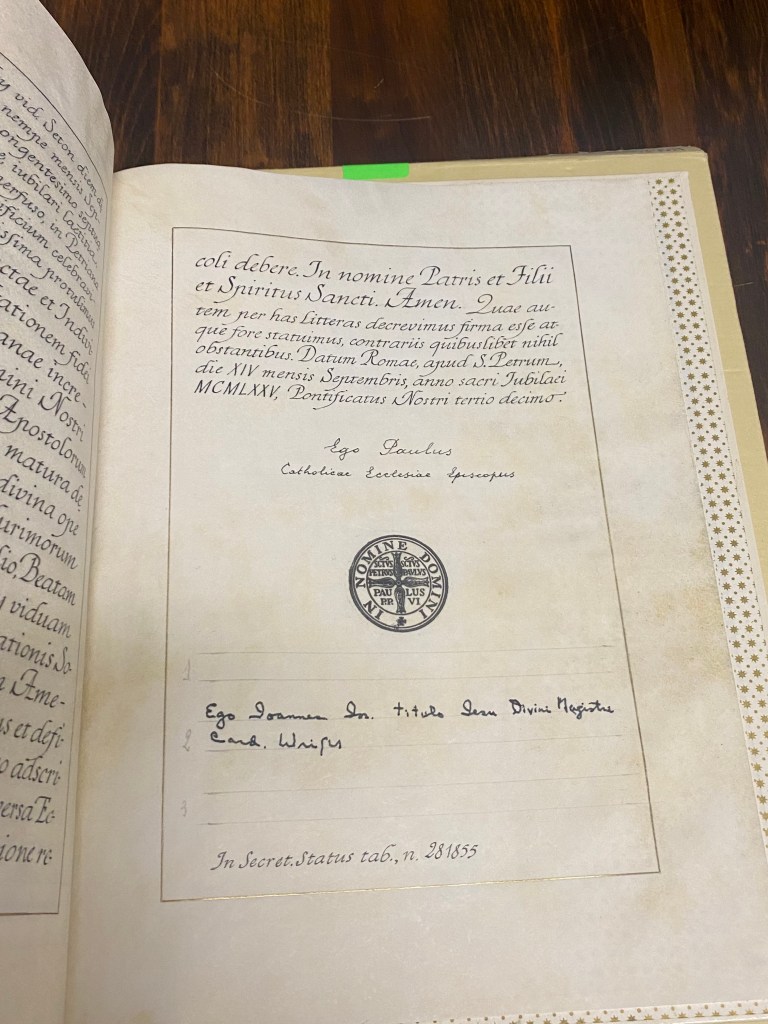
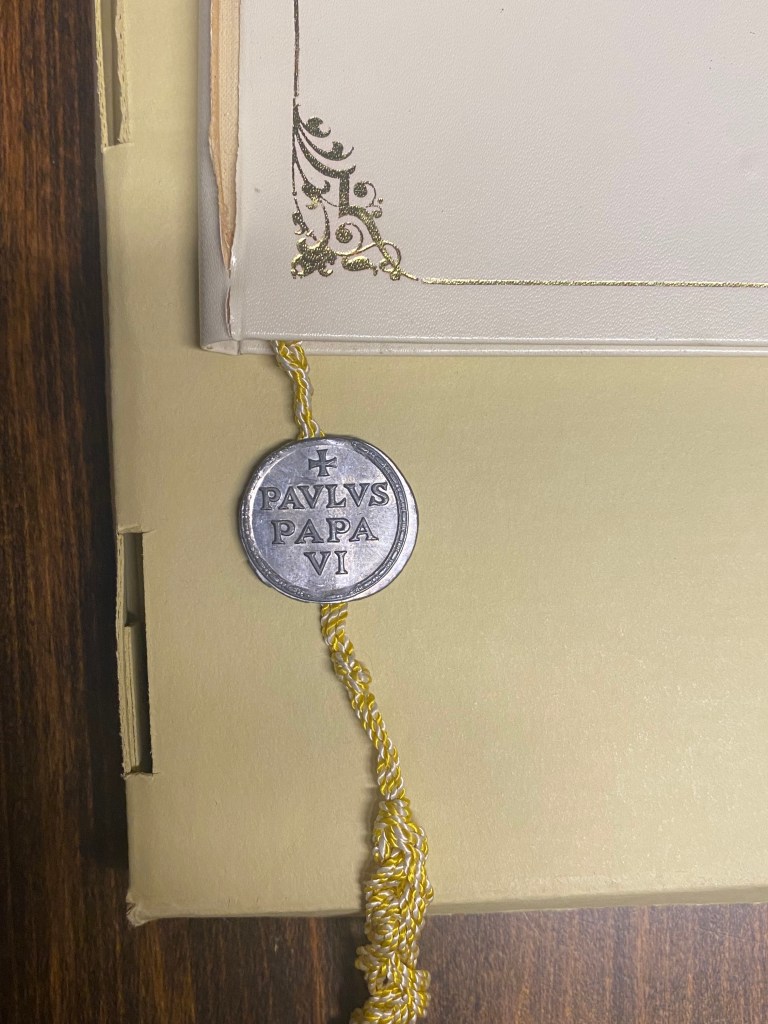
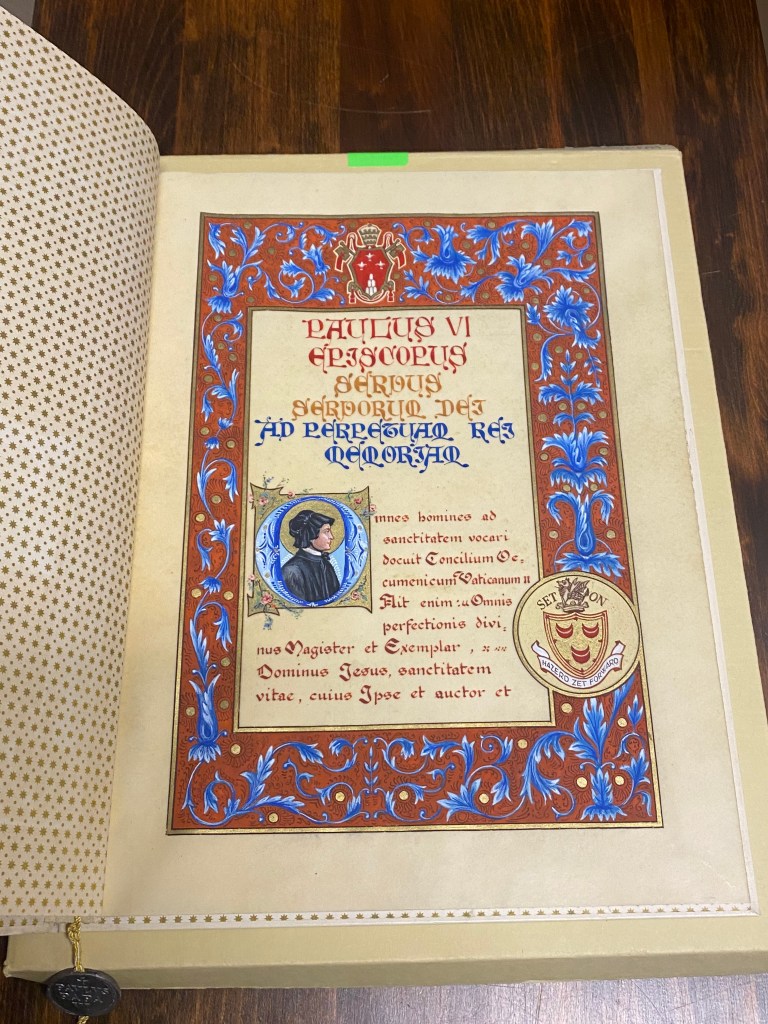
Canonized Popes Many Daughters have been lucky enough to meet the Successors to St. Peter, sometimes as part of a crowd, and sometimes in more serious business.  The most notable occasion relating to the community’s history was Saint Pope Paul VI, who canonized Mother Seton in 1975, thus making Mother Seton’s canonization bull itself a relic of a saint.

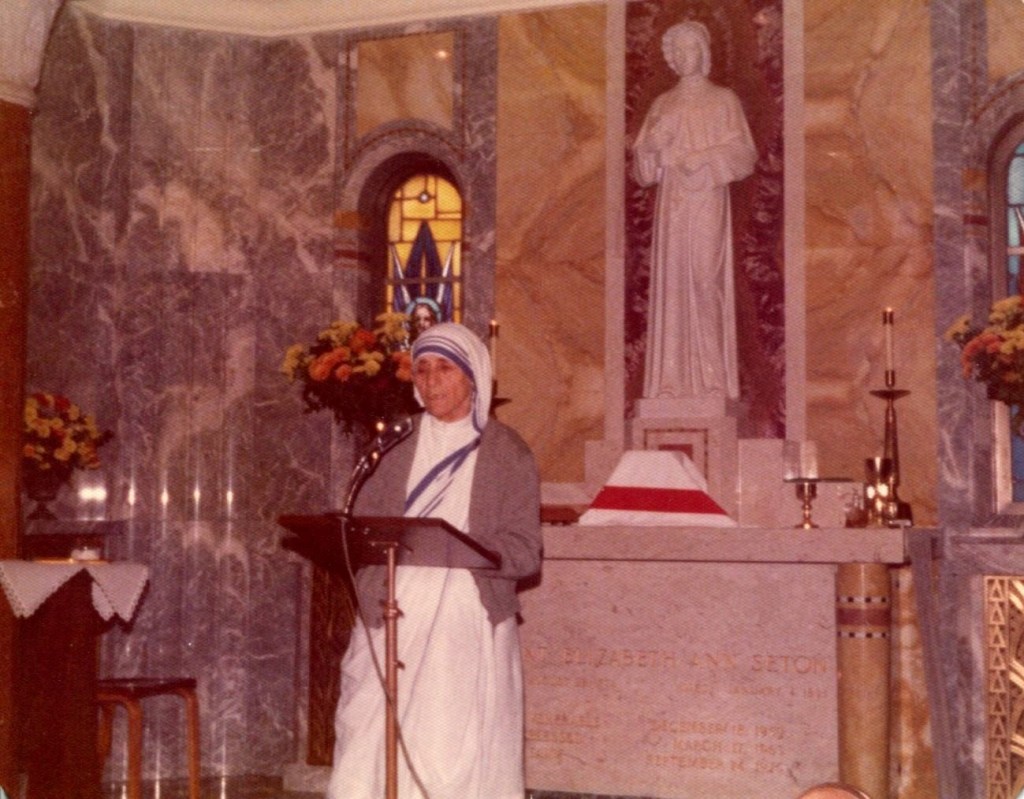
Saint Teresa of Calcutta – often still known as Mother Teresa – made a three-day tour of the United States in 1975.  During her visit, she visited the Shrine of the just recently canonized Saint Elizabeth Ann Seton alongside her more formal trips to the United Nations and Washington, D.C.  The archives contains photos of her visit.

Almeide Maxis Duchemin – later known as Mother Theresa Duchemin – was a student of St. Joseph’s Academy from 1819-1823 from around ages 9-13.  She became a founding member of the Oblate Sisters of Providence in Baltimore and became the first African American Superior General of a white religious majority community when she co-founded the Sisters, Servants of the Immaculate Heart of Mary.  The archives contains records of her schooling at the Academy.

Mothers Elizabeth Boyle and Margaret George were companions of Mother Seton and members of the Sisters of Charity of St. Joseph’s who founded their own communities; the Sisters of Charity of New York in 1846 and the Sisters of Charity of Cincinnati in 1852, respectively. 

3 Comments

Filed under Canonization, Emmitsburg, Mother Theresa Duchemin, Paul VI, Simon Brute, Sisters of Charity of Cincinnati, Sisters of Charity of New York, Teresa of Calcutta

Rev. Bruté’s Image of Emmitsburg

file1-24

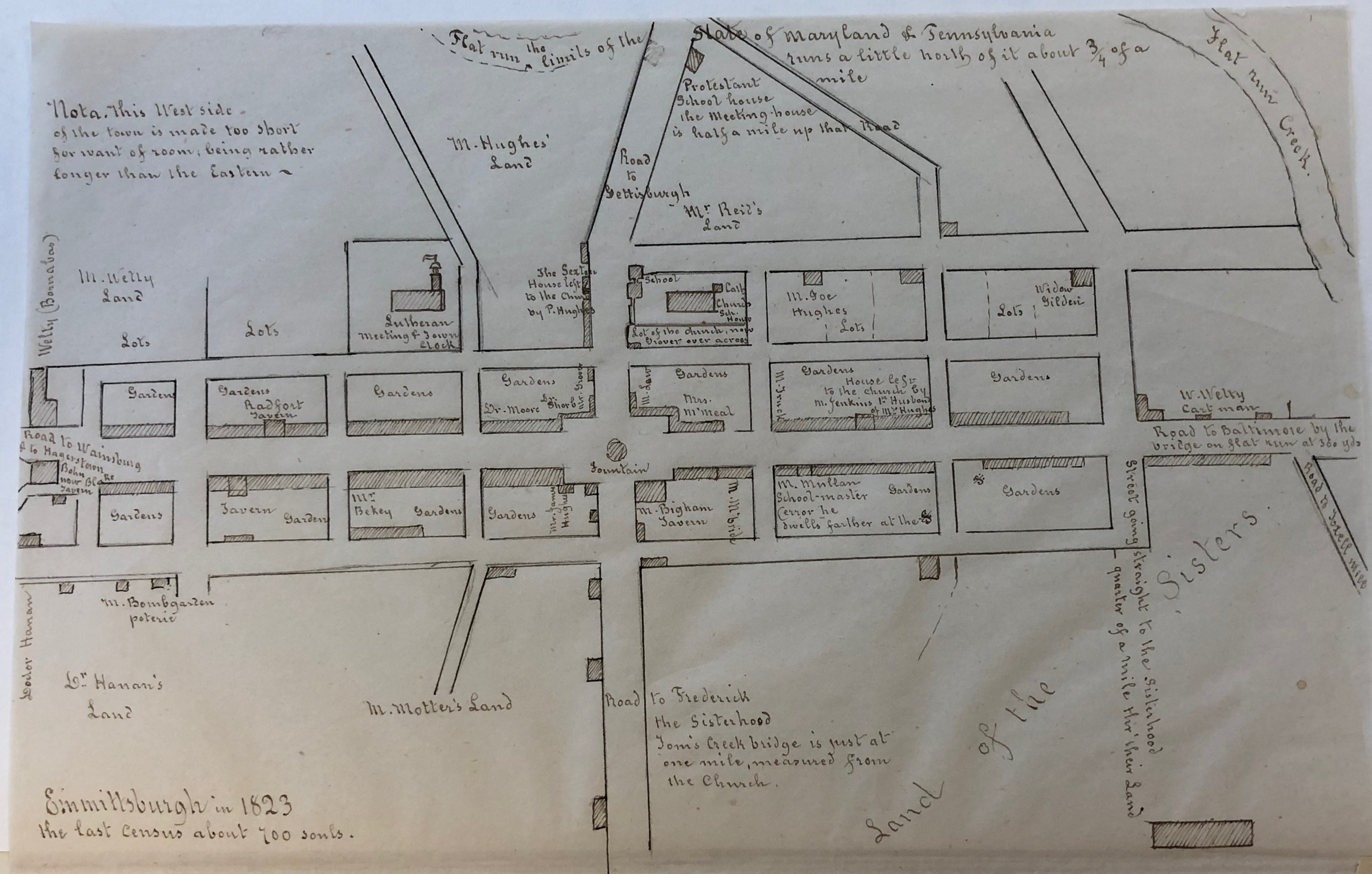
Rev. Simon Bruté served as Mother Seton’s Spiritual Director from 1812 until her death in 1821.  Many of his sketches show Mother Seton, the landscapes, Mt. St. Mary’s University, and the town of Emmitsburg.  As a document of local history, his map of the town square, written in tight, neat handwriting, show accurate distances to other towns and, perhaps most importantly, an accurate picture of families and landowners in 1823.  Bruté also left a 14 page manuscript describing the town and landscape, mostly in his native French (although the archives has translations).  Rev. Bruté became Bishop Bruté, the first Bishop of Vincennes, now Indianapolis.  The Archive of the Daughters of Charity, Province of St. Louise archive has a 6 box collection on Bishop Bruté.  Despite his importance, most of his manuscripts have been scattered or lost in a fire at the Benedictine Monastery of St. Meinard, IN.¹  Rev. Edmund J. Schmitt was working on a biography of Bruté before his own death, and his unfinished research notes are located at the University of Notre Dame.²

  1. Catholic Historical Review, Vol. 3, No. 4 (Jan., 1918) pp. 492-494.
  2. “Edmund J. Schmitt Papers,” University of Notre Dame Archives (UNDA),  http://archives.nd.edu/findaids/ead/html/SCT.htm

Leave a comment

Filed under Emmitsburg, Simon Brute