The relationship between the Catholic Church and Native Americans has often been a contentious one. In the American Southwest, this antagonism dates from the time of Spanish colonization, and, although many American Indians have become members of the Church, there is a long memory of when the Church was used as an arm of Spanish imperialism and Christianity was a forceful presence in the American boarding schools.
In 1993, the Vincentian priests were looking for ways to fulfill their charism of “Service to the Poor.” The Native communities in Arizona and New Mexico were certainly in need, but the priests had very much to contend with history before they could begin. The question that they kept returning to was: “How can we discover what the Native American people themselves think that their needs are?” Their answer: “By going in and becoming part of their community.”
The priests had two allies in this cause. First, the Bishop of Gallup at the time was Bishop Donald Edmond Pelotte, and, although he came from the far Northeast of Maine, he was the first Native American Bishop to be appointed in the United States. Second, the Vincentians recruited the Daughters of Charity to assist in their ministry, under a “Home Mission” structure that included and involved all the provinces of the Vincentians and the Daughters at the time.
When the Sisters accepted the ministry in Tuba City, Arizona on the Navajo Reservation, they first attended an inculturation program in Rapid City, South Dakota. They reported that they should only “send sisters who are willing to ‘rough’ it” in the remote desert climate as they began their work at St. Jude Parish. Their initial framework would include Adult Education ministry, Outreach to the poor on the reservation, and some type of Youth Services. Bishop Pelotte recommended three Sisters and that they “should take six months to discern and plan together.”
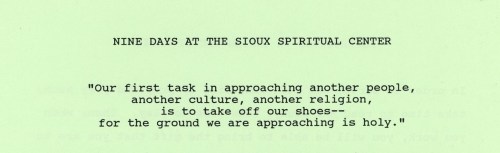
In August 1996, three Daughters of Charity arrived: Sister Regina Hlavac, Sister Carmela Molini, and Sister Frances Vista. Sister Carmela described their ministry during those first few weeks:
“There is a speech therapist who works at the hospital and does the liturgy at the church. She gave us a tour of the hospital and she has engaged us in the choir. We have sung at the Assumption and Sunday Masses already. I have an invitation to b a volunteer in the Public School to listen to children read to me. We are also invited to help with ‘Learning To Live Sober’ program, the Food Pantry, the Soup Kitchen and visiting the sick in the hospital.”
This inclusiveness began to pay off. After one year, Sister Frances wrote to her home province that “It is known that the Sisters are in Tuba City and we are not here to convert the natives and/or have the natives be baptized. People are realizing that we are here for them and we will continue to be present to them and their needs.”
St. Jude provided a place for a multi-racial, multi-ethnic parish to form. In a report from 1997, the Sisters wrote of their work “that they have made progress toward service, stressing that they must not do things for the Native Americans, but be patient and take the time to discover what the Native Americans themselves desire.” At the same time, they did note that, when reporting to their own councils, that this was not a traditional ministry governed by institutions. “Success is not measured by beginning services, but by being present to the People, and gradually working with them to develop and take responsibility for programs they value.”
In terms of a long-lasting impact, the most successful program was the St. Jude Food Bank, which started as a closet of emergency supplies of the parish, moved into the Sisters’ garage, and dedicated a new warehouse in 2005. It also offers referrals for food assistance within a 100-mile area, a level of intervention that can only come from knowing the community. In 2002, the it was the only food bank on the Navajo Reservation, an area the size of West Virginia. Even when the Daughters were no longer able to continue their ministry in Tuba City after 2023, they ensured that this ministry could in fact be a long-term institutional presence within the Navajo Reservation. It is now directed by members of the Navajo nation with sponsorship from the Province of St. Elizabeth Ann Seton of the Daughters.
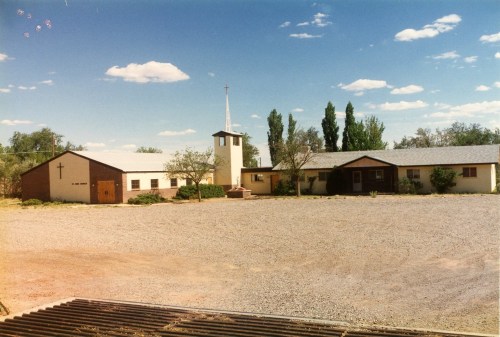
Sister Regina Hlavac later wrote of her time in this ministry:
“I loved my time ministering with the Navajos. Their spirituality is amazing. We loved going to the “Pow-Wows” and celebrating their traditions with them. We also had the opportunity to visit them in their hogans and on the lower and upper mesas. We started the soup kitchen and would go every Friday to “Bashas” grocery store and the manager would give us all their “day old” vegetables, breads and meats to cook up and serve to the many Native Americans. It was so wonderful to see the smiles on their faces as they enjoyed their meal. (We didn’t realize that we could be short order cooks and actually cook up a tasty and nutritious meal.!!) What a privilege it was to serve these beautiful people of God!!”