New exhibit, “We Saw The First Spade of Earth Turned”

Provincial House groundbreaking

Sister Isabel Toohey, Visitatrix breaking ground for the new St. Joseph’s Provincial House on September 27, 1961 (used with permission of Daughters of Charity Provincial Archives)

On Sept. 27, 1961, Sr. Isabel Toohey, Visitatrix of the Emmitsburg Province, broke ground for the construction of a new Provincial House. There for this “never-to-be-forgotten moment” were sisters who had processed from the old Central House on the original property (now owned by FEMA).
The new Provincial House was considered the flowering of the seed planted by St. Elizabeth Ann Seton. She and her first sisters arrived in Emmitsburg in 1809 and on July 31 took possession of their first home, the Stone House. The growing community moved into the White House the following year. In 1826, they took up residence in a larger building that served, with necessary additions, as the Central House for 138 years. The ground breaking for a new Provincial House took place on 27 Sept. 1961 and in less than three years, the building was ready, with sisters moved in on 12 Sept. 1964. Arriving soon after were 69 postulants.

Speaking at the ceremony was Fr. Francis J. Dodd, C.M., who told those gathered, “This is a very simple ceremony, but I hope that it will mark a memorable occasion. We have, by God’s Providence, been able to prepare a place for our sick and ancient Sisters. We are faced at home now with an acute problem of providing for the members of the Community itself. The buildings you occupy have served wonderfully well, many of them for more than a century. They are not now adequate. Besides that, the maintenance is growing year by year. So, the economic thing to do is to prepare a new Central House. A few years ago, we had Seminary Sisters for a few months; the Postulants did not come here; we did not have a Juniorate. Now we have Postulants, Seminary Sisters and the Sisters of the Juniorate. And the Juniorate will soon be for two years…. So a larger building is needed. That is why we meet on this occasion to turn the first spade of ground in the work to be begun.”

One of the most memorable aspects of the new Provincial House was the “big chapel,” as one of the sisters called it. Originally meant as a private place for the sisters, it would become the Basilica of St. Elizabeth Ann Seton.

To remember these events, the Provincial Archives traces the planning and building of this house in a new exhibit, “called “’We Saw the First Spade of Earth Turned….’: The Building of St. Joseph’s Provincial House.” Featuring photographs, architectural plans, artifacts, and a special video of some of the sisters who were the original occupants, the exhibit will be open through January 9, 2015. Watch for a virtual tour of the exhibit here on our blog!

Leave a comment

Filed under Emmitsburg, Exhibits

Star Spangled Banner 200th Anniversary

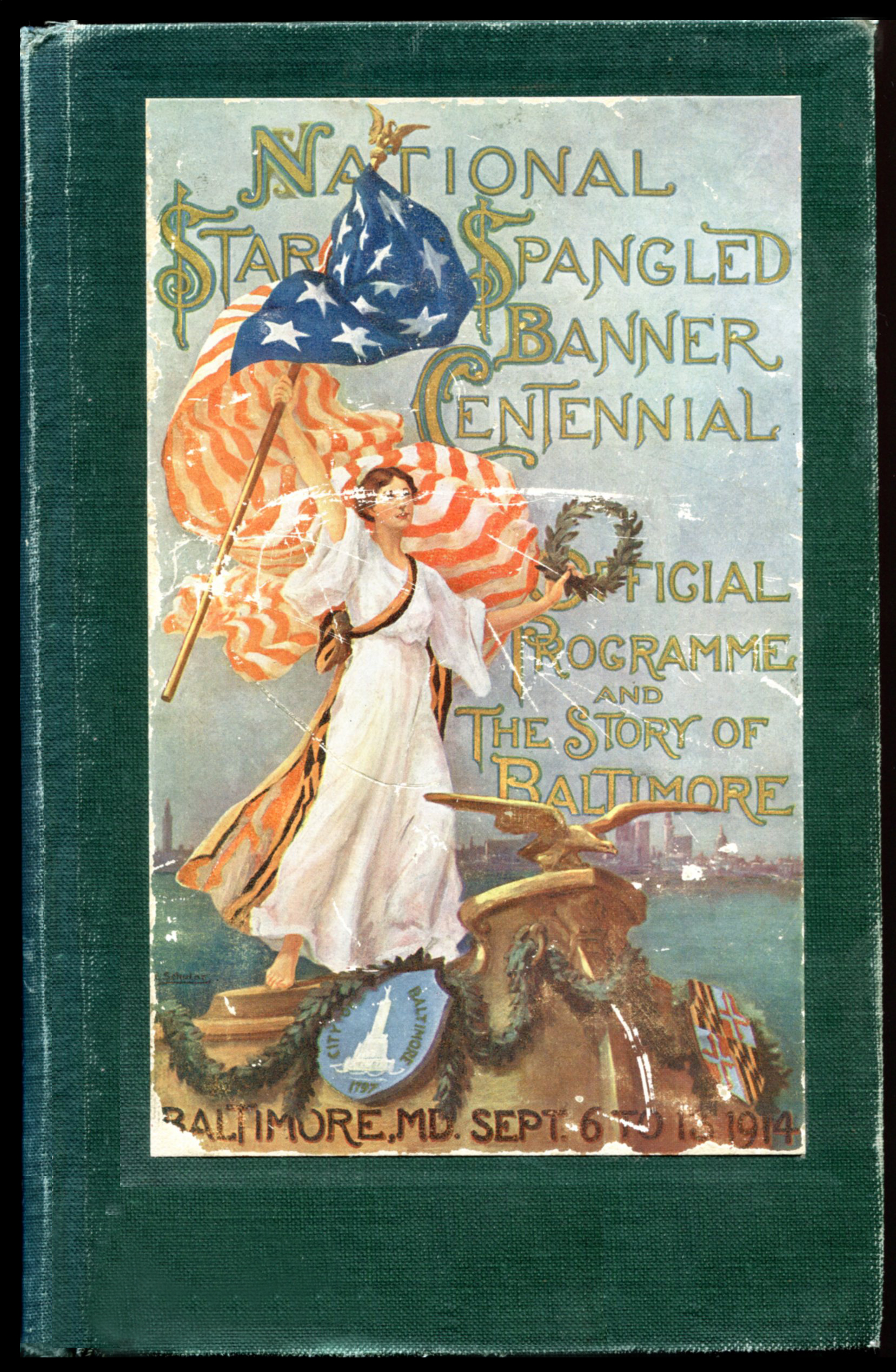
Program for the celebration of the 100th anniverary of the Star Spangled Banner, 1914 (courtesy Daughters of Charity Provincial Archives)

Program for the celebration of the 100th anniverary of the Star Spangled Banner, 1914 (courtesy Daughters of Charity Provincial Archives)

On September 14, 1814, U.S. soldiers at Baltimore’s Fort McHenry raised a huge American flag to celebrate a crucial victory over British forces during the War of 1812. The sight of those “broad stripes and bright stars” inspired Francis Scott Key to write a song that eventually became the United States national anthem. The image above shows the cover from the program for the celebration marking the centennial of the battle at Fort McHenry and the writing of The Star Spangled Banner, a copy of which can be found in our library collection.

We consulted with Loras Schissel, of the Music Division of the Library of Congress, concerning the history of The Star Spangled Banner and of To Anacreon in Heaven, the tune on which The Star Spangled Banner is based. According to Schissel, The Star Spangled Banner, as sung, is the only national anthem that ends in a question mark. It’s not a drinking song, but was written as a “club” song for the Anacreontics and was writen to show off the good voice and range of one of the singers.

In 1931 President Herbert Hoover signed legislation which made the Star Spangled Banner the United States’ official national anthem. When Irving Berlin was asked if he thought God Bless America should be national anthem, he said, “we already have one … and it’s a darn good one.”

Learn more about the history of the Star Spangled Banner in this website from the Smithsonian’s National Museum of American History.

Leave a comment

Filed under Baltimore, U.S. History

Throwback Thursday: Elizabeth Ann Seton altar

Seton altar

Elizabeth Ann Seton altar prior to the transfer of Mother Seton’s relics in 1968 (Images used with permission of Daughters of Charity Provincial Archives)

For Throwback Thursday and the anniversary of Elizabeth Seton’s canonization coming up this weekend, here is a view of the Seton Altar in what is now the Basilica of the National Shrine of Saint Elizabeth Ann Seton before Mother Seton’s remains were formally transferred there in 1968. Look closely and you’ll see the words “Blessed Elizabeth Ann Seton” above the statue. Mother Seton was canonized on September 14, 1975 by Pope Paul VI.

Elizabeth Ann Seton’s remains have resided in a number of different locations on the Emmitsburg Campus since her death. When she died in 1821 she was buried in St. Joseph’s Cemetery, the original cemetery on our grounds. A headstone marking her original burial spot can still be seen today. In 1845 the Mortuary Chapel, located in St. Joseph’s Cemetery adjacent to Mother Seton’s first burial spot, was built to house her remains; her remains were transferred to the Mortuary Chapel in 1846. The Mortuary Chapel still stands as well. After her beatification in 1963 Mother Seton’s remains were placed in a copper casket and transferred to a niche above the main altar in the chapel at St. Joseph’s Central House. The chapel, located just south of our current campus, is now part of FEMA’s National Emergency Training Center. In 1968 her remains moved for the final time to the Sisters’ Chapel at St. Joseph’s Provincial House, now the Basilica of the National Shrine of Saint Elizabeth Ann Seton. The Basilica is open to the public and can be viewed from 10:00am – 4:30pm every day.

Leave a comment

Filed under Elizabeth Ann Seton, Emmitsburg, Feast Days