Our Four Campuses: Albany, New York

This is part two of a four-part series on the history of the four primary campuses in the Province, which correspond to the locations where the four provinces that formed the Province of St. Louise had their provincial houses:  Emmitsburg, MD; Albany, NY; Evansville, IN; and St. Louis, MO.  Part one on the Emmitsburg campus can be found here.

January 4, 1969 would be a momentous day for the American Daughters of Charity; two U.S. provinces – one in Emmitsburg, MD and the other in Normandy, MO – were to be re-organized into five provinces.  Among them, a new Northeast Province was to begin to create its own history.

Preparations for the change had been taking place for months.  In October 1968, Sister Mary Basil Roarke accepted her position as the first Visitatrix of the new province and in December travelled to Jamaica, Queens, New York City to begin establishing a temporary Provincial House at the DePaul House of Study. 

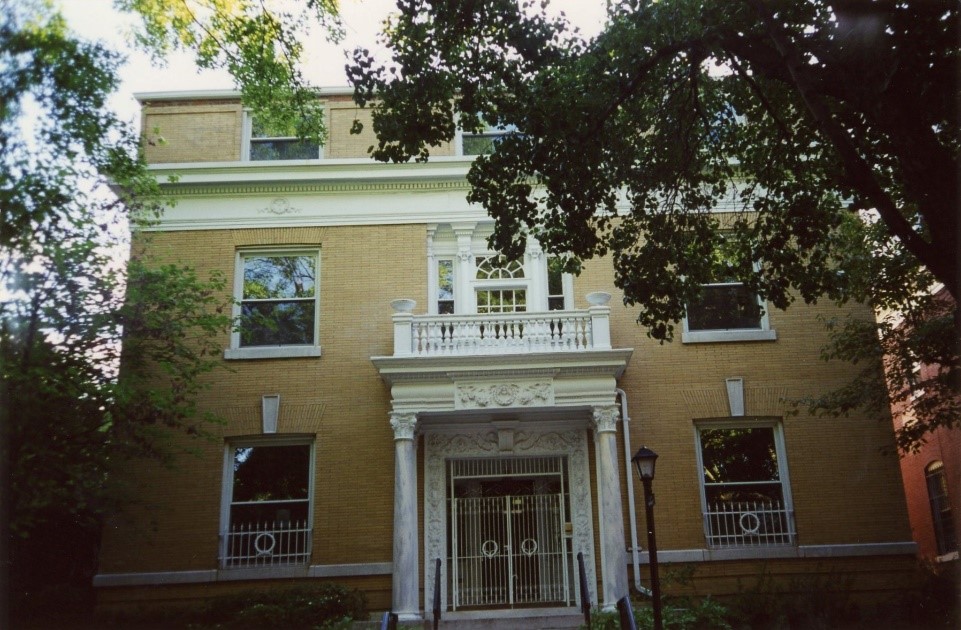
The Dorchester Place Provincial House in Queens, New York City
The Dorchester Place Provincial House, Queens, first provincial house of the Northeast Province

In 1970, the question of a permanent Provincial House was discussed, and Albany, New York was selected as the best site due to its central geographic point within the province with a long history with the community.  The property in Menands was purchased from the Missionary Sisters of the Immaculate Heart of Mary, who were looking to downsize their infrastructural footprint due to declining numbers.  The final contracts for the purchase were signed on April 19, 1971.  Sisters Margaret Finnegan and Caroline Mooney oversaw the preparations of the new home, and the first moving vans left New York City for the Capital Region on July 3.

Sister Mary Basil Roarke receives a blessing from Father Joseph Tinnelly, C.M., 1971
Sister Mary Basil Roarke, Visitatrix, receiving the blessing of Father Joseph Tinnelly, C.M., Provincial Director, at the opening of the new Provincial House, 1971

The house was comprised of Sisters serving in Provincial governance and Sisters who served in the Ministry of prayer (who lived in the area that became known as St. Louise House).  The campus was also home to the Seminary for sisters in Formation until 1990, when an interprovincial Seminary was established for the Northeast and Southeast Provinces in Emmitsburg. 

In 1995, a new office building was constructed for the Provincial Council’s and Visitatrix’s work in governance so that the St. Louise sisters could have a larger oratory and activity space.  In 1998, the community saw their merger with the Canadian province of the Daughters of Charity, creating a truly binational province.   Both flags fly on campus to this day.

The American and Canadian flags on the Albany campus
The binational flags on campus

In 2011, the Northeast province became part of the new Province of St. Louise, along with three other provinces in North America.  Facing their own declining numbers, the Albany campus began a process of transition, as the Daughters partnered with Franciscan Ministries to continue to care for the Sisters who live and serve in Albany, as well as to provide senior living space in a faith-based environment to those living in upstate New York. 

The campus has been home to the Daughters for over 50 years, and to the sisters who originally came from that province, remains a deeply important place in their lives and ministries.

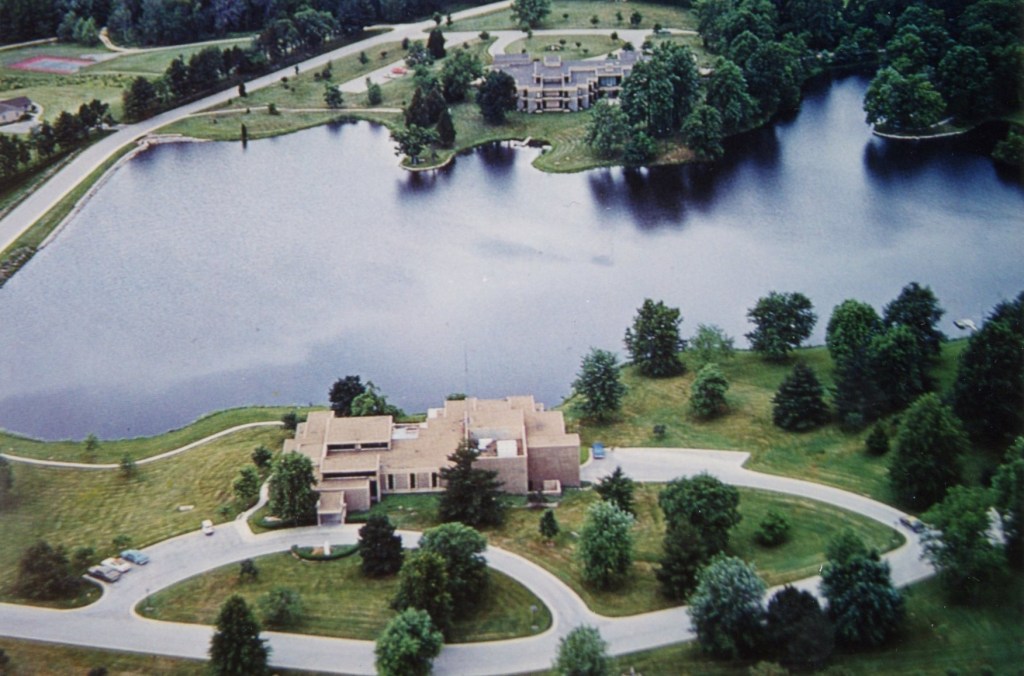
Aerial view of the Albany campus in autumn facing west southwest, 1988
Campus in autumn, facing west southwest, 1988

3 Comments

Filed under Albany

Digitzed Materials Available: Mother Seton Guild and Seton Causeway

Good news! Working with our partners at Catholic Research Resources Alliance – CRRA, we have digitized and made available every edition of the Mother Seton Guild Bulletin and the Mother Seton Causeway! These publications were an integral way of invigorating the laity and promoting Elizabeth Ann Seton’s recognition as a saint. Beginning in 1941, they cover the acceptance of her canonization cause and her Beatification. In 1973, the series transitioned to a new title, “The Seton Causeway,” which covered her canonization in 1975 and the celebrations in Rome and the United States.

The link below will take you to a subject guide for the entire run of the newsletters. You can also search “Mother Seton Guild” or “Seton Causeway” and narrow your search down by date.

https://vufind.catholicresearch.org/vufind/Record/docead_MSGB_?fbclid=IwAR3iACIFoOXvwWIcUTjqdvW0xTnFf1uKQDY9jQHOQNyql2_boSGSUYEukoU

1 Comment

Filed under Uncategorized

The Daughters in Canada

The first ministry of the Daughters of Charity in Canada occurred before Canadian Confederation of 1867, when three British North American provinces – Canada, Nova Scotia, and New Brunswick – united to form one federation, the Dominion of Canada.  Just as the American Civil War was about to begin south of the border in April 1861, the Council of the Daughters received a request from a friend and collaborator in the Vincentian Family, Bishop John J. Lynch, C.M.  One of the co-founders of Niagara University in New York, Bishop Lynch accepted the role as Bishop of Toronto the previous year and asked the Council to approve the operation of an Industrial School for Catholic girls.  The next year, the Daughters agreed to staff a similar school for boys, sending four Daughters to each institution.  The initial Canadian project was short-lived, however, and, due to the small Catholic population in the still very Anglican portion of the Confederation, the Daughters withdrew in 1868.

It took 80 years for the Daughters of Charity to return to Canada, when Bishop Phillipe Desranleau of Sherbrooke approached Mother Blanchot, Superioress of the Daughters, with a request for the Daughters to serve at a nursery for abandoned children.  The new Canadian community was made up of three Daughters from France and two from the United States.  The Canadian community was established as a “Vice-Province,” which was under the direct administration of a General Councilor in Paris.

Sisters Isabel Toohey and Mary Basil Roarke (seated, middle and right) travelled north from Emmitsburg for the installation of the first five French sisters in Sherbrooke

By 1953, there were four small houses of sisters throughout Quebec:  in addition to Sherbrooke, there was the Asbestos Maternity Hospital, the elderly and maternity hospital in Coaticook, and the Home for the Elderly at Viger Square in Montreal.  Additionally, Toronto saw the re-opening of a house under the Slovenian province of the Daughters.

By the 1960s, the Daughters in Canada were primarily engaged in ministry in hospital or hospital-likeministries.  The Quiet Revolution led to wide-ranging secularization in Quebec, and the Daughters saw a quick shift away from administrative roles to personalized outreach ministries, serving in parishes and in the community at soup kitchens and shelters for the unhoused.

Canada’s status in the global community of the Daughters shifted back and forth from Vice-Province to Region, an experimental new designation under the authority of the Motherhouse.  In 1976, Sister Balance Tremblay became the first Canadian to become Vice-Provincial, and in 1980, the community increasingly worked with waves of immigrant communities from Vietnam and Latin America.  By 1998, there were just two houses left in Montreal and Coaticook, and the Canadian community was formally combined with the Northeast Province of the United States in Albany (which subsequently became one of the forerunner Provinces of the modern Province of St. Louise; the former provincial house in Albany still flies both the American and Canadian flags).

“DC Northeaster,” the newsletters of the Albany Provincial House at the time of the merger, September/October 1998

In the nearly 25 years since then, the Daughters have continued to serve in parishes and particularly among the immigrant communities.  This is fitting, as the Canadian community of the Daughters has often been a majority immigrant one, with members often being from other nations and provinces.  One particularly interesting story is that of Sister Michelle Nguyen, who became a member of the Northeast Province at the time of the Canadian merger.  Sister Michelle arrived in Quebec as both a Daughter of Charity and a refugee from Vietnam, who used her position and experience to help others in the Canadian community’s ministry with immigrants and refugees.  She told her story to the Miraculous Medal Shrine as part of their “On the Move” series last year: 

We would like to thank Sister Judith Mausser, DC for her assistance in providing and translating materials from the Motherhouse Archives in Paris for this piece.

Leave a comment

Filed under Canada