“Ceaseless tide of famished soldiers”

soldier with gear

[Private Albert H. Davis of Company K, 6th New Hampshire Infantry Regiment in uniform, shoulder scales, and Hardee hat with Model 1841 Mississippi rifle, sword bayonet, knapsack with bedroll, canteen, and haversack. Photo courtesy of the Library of Congress]


(Text (c) The Provincial Archives of the Daughters of Charity and the author, Denise Gallo)

Accounts of the Battle of Gettysburg in the Provincial Annuals are rife with descriptions of Sisters at St. Joseph’s Central House giving slice upon slice of freshly-baked bread to ravenous soldiers. As we researched Civil War and Gettysburg histories in preparing for our recent program, we started to wonder just how hungry the visiting troops could have been. We discovered so much information that we devoted the entire July 1 gallery talk to the topic of “Bread.”

Let’s begin with the first group of visitors, who arrived the evening of June 27, 1863: members of the Michigan Fifth and Sixth Cavalry brigades. According to James H. Kidd, one of the riders, they left headquarters in Frederick that morning “much refreshed, with horses well fed and groomed and haversacks replenished.” “Haversacks replenished” meant that each man carried enough rations for three days. This unappealing Army fare included such staples as hardtack, salt pork, and coffee. What Kidd next related is important to our question. Along the way, the Cavalrymen (among whom, we should note, was St. Joseph’s most illustrious guest, George Armstrong Custer) were greeted by local residents with “the richness and overflowing abundance of the land.” There were, he relates, “…’oceans’ of apple-butter and great loaves of snow-white bread that ‘took the cake’ over anything that came within the range of my experience…. A slice cut from one of them and smeared thick with that delicious apple-butter was a feast fit for gods and men.” Of course, there was one significant difference between this bread and the slices both Cavalry and Infantry troops would have received at St. Joseph’s: in almost all cases, the locals were selling food to the soldiers whereas the generous Sisters were giving it to them. Similar remembrances can be found in many other first-person narratives. Charles Wainwright of the First Corp wrote, “The people along the road sell everything, and at very high prices: fifty cents for a large loaf of bread, worth, say, twenty; fifteen to twenty-five cents for a canteen, three pints, of skimmed milk; how much for pies I do not know, but they were in great demand.” What is noteworthy is that food was available along the routes to Emmitsburg, and the soldiers took every occasion to get it. Wainwright offers a particularly vivid picture of one man actually dumping the rations from his haversack to fill it with newly-purchased homemade luxuries.

Were the soldiers who arrived at St. Joseph’s actually “the ceaseless tide of famished soldiers” that Sr. Marie Louise Caulfield described? Marching for miles certainly built up appetites and their visitors undoubtedly came hungry, but one cannot interpret the Annals to mean that the Sisters’ bread took care of the needs of a hungry army. Even so, had the Sisters known that the men were obtaining food from other sources, they certainly would have shared their loaves all the same.

One last question: why was bread such a particular delicacy for the men? This bread, fresh and warm from the oven, not only filled their stomachs but filled them with memories of home. For St. Vincent’s Daughters, of course, bread was always an offering, the most basic of all gifts to share with those in need.

Leave a comment

Filed under Civil War, Exhibits

Thank you for your support of “Our buildings and very earth trembled”

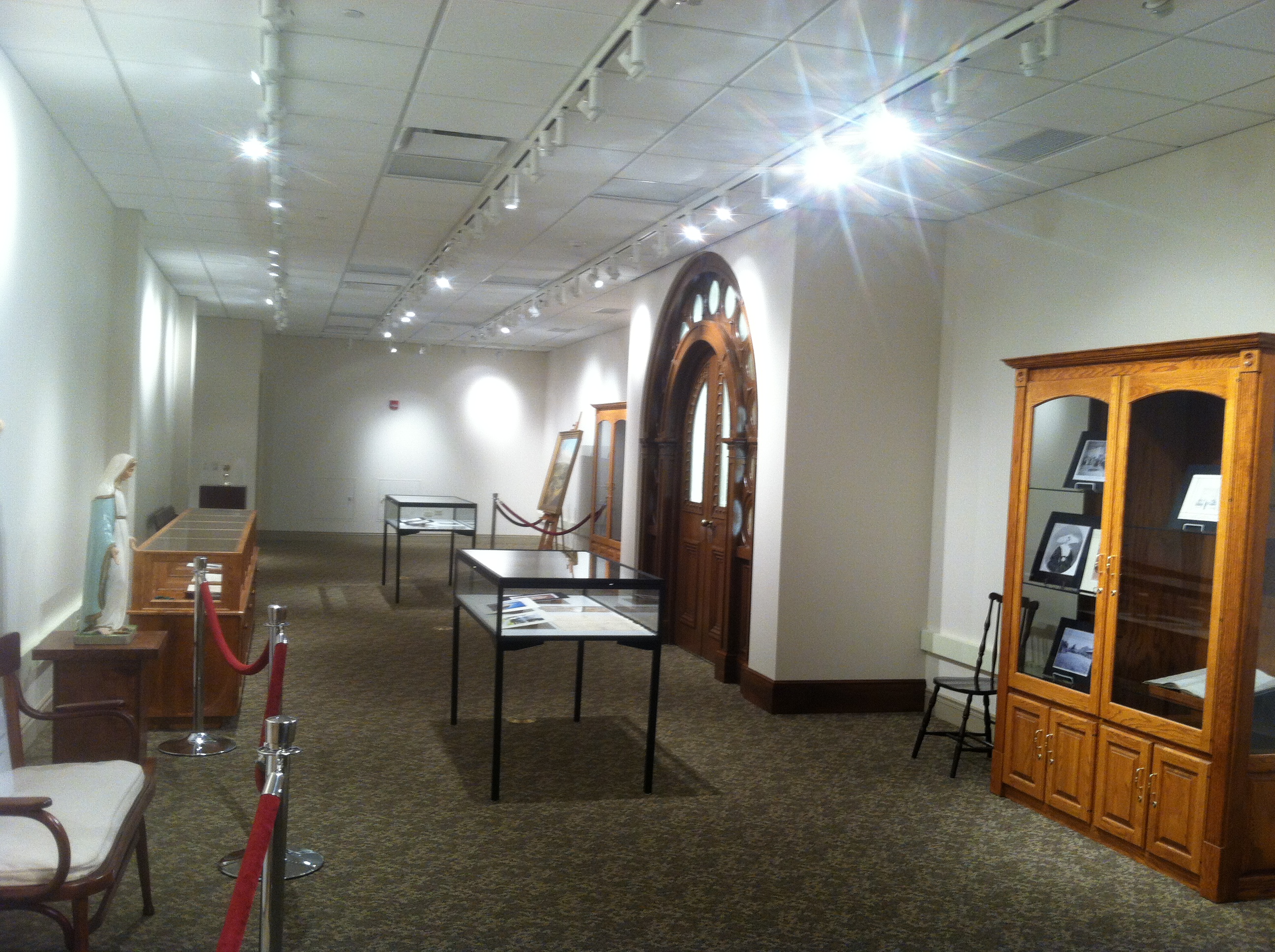
“Our buildings and very earth trembled” has completed its run. In all, 338 visitors viewed the exhibit over the last eight days. To all who attended, thank you for your support, your enthusiasm, and your interest.

Many people have asked us whether the gallery talks will be made available and whether we’ll be producing some kind of exhibit catalog. We’ll be putting together a video with pictures from the exhibit and excerpts from the “voices” which will be made available for free viewing online. We will also produce a list of all the items we exhibited and make that available for free download. When they are available we’ll post URLs on Facebook and on our blog. Thank you again for your support of “Our buildings and very earth trembled”.

Now that the exhibit has closed, we will go back to our normal routine: reading room hours from 8 AM to 4:30 PM Monday through Friday and public exhibit hours on Wednesdays from 1 to 4 PM. All of our Civil War annals have been transcribed, so if you wish to learn more about the Daughters’ role in the Civil War you are welcome to come and do research in our reading room. For more information about coming to the Provincial Archives to do research see the “For Researchers” page on this blog.

Leave a comment

Filed under Announcements, Exhibits

Highlights from Day 6 and 7 of “Our buildings and very earth trembled”

Satterlee Military Hospital

Images of Satterlee Military Hospital, Philadelphia

Two more sites where Sisters served. Top: sketch of General Hospital in Richmond. Bottom: Patient ledger from St. Mary's Hospital Rochester, NY

Two more sites where Sisters served. Top: sketch of General Hospital in Richmond. Bottom: Patient ledger from St. Mary’s Hospital Rochester, NY

Hospitals where DCs served

Images of other hospitals where Daughters of Charity served during the Civil War: Gratiot St. Prison in St. Louis, Charity Hospital in New Orleans, and St. Mary’s Hospital in Detroit.

Manuscripts showing the history of Satterlee Military Hospital and the journey to  Gettysburg.

Manuscripts showing the history of Satterlee Military Hospital and the journey to
Gettysburg.

Coskery manuscripts

Manuscripts of Sr. Matilda Coskery’s Advices Concerning the Care of the Sick

Omnibus

A horse-drawn omnibus similar to this one transported the Sisters to Gettysburg.

Leave a comment

Filed under Civil War, Emmitsburg, Exhibits, Gettysburg