Category Archives: Ministries

Sister Mary Bernadette Szymczak and St. John’s Parish Center, Brooklyn

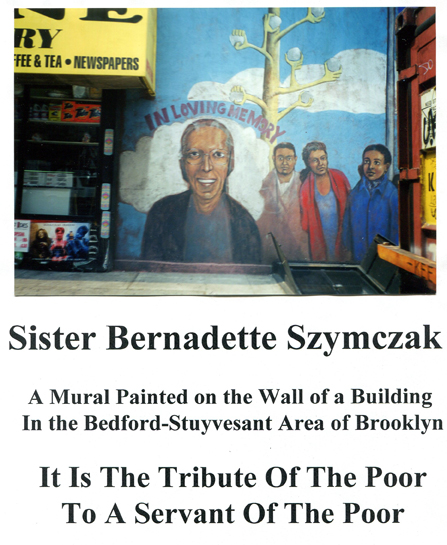
Sister Bernadette Szymczak mural

Mural created in memory of Sister Mary Bernadette Szymczak in the Bedford-Stuyvesant area of Brooklyn (Daughters of Charity Provincial Archives)

In honor of National Catholic Sisters Week, we remember the work of Sister Mary Bernadette Szymczak (1921-1998) who spent nearly 30 years serving the poor of the Bedford-Stuyvesant area of Brooklyn.

In September 1971, she was one of five Daughters of Charity who arrived in Brooklyn to work in St. John the Baptist Parish in conjunction with the Vincentian Fathers. At St. John’s, Sr. Mary Bernadette was coordinator of the parish Thrift Shop and Food Pantry, working with neighborhood volunteers to distribute food and clothing to the many needy who come every day. As assistant coordinator of the soup kitchen she managed the preparation of meals, working with the volunteers and serving the 350 to 400 poor, many of them homeless who come daily to be fed. She was also involved in parish life as a Eucharistic minister, CCD teacher, moderator of the Ladies’ Sodality, home visitor, and held flea markets to raise money for the parish. Through all these works she became a well-known figure as an advocate for the poor.

In an article written at the time of her death, the New York Times wrote:

“ … When the Sisters first came to Brooklyn at the request of the Vincentian priests who ran St. John’s parish, there seemed little need for a soup kitchen. Then came the governmental cutbacks to the poor of 1981, and as the need for food began to soar, Sister Bernadette, who had already established a thrift shop and an adult education program, started the soup kitchen, initially serving 15 or so meals a day. Over the next decade and a half, as the slender woman in the plain blue habit grew frail in her work, she became a neighborhood heroine …”

Leave a comment

Filed under Ministries, Parish Ministry, Social Work

Online Exhibit: “Beginning the Good Work: 200 Years of Service in Philadelphia”

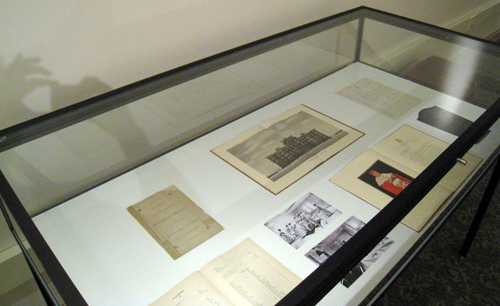
Images from our current exhibit, on display in Gallery 1 through April 30.

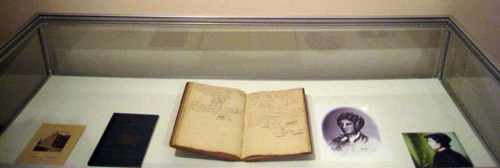
Philadelphia exhibit - case with items showing the start of ministry in Philadelphia.

Start of the work in Philadelphia. Mother Seton, who sent the first three Sisters, is on the far right. Next to her is Mother Rose White, the first superior. in the middle is a book with early minutes of the board of St. Joseph Orphan Asylum.

Mother Rose White

Mother Rose White, leader of the first group of Sisters of Charity of St. Joseph’s to serve in Philadelphia. After Elizabeth Seton’s death in 1821 Mother Rose served as the community’s superior.

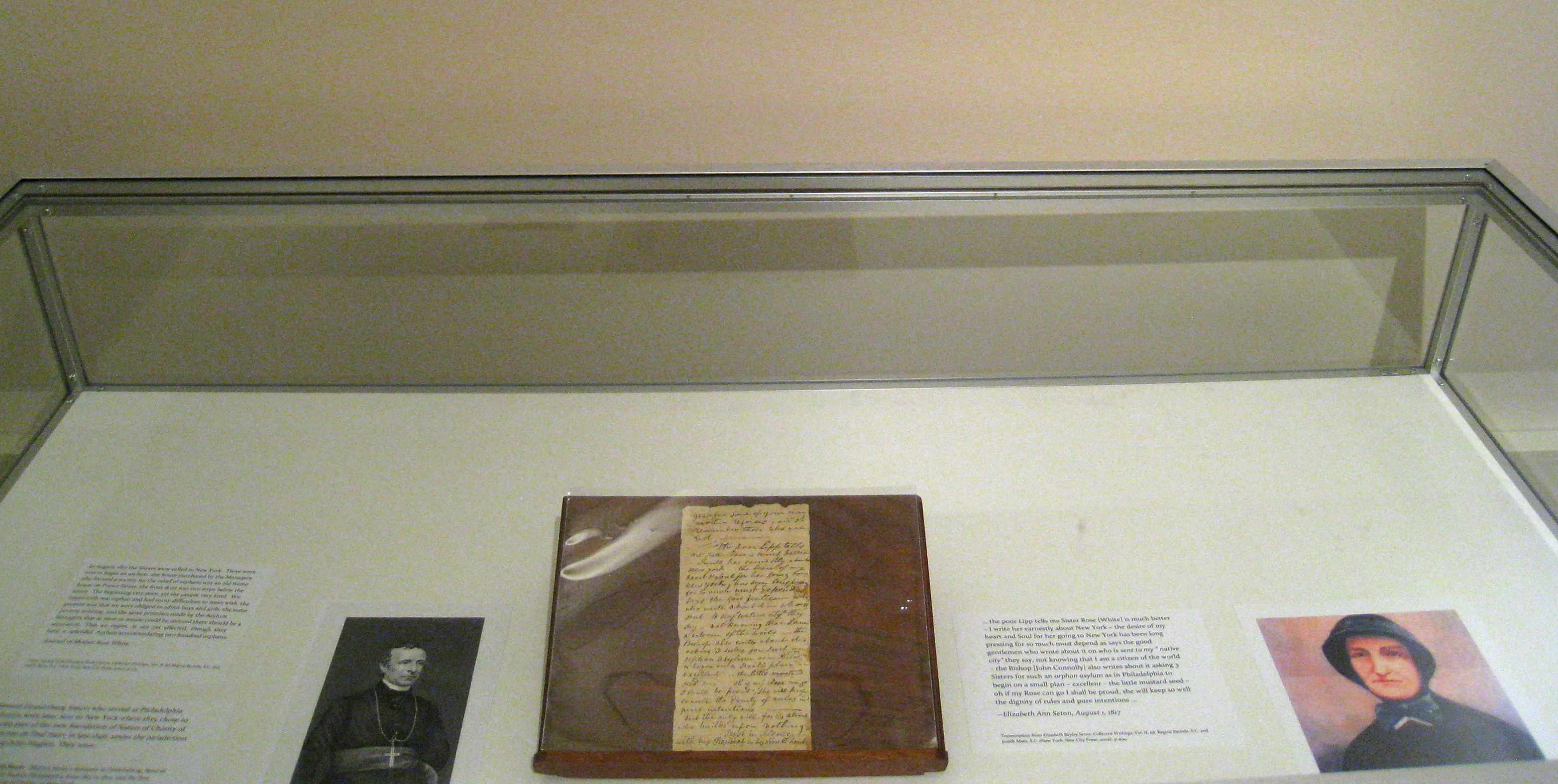
Philadelphia exhibit - case showing connections with Sisters of Charity of New York

Mother Rose White’s skill in managing St. Joseph Orphan Asylum led to a request, in 1817, for the Sisters of Charity of St. Joseph’s to start an orphanage in New York. In the center is a letter from Mother Seton talking about her desire to send Sisters there. One companions of Mother Seton’s who served in Philadelphia was Mother Elizabeth Boyle, seen at right, who in 1846 became the first superior of the Sisters of Charity of New York. (Image of Mother Elizabeth Boyle courtesy of Sisters of Charity of New York)

Mother Elizabeth Boyle, Sisters of Charity of New York

Mother Elizabeth Boyle (1788-1861), first superior of the Sisters of Charity of New York (1846-1849) (Courtesy Sisters of Charity of New York)

Philadelphia exhibit - case showing Sr. Mary Gonzaga Grace and Gonzaga Home

Photos and artifacts of Sr. Mary Gonzaga Grace and Gonzaga Home. Sr. Mary Gonzaga is at the upper left. Beneath her is an image of the Sisters who served at Satterlee Hospital in West Philadelphia during the Civil War. In the center are pages from a handwritten life of Sr. Mary Gonzaga. On the far right is an image of Gonzaga Home.

Sister Mary Gonzaga Grace

Sr. Mary Gonzaga Grace spent 61 years of her community life in Philadelphia. During the Civil War she served as both superior of Satterlee Military Hospital and St. Joseph Orphan Asylum.

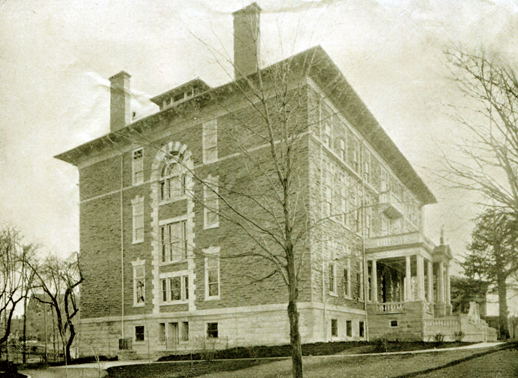
Gonzaga Home

Gonzaga Home, completed in 1899 and named in honor of Sr. Mary Gonzaga Grace.

Photos and artifacts for St. Joseph Hospital.

Photos and artifacts for St. Joseph Hospital.

St. Joseph Hospital building

St. Joseph Hospital, early 20th century.

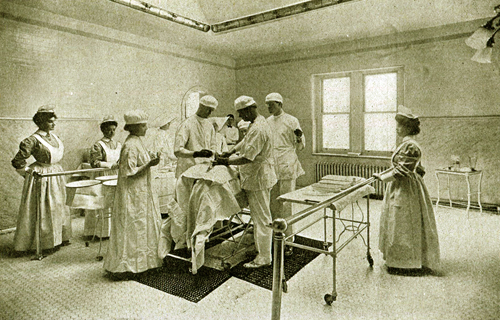
St. Joseph Hospital operating room 1900

St. Joseph Hospital operating room, ca. 1900

Exhibit case - St. Vincent Orphan Asylum Drexel Hill

Case showing photos and artifacts from St. Vincent Orphan Asylum, Drexel Hill.

St. Vincent Orphan Asylum building, early 1920s

St. Vincent Orphan Home, founded in 1850, moved into this building in the early 1920s. The building later became an archdiocesan high school.

St. Vincent Orphan Home Drexel Hill, children on playground, 1943

St. Vincent Orphan Home Drexel Hill, children on playground, 1943

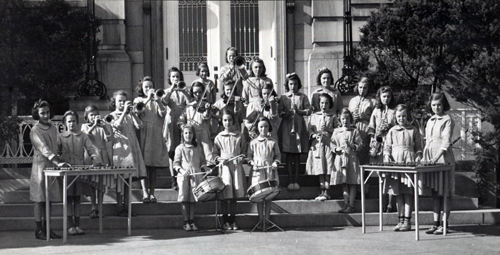
Girls' band from St. Vincent Orphan Asylum Drexel Hill

“Musical Mites” – a girls’ band from St. Vincent Home Drexel Hill, 1943

Philadelphia exhibit - case showing St. Joseph Hall for Girls and Ghebre Michael Inn.

On the left are images of St. Joseph Hall for Girls, from the 1970s and early 1980s. On the right is Ghebre Michael Inn, founded by the Vincentians at Immaculate Conception Parish in Germantown in 1989. Ghebre Michael Inn, named for a Vincentian priest and martyr, provided temporary housing and job assistance to under-and-unemployed single men.

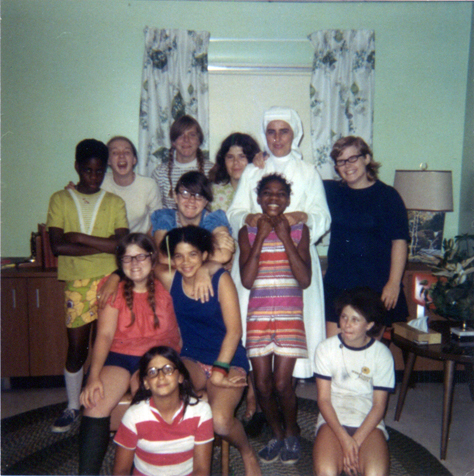
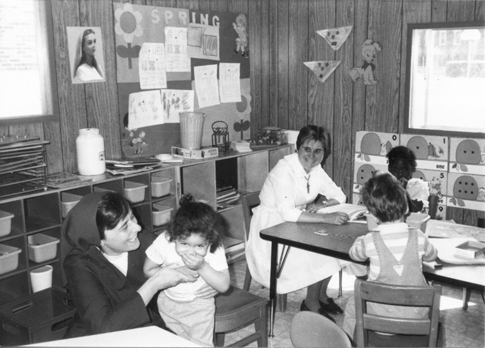
St. Joseph Hall for Girls, unidentified Sister and students, early 1970s

St. Joseph Hall for Girls, unidentified Sister and students, early 1970s

St. Joseph Hall for Girls, early 1980s

Sr. Mary Frate and children at St. Joseph Hall for Girls, early 1980s.

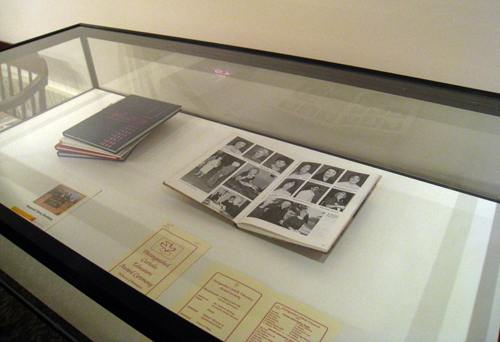
Case showing yearbooks from Gwynedd Mercy Academy

Gwynedd Mercy Academy was one of a number of school ministries. Sr. Denise Williams taught at the school in the late 1980s.

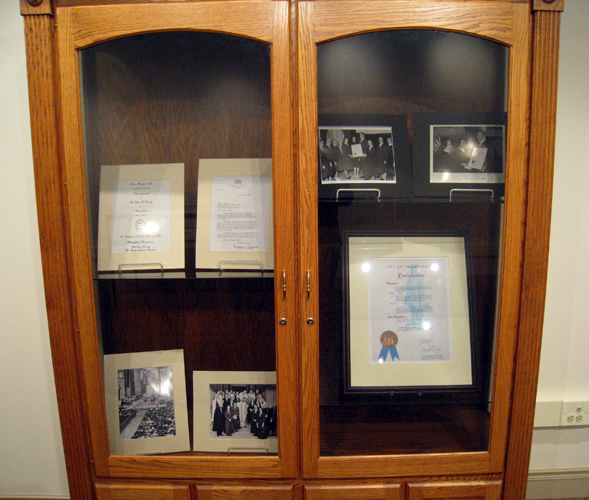
case showing images of special celebrations for the DCs in Philadelphia
Mayor presenting proclamation to Sisters

Mayor Rizzo of Philadelphia presents a proclamation for “Elizabeth Seton Day” in the city of Philadelphia, September 14, 1975.

Seton Proclamation from City of Philadelphia

Proclamation from the City of Philadelphia in honor of Elizabeth Seton Day, September 14, 1975

3 Comments

Filed under Exhibits, Ministries

DCs and Presidents – Theodore Roosevelt at St. Vincent Hospital, Indianapolis, 1902

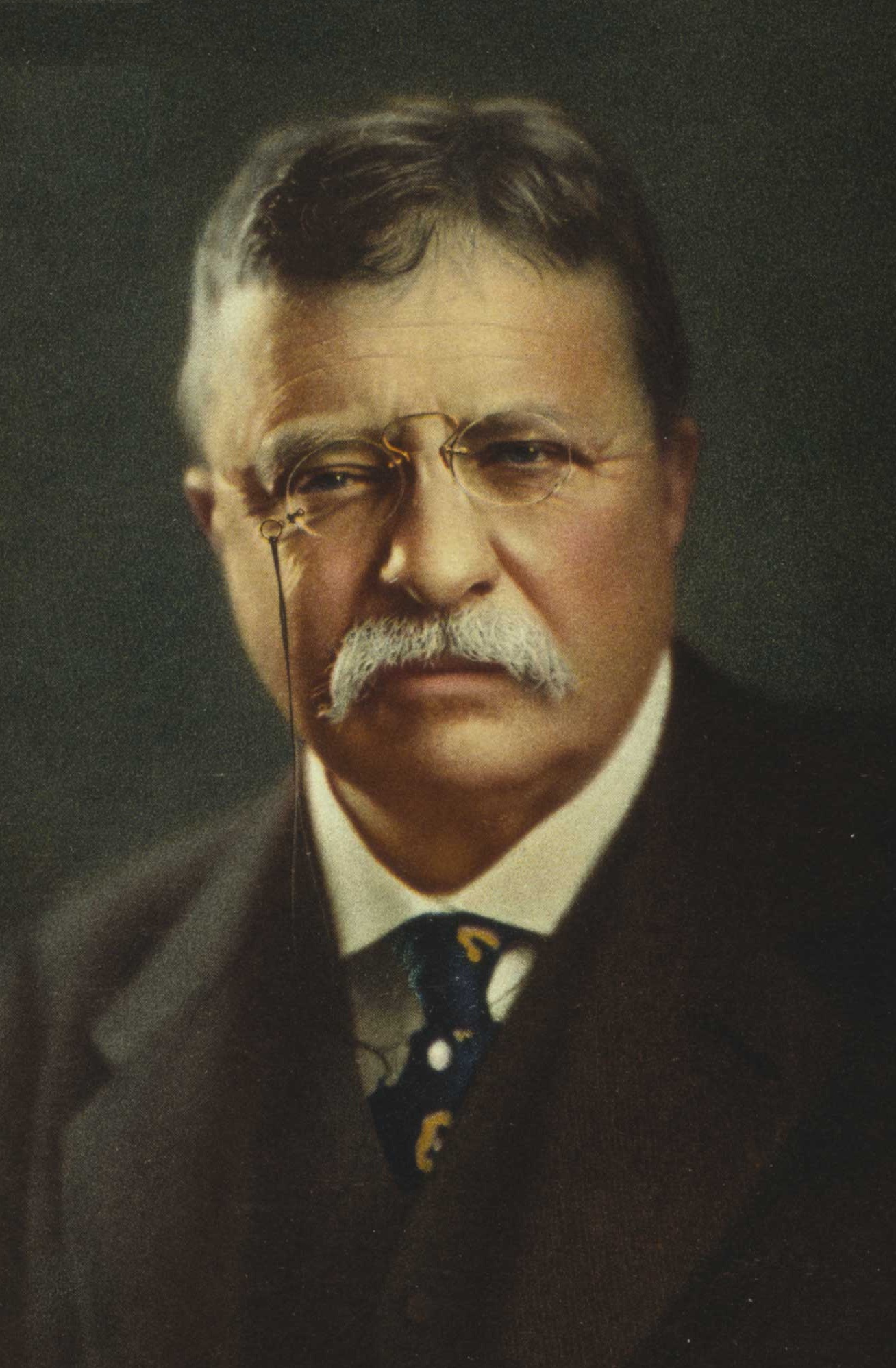
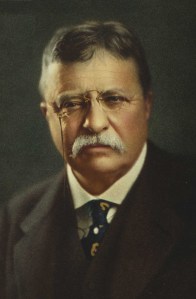
Theodore Roosevelt

Theodore Roosevelt, President, 1901-1909

Our last presidential blog featured William McKinley’s visit to Camp Wikoff, Long Island, where the Daughters of Charity served as nurses following the Spanish-American War. Teddy Roosevelt and his Rough Riders were among the soldiers stationed at Camp Wikoff. Serving as McKinley’s Vice President, Roosevelt became President after McKinley was assassinated in 1901. The following year Roosevelt and the Daughters crossed paths for the second time when Roosevelt entered St. Vincent Hospital in Indianapolis for minor surgery. The photo below shows the banner headline from the September 24, 1902 Indianapolis Sentinel. Our records of St. Vincent Hospital contain a number of newspaper clippings which give the details of Roosevelt’s time at the hospital.
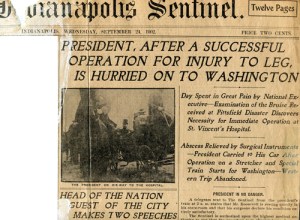
Indianapolis Sentinel

Indianapolis Sentinel, September 24, 1902 (Daughters of Charity Provincial Archives)

In the Fall of 1902 Roosevelt embarked on a national speaking tour to promote Republican candidates in the upcoming midterm elections. On September 3, while in Pittsfield, Massachusetts, a speeding trolley car crashed into the presidential carriage, killing one of Roosevelt’s Secret Service agents. Roosevelt himself was thrown from the carriage and seriously injured. Despite his injuries he continued the speaking tour. One injury, a bruise on his leg, began to swell and developed into a small abcess. By the time he reached Indianapolis he had a noticeable limp, and his doctors advised that he should undergo a minor operation, to lance and drain the wound. When the presidential train reached Indianapolis the procedure was performed at St. Vincent Hospital by Dr. John Oliver, a surgeon on the hospital’s medical staff. Dr. Oliver said in a statement to the press, “The operation was performed successfully, but it really was not a serious one. The fear was that if the serum had been allowed to remain, blood poisoning might set in, but I believe there is no further cause for apprehension. The swelling in the President’s leg was about as big as an open hand laid on the leg. The operation only took a short time and in no way affected the physical condition of the President. He is the same today as any other well man, outside of the sore place on his leg.”

The newspapers also reported on the Sisters’ preparations for receiving their distinguished patient.

“Sister Stella has had long experience in hospital work and is known for her coolness and forethought in times of emergency. Within a few minutes the necessary steps were being taken to receive the patient. Room No. 52, a cozy apartment on the fourth floor and fronting on South Street, was quickly got in readiness. White-capped nurses hurried here and there under the direction of the sisters. The private operating room on the fifth floor was made ready …

… A sentry was stationed just inside the outer enrance to the hospital and other guards took up positions outside. While the operation was being performed, Governor Durbin and Senators Fairbanks and Beveridge sat in the north parlor of the hospital waiting for news from the operating room. No one was allowed to go into this parlor. In the south parlor representatives of press associations waited. It was difficult to get any news from above stairs. Perhaps it was about 5 o’clock when the Sister Superior came into the south parlor and announced that the operation was over and that the President had been moved to his room.

‘The President is in a fine humor and is talking and joking,’ the sister said … ”

According to the newspaper accounts, Roosevelt’s nurse in the operating room was Sr. Mary Joseph. The nurse assigned to his private room was Sr. Regina, one of the nurses he had met at Camp Wikoff when the Rough Riders were stationed there.

Roosevelt’s doctors prescribed ten days to two weeks of rest to recuperate from the procedure. The remainder of Roosevelt’s tour was cancelled and he returned to Washington.

For the political context of Roosevelt’s speaking tour, see Doris Kearns Goodwin, The Bully Pulpit: Theodore Roosevelt, William Howard Taft, and the Golden Age of Journalism (New York: Simon and Schuster, 2013), p.305-310.

Learn more about Theodore Roosevelt

Leave a comment

Filed under Health Care, Ministries, Theodore Roosevelt, U.S. Presidents