Category Archives: Emmitsburg

The Emmitsburg Community Chorus and Sister Jane Marie Perrot

When Sister Jane Marie Perrot was a child, she asked her parents if she could take piano lessons.  The ongoing Depression meant that her parents had to say, “no;’ they couldn’t afford them. When Sister mentioned this to Sister Loretta Larking, one of the Daughters of Charity who taught her at St. Joseph’s Academy in Portsmouth, Virginia, Sister Loretta made sure that the young child would have music in her life.  Thus began a career and a vocation for Sister Jane Marie.
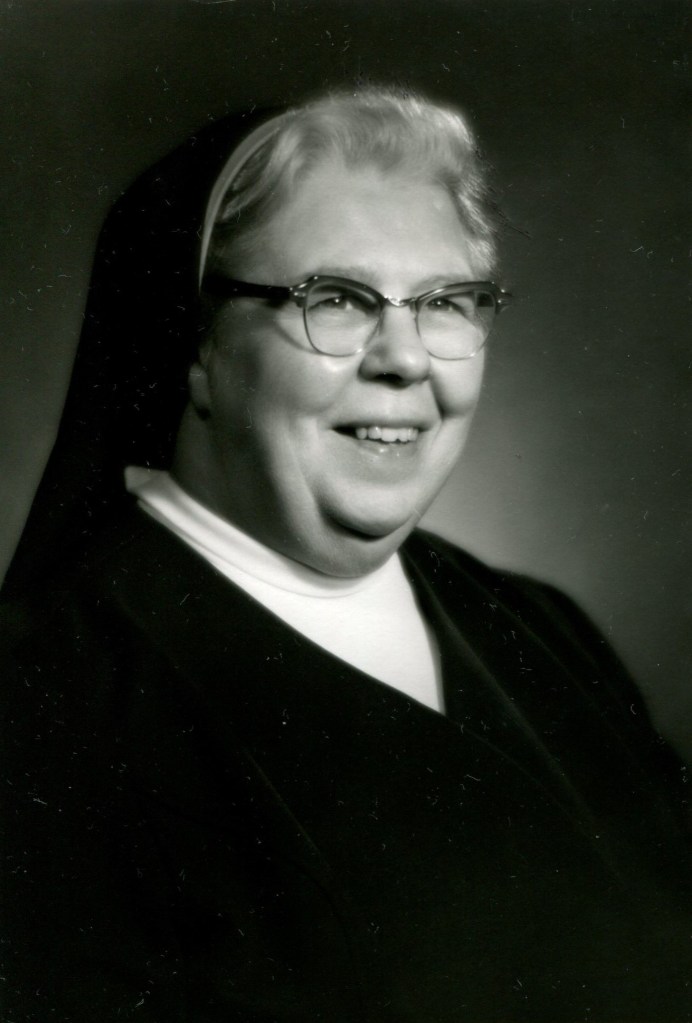
Sister Jane Marie Perrot

Sister began teaching music at her first mission at St. Ann’s School in Bridgeport, Connecticut.  At nearly every school where she taught, Sister Jane Marie would, at least part of the time, be involved with children and their appreciation of the arts.  In addition to her teaching duties, she studied organ at the Peabody Conservatory and received a Master of Arts from The Catholic University in 1952.  She eventually became the music director at St. Joseph’s Central House and St. Joseph College in Emmitsburg in the mid-1960s.

When the reforms of Vatican II were introduced, Sister Jane Marie was not one to shy away from a new era of Church history.  She used music and song to “open up” worship, and, in postulant formation, emotional and experiential forms of evangelization.

Among her evangelization projects was the Emmitsburg Community Chorus, which continues today more than 20 years after Sister Jane Marie’s death.  The chorus began with amateur singers from parishes in Frederick and Carroll Counties in Maryland and Adams County in Pennsylvania.  Known for its yearly Christmas concerts that take place in the Basilica of Saint Elizabeth Seton, it also performed around the Frederick, Western Maryland, and Gettysburg areas.  Sister Jane Marie served as the director from 1968-1973.

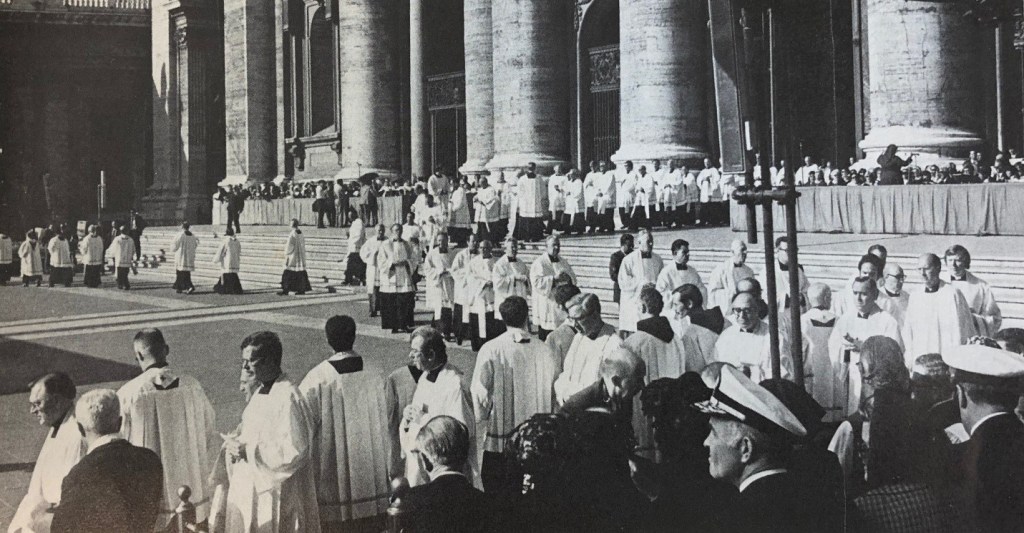
In 1975, the world received news of the canonization of Elizabeth Seton, the founder of the Community in Emmitsburg and the first native-born North American saint.  At the invitation of the Vatican, the Emmitsburg Community Chorus, 45 strong, traveled to Rome to sing alongside musicians from the U.S. Army bands stationed in Germany and the Sistine Chapel Choir in St. Peter’s Square for the assembled crowds and St. Pope Paul VI as part of the canonization ceremony.  Sister Jane Marie took up the baton for the Chorus once again.  She became the first woman to conduct a choir in St. Peter’s Square.

Sister Jane Marie before performance in Rome
Sister Jane Marie “in action” in upper right-hand corner conducting the Emmitsburg Community Chorus
Arrangements and logistics for the performance in Rome

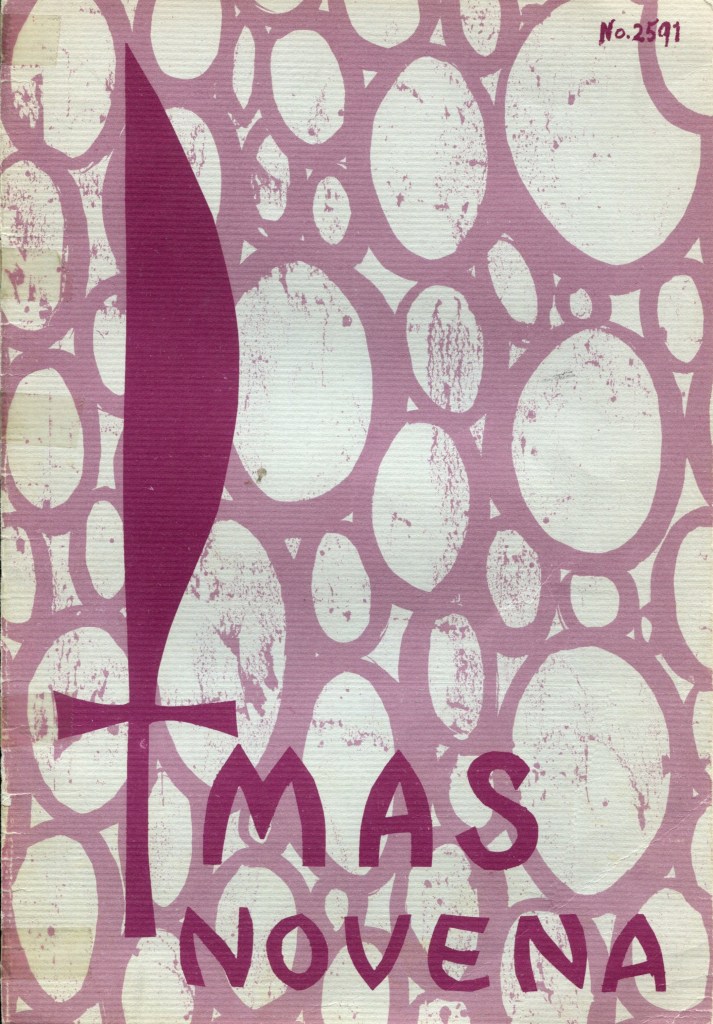
Sister Jane Marie was highly respected in the world of music education.  In 1978, she co-founded with Father Virgil Funk the National Association of Pastoral Musicians, receiving the Association’s award for Educator of the Year in 1996.  She was responsible for an arrangement of the Christmas Novena, performed by the American Daughters of Charity each year before Christmas, and she composed several other hymns.
In 1982, Sister Jane Marie was involved in an automobile accident, severely restricted use of her left arm after a car accident.  Afterward, she was unable to conduct in her preferred vigorous, expressive style.  This did not mean, however, that she could not compose or arrange music, and she continued to direct celebrations, liturgies, and arrange music at the Seton Shrine before her entry into the Ministry of Prayer in 1988. Sister died in December 1998.

1 Comment

Filed under Canonization, Emmitsburg Community Chorus, Sister Jane Marie Perrot

Rev. Bruté’s Image of Emmitsburg

file1-24

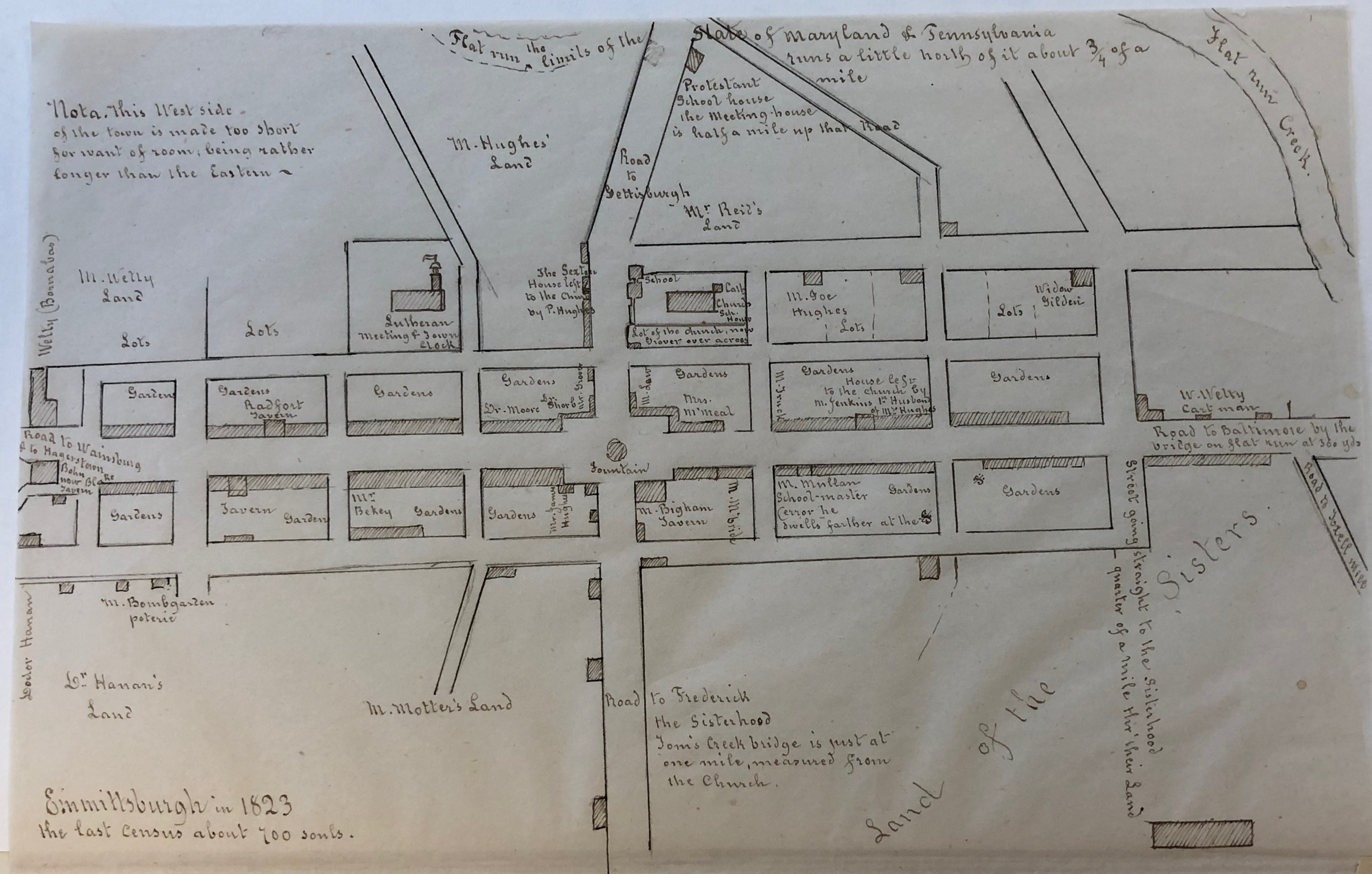
Rev. Simon Bruté served as Mother Seton’s Spiritual Director from 1812 until her death in 1821.  Many of his sketches show Mother Seton, the landscapes, Mt. St. Mary’s University, and the town of Emmitsburg.  As a document of local history, his map of the town square, written in tight, neat handwriting, show accurate distances to other towns and, perhaps most importantly, an accurate picture of families and landowners in 1823.  Bruté also left a 14 page manuscript describing the town and landscape, mostly in his native French (although the archives has translations).  Rev. Bruté became Bishop Bruté, the first Bishop of Vincennes, now Indianapolis.  The Archive of the Daughters of Charity, Province of St. Louise archive has a 6 box collection on Bishop Bruté.  Despite his importance, most of his manuscripts have been scattered or lost in a fire at the Benedictine Monastery of St. Meinard, IN.¹  Rev. Edmund J. Schmitt was working on a biography of Bruté before his own death, and his unfinished research notes are located at the University of Notre Dame.²

  1. Catholic Historical Review, Vol. 3, No. 4 (Jan., 1918) pp. 492-494.
  2. “Edmund J. Schmitt Papers,” University of Notre Dame Archives (UNDA),  http://archives.nd.edu/findaids/ead/html/SCT.htm

Leave a comment

Filed under Emmitsburg, Simon Brute

Unlocking the archival legalities of donating the Seton key

Image courtesy of Seton Heritage Ministries

Image courtesy of Seton Heritage Ministries

By Dee Gallo, Provincial Archivist

It seems impossible that anyone who followed Pope Francis’ visit to the United States did not hear that one of two gifts President Barack Obama gave to His Holiness was a key to the original door of the Stone House, St. Elizabeth Ann Seton’s first residence here in Emmitsburg, Maryland, on the property on which she founded her religious community, the Sisters of Charity of St. Joseph’s. Dating from 1809, this key appears to be like so many others of its time. Yet its symbolism sets it apart – it literally and figuratively opened the door to let in new students who would experience Catholic education and to send out women religious to care for the poor and voiceless by opening service ministries that continue on into our own century.

Up until recently, the key given to the Pope and a second one like it were under the curative care of Provincial Archives of the Daughters of Charity, just across the lawn from where the Stone House now sits. Some people have wondered how President Obama ever came in possession of the key and whether it was really his to give. Well, this key’s path from its archival home to the United States Department of State is an excellent example of the legalities which all archives and archivists must observe when transferring items from their collections.

About two months ago, my colleague, Rob Judge, Executive Director of The National Shrine of St. Elizabeth Ann Seton, told me he wanted to discuss something “confidential” with me. Now, we collaborate with the Shrine frequently to assist in loaning our artifacts for their exhibits; the “gift key,” in fact, was until recently on exhibit in the Shrine’s museum. However, the committee Rob had convened – and sworn to secrecy – was to face another challenge. He had been contacted by the State Department who wondered whether some artifact representing the life of Mother Seton might be obtained and transformed into a gift from the President to the Pope. The Shrine folks were elated – what a wonderful way to let the world know about Mother Seton and the National Shrine! For my part, I was elated as well – an artifact from our Archives would become a part of national history! But “loose lips would sink Papal gifts”; if any news leaked out, we were out of the running.

And so began weeks of closed-door meetings. I enlisted the help of one of my staff, Bonnie Weatherly, who has been working in the Emmitsburg archives for 35 years and has been assisting the Shrine museum with their displays for almost as long. We went through Archives’ collection of Seton artifacts, making lists of objects that might meet the criteria. Our little committee, however, kept coming back to the key for it had the best “narrative.” As Rob suggested, as a gift, it would be “a fitting tribute for a woman who opened the doors for so many women to serve the poor,” and for Pope Francis, “a man who has been a strong advocate for those who are poor and marginalized.”

Then came the legal transfer of the object from our Archives to the State Department.

Any item in an archives has to be “accessioned” or taken into a collection by making a record of its existence and location. This ensures that the repository has the legal “physical” right to it as property. In order to give the key to the State Department for the President to present it as a gift, however, we had to “deaccession” the key. As Provincial Archivist, I’m just the curator of the collections – the Daughters of Charity, Province of St. Louise, actually own everything in the archives. So the State Department presented us with a Donor Form, which I prepared and sent off for the Provincial Visitatrix, Sr. Louise Gallahue, to sign. In addition to acknowledging donation, the agreement also expressly stipulated that were there some change of plans and the key not be given to Pope Francis, it would be returned to the Archives. Only when that document had been completed and received was the key legally no longer part of our collections. The final step, then, was to change our records to show that one of the two keys labeled as items 1-3-#266 [“keys to the original doors of the Stone House”] was donated to the State Department. This will show to archivists (and researchers) in years to come that the Provincial Archives once possessed TWO keys to the original doors of the Stone House and what the disposition of one of those had been. The second key will go into the Shrine Museum to replace its predecessor.

The overall implications of the gift are more numerous than one can count. St. Elizabeth Ann Seton’s name has been mentioned in the national press and in almost every Mass and religious ceremony at which the Pope presided. The Daughters and Sisters of Charity who follow in her works have been highlighted as continuing her wonderful legacy. And the story of her roles as wife, mother, and widow now give refreshed meaning to Catholic family life. Ah, but to the archivist who was lucky enough to attend that first confidential meeting and to navigate the legal steps of this once-in-a-lifetime property transfer – wow! Just wow!

7 Comments

Filed under Elizabeth Ann Seton, Emmitsburg, Francis, Popes