There are currently six African Americans on the pathway to sainthood. One of them, Ven. Pierre Toussaint (1766-1853), shares a connection with the early Sisters of Charity of St. Joseph’s.
Toussaint arrived in New York City from Haiti with his enslavers in 1787. He was permitted to work and earn money for himself as a hairdresser, becoming renowned for his skill and able to command high prices from the upper classes for his work. When his Mistress died in 1807, he was freed through her last will and testament. His renown grew through his connections with different members of society – the upper native classes through his work, the immigrants from the Francophone world through his mother tongue, and the Black community – both free and enslaved – through his race and life experience. Upon his freedom, he took the last name Toussaint in honor of Toussaint L’Ouverture, hero of the Haitian Revolution.
Toussaint’s financial success and Catholic faith inspired him to give back. Among other charities, he was a major visitor and contributor to the Roman Catholic Orphan Asylum on Prince Street, an orphan asylum that had been run by the Sisters of Charity of St. Joseph’s since 1817. His special concern for this cause likely came from the death of his sister, after which he took in his niece to raise her. At one time, his donations totaled one-third of all the yearly donations of the Asylum. This is in spite of the Orphan Asylum being, at the time, for white children only.
Among the other causes that he championed, Toussaint showed particular concern for refugees, particularly those who spoke French. He also founded the first Catholic school for Black children in New York City, located at the Parish of St. Vincent de Paul, the city’s Francophone parish at the time.
Toussaint was known for attending daily Mass at St. Peter’s, which was Mother Seton’s parish during her New York years!
In 1846, the Sisters in New York City and Brooklyn withdrew from Mother Seton’s community to form the Sisters of Charity of New York, who inherited the community’s history in the Metro area up until that time. In 1850, members of the Sisters of Charity of St. Joseph’s joined with the French Daughters of Charity, and a separate group of Sisters formed the Sisters of Charity of Cincinnati. The New York Orphan’s Asylum forms part of the core history of the Sisters of Charity of New York and therefore, of the shared history of Mother Seton’s Daughters.
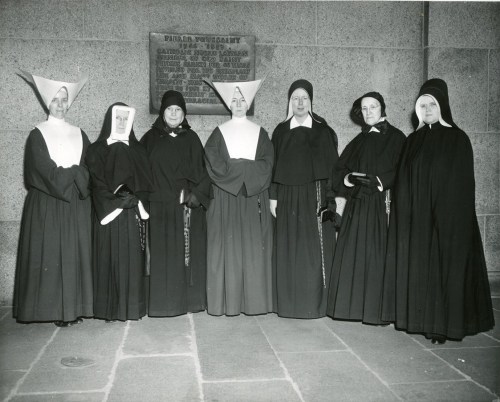
A meeting of the Sisters of Charity Federation, sometime after 1953, in front of the plaque to Pierre at Old St. Patrick’s Cathedral.
In 1990, for his role in helping the Catholic Charities of the city survive in their early days, Toussaint was re-interred to the crypt of St. Patrick’s Cathedral. He is the only layperson so honored. He was declared venerable in 1996. The Pierre Toussaint Guild and Office of Black Ministry of the New York Archdiocese actively engages in charity and sponsorship projects that they believe Toussaint would support today.
Historic Frederick, the seat of Frederick County, Maryland, is just a short trip down US-15 from the archives in Emmitsburg. The second largest city in the state, this year marks the 275th anniversary of Frederick’s founding in 1745, and its proximity to the Sisters’ community in Emmitsburg has proven significant to the many contributions of the Sisters throughout the years to this beautiful city.
The history of the community in Frederick dates to the first trip that Elizabeth Ann Seton made to Emmitsburg in 1809, when she and the first band of Sisters passed through the town on their three-week wagon trip to the Stone House on the banks of Tom’s Creek.
The first and only formal mission operated by the Sisters of Charity of St. Joseph’s in Frederick was at St. John’s School and Asylum, attached to St. John’s Church on 2nd Street. At the invitation of the Jesuit pastor of St. John’s Church, Rev. John McElroy, S.J., the sisters were invited to open a much-needed school for girls. The mission in Frederick began when Sister Margaret George and Sister Rosalia Green left Emmitsburg on Christmas Eve 1824; a week later, on January 3, 1925, Frederick’s first school opened with 47 students.
The free school would grow, eventually opening a pay school in 1830 that included boarders and offering classes on religion for the children of enslaved persons in the area. All students, regardless of status, would freely interact with one another under the tutelage of the Sisters.
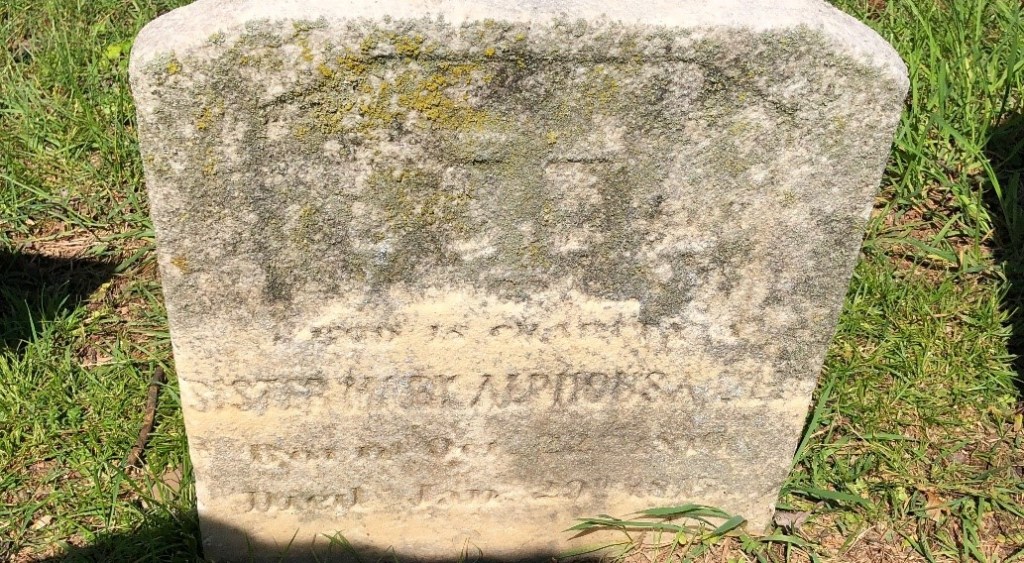
Faded tombstone of Sister Mary Alphonsa Lilly in old St. John’s Cemetery in Frederick, a native of Frederick who was recommended to the community by Father McElroy
The document that the Daughters’ archivists call “The Frederick Diary” contains the account of Sister Margaret George from the night the two Sisters left Emmitsburg in 1824 through April of 1832. She writes of their Christmas Eve departure, arriving late on Christmas Eve, being received by Father McElroy, and attending midnight Mass, before taking the next week to prepare for their first classes.
Like St. Joseph’s Academy in Emmitsburg, Sister Margaret noted that the school would not be just a school for Catholics. On the school’s first day, Sister Margaret wrote that one-third of the children were Protestants; by 1826, it was two-thirds Protestant. Amongst Frederick’s “Clustered Spires” skyline – where the tallest structures are the steeples and bell towers of the churches – St. John’s still stands out as the lone Catholic tower. However, the Sisters didn’t see their duties as being exclusive to any religion; for them, the children were simply those who “could not make a figure or work a sum” (Sister Margaret George, “The Frederick Diary,” 2-3). Their historical accounts note that, by running a free school, they encountered hostility from other churches and Ladies’ societies at the new competition.
The school’s opening was announced in the newspaper with the following:
This school will be opened on Monday next, the 3rd of January under the direction of two Sisters of Charity from Emmitsburg. Female children of every Religious Denomination will be admitted free of expenses and will be taught Reading, Arithmetic, English grammar and plain Needlework. For admittance apply to John McElroy Rector of St. John’s Church. (“Historical Account, December 23, 1824, 11-6-20(2) #2)
In March of 1825, construction on a school structure of their own began by a team of Irish laborers, which they moved into in September 1825. In 1826, they started the orphan asylum in the same building.
In 1830, a pay school opened; one with a lower tuition and more convenient, less rural location than St. Joseph’s up in Emmitsburg. The Sisters would continue to rely on donations to fund the school for the free students but could now provide a quality education at an affordable rate to a whole new set of students. The Frederick-St. John’s collection also contains original correspondence that further tracks day to day events of the school, along with original pupil lists and finance books throughout the 1830s and early 1840s.
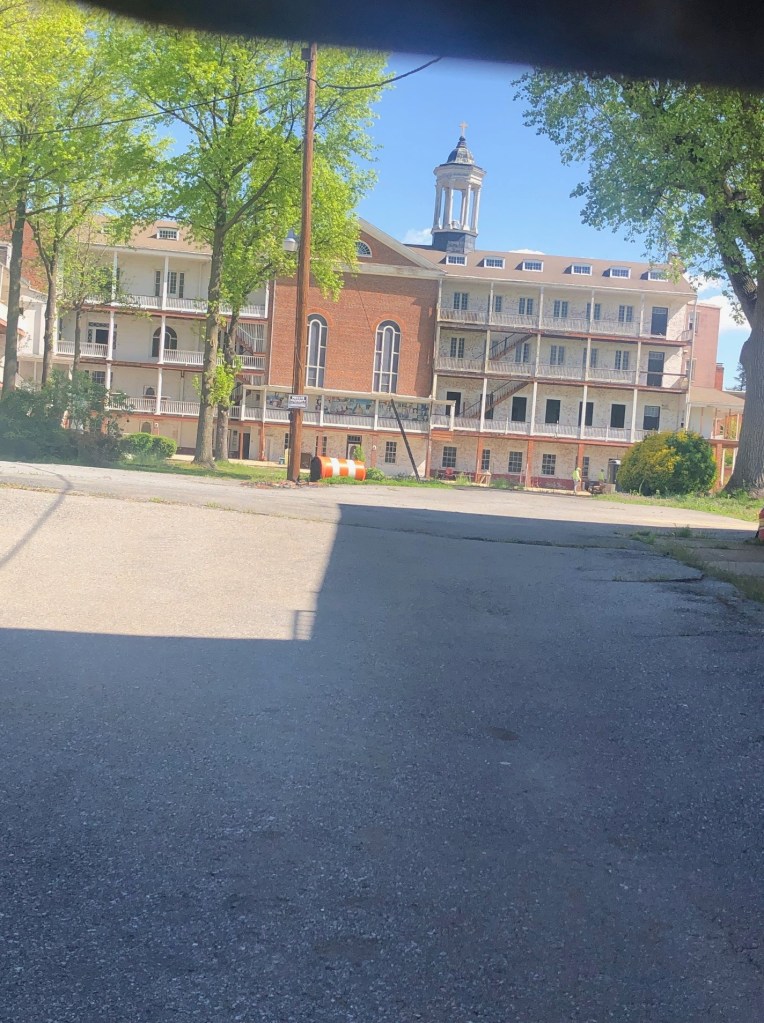
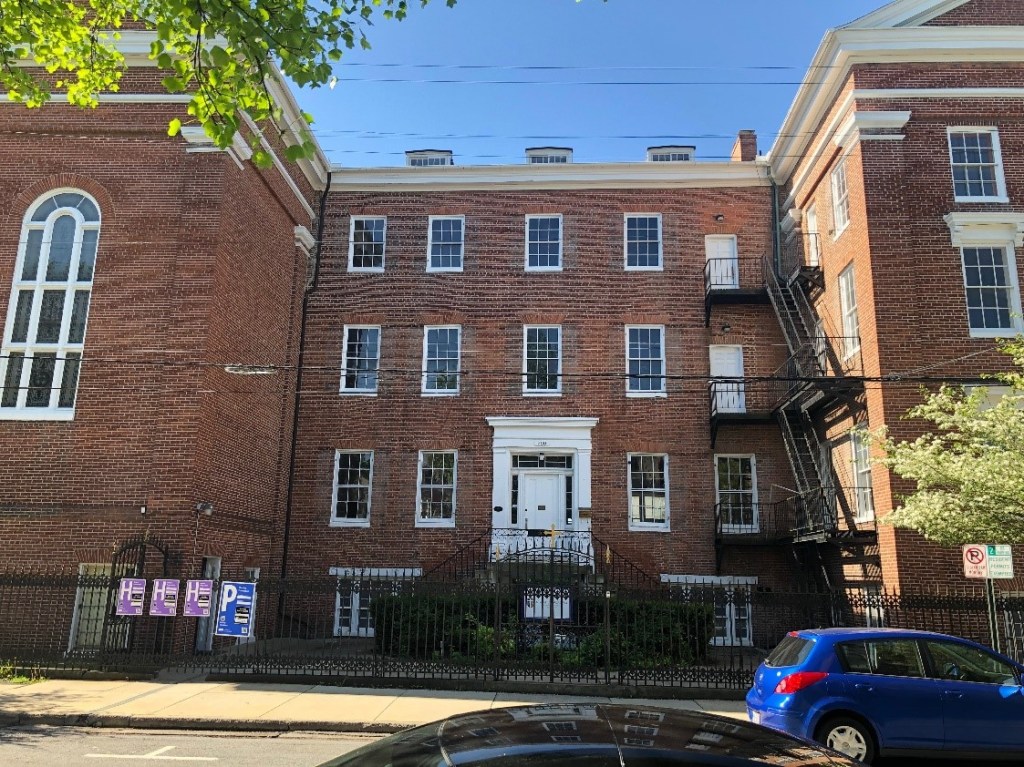
Back structure of the Vistation Academy on Church Street
Late on the night of June 8th, 1845, the wooden structure of the School caught fire. Firefighters rushed to the scene, but a long drought meant that there was little water to put out the fire; there was only enough to contain it from engulfing the rest of the block. There was significant anti-Catholicism in the City at that time, and it remains unknown whether the fire was accidental or purposefully set, although a Sister’s account says that she “will not permit myself to believe it. If there be a bare possibility of ‘accident’ in the matter, I should incline to believe it, rather than admit our city was disgraced by the presence of such a monster” (“Historical Sketch,” 11-6-20(2) #30). Thankfully, the wooden structure was empty in the middle of the night; students and Sisters were safely asleep in the stronger, more modern brick structure that housed them. The structure survived, but with damage to the roof and cupola.
The cost of the fire and rebuilding made the Frederick mission unsustainable for the Sisters of Charity. In 1846, the institution was transferred to the Order of the Visitation of Holy Mary, better known as the Visitation Sisters. To this day, the site is known as the Visitation Academy, down the street from the modern St. John’s church, which is virtually across the street from its original location.
The back courtyard and convent of the Visitation Academy, structurally unchanged in 170 years
The Frederick-St. John’s is valuable to researchers interested in the history of Frederick, the history of education in the early Republic, and to genealogists of the Frederick County area, as the collection contains many of the local children and families. Sister Margaret George went on to become the foundress of the Sisters of Charity of Cincinnati.
The history of the community in Frederick City picks up during the Civil War. Now known as the Daughters of Charity of St. Vincent de Paul (following the merger of the Sisters of Charity of Joseph’s with the Paris, France, community in 1850), the Daughters had become known for their nursing abilities, and had specifically been requested by the head Medical Authority of the “United States General Hospital” – then and now known informally as the Hessian Barracks, after the German mercenaries who had occupied the structure during the American Revolution – in 1862.
The City of Frederick was often noted as “One vast hospital,” and changed hands between the Union and Confederate troops multiple times. While many Protestant soldiers went into the hospital with either some lingering or overt anti-Catholic sentiment, the Daughters’ compassion, ability, and concern for their well-being often won soldiers over. Accounts also noted that doctors were usually accepting and happy to see the Daughters from day 1.
On September 5, 1862, the Union army left the city and evacuated their patients. The Daughters serving there met Confederate commanders as they walked in the door. Seeing the men in need of assistance and regardless of whose side they had served on during the war, the Daughters continued with their duties. This caused a conflict, as the Daughters were on the Union payroll as nurses. The chief Union doctor on duty made an arrangement – when the Union army returned to the city (which he expected to be soon), the same quality of care would be kept up. On September 12, the entire ritual repeated itself, and the city was back in Union hands.
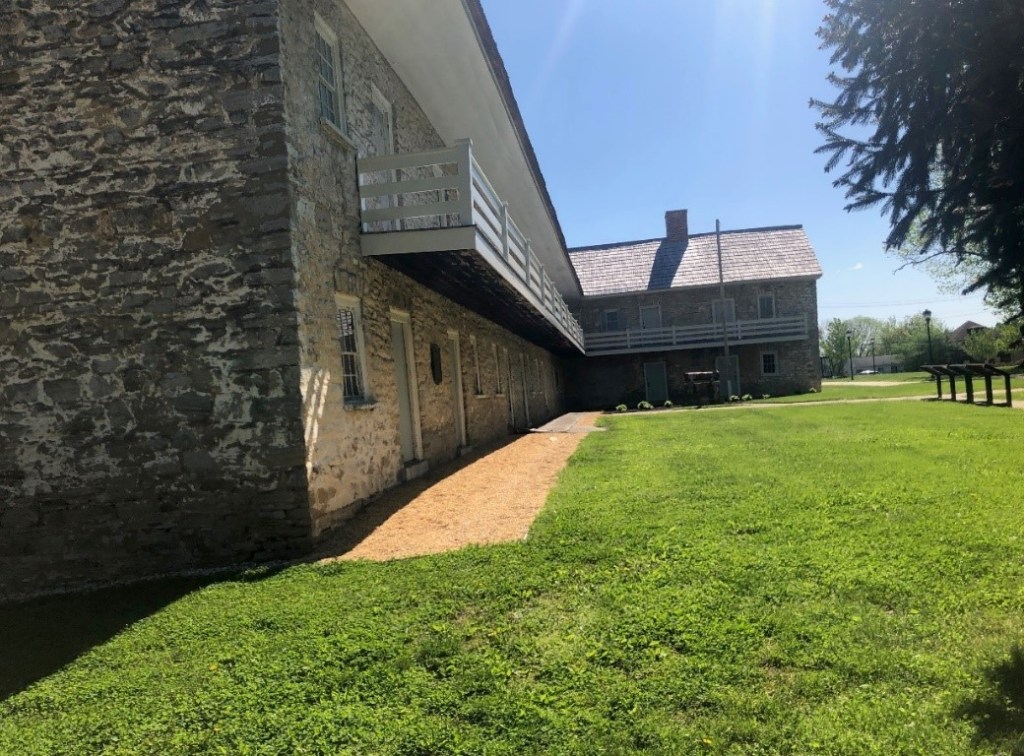
The Hessian Barracks on the campus of the Maryland School for the Deaf
The Daughters personally met General McClellan at the Hospital in the days before Antietam. The Unions soldiers wounded here on the bloodiest day in American history, were evacuated to nearby Frederick, just 30 miles away. The soldiers came under the Daughters care at the “old” Visitation Academy, now a makeshift field hospital.
The Hessian Barracks remain standing, today on the grounds of the Maryland School for the Deaf in the South End of Frederick. The Daughters’ work at the site is appropriately commemorated with historical markers and guides.
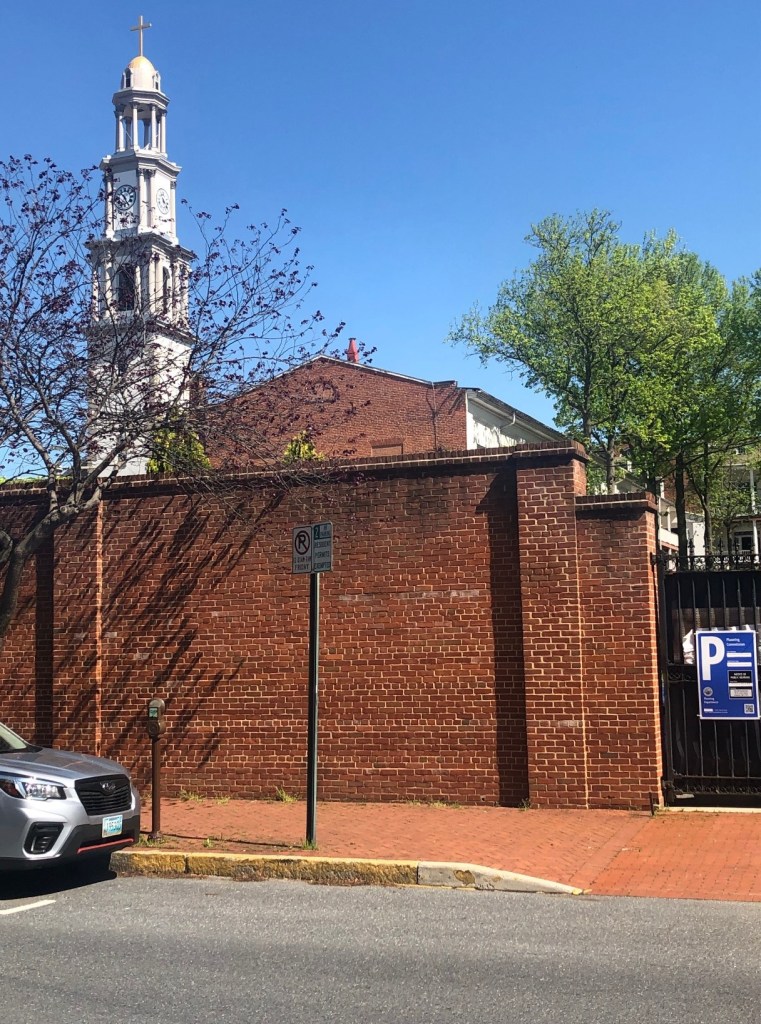
The Visitation Academy remains standing; the school was staffed by the Visitation Sisters until 2005, and the school only closed completely in 2016. The backyard and convent portion of the structure – the Visitation Sisters are cloistered – remains virtually unchanged since its rebuilding after the fire. There are many debates and discussions in the City of what will become of the historic structure, although vast portions of it remain protected from destruction or too many structural changes as part of the Frederick Town Historic District.
Visitation Academy behind the locked, wrought-iron gate
The gate and wall of the Visitation convent, with the tower of St. John’s Church nearby








 docarchivesblog.org