This article originally appeared in the Spring 2026 edition of ‘Faith Afire’, a publication of the Daughters of Charity, Province of St. Louise in the United States. The full edition can be found here: https://issuu.com/daughtersofcharity/docs/faith_afire_-_spring_2026
With the start of the United States Semiquincentennial year, more easily pronounced as the 250th year, we thought it would be fun to look at Mother Seton and her relationship with the Founders. She was born nine months after the Boston Tea Party, and most of her childhood years were spent in the part of New York City and the Hudson Valley that were occupied by British forces. During the height of her family’s wealth and status, she lived directly in the midst of the new federal government’s infrastructure on Wall Street, barely a block from Federal Hall. Her father grew up with John Jay in New Rochelle, the future diplomat and first Chief Justice of the Supreme Court. In fact, her father, as the appointed health officer for the city when Jay became Governor, was friendly with many of the early founders, particularly those from New York, despite having fought directly against them in the American Revolution as a surgeon for Admiral Richard Howe.
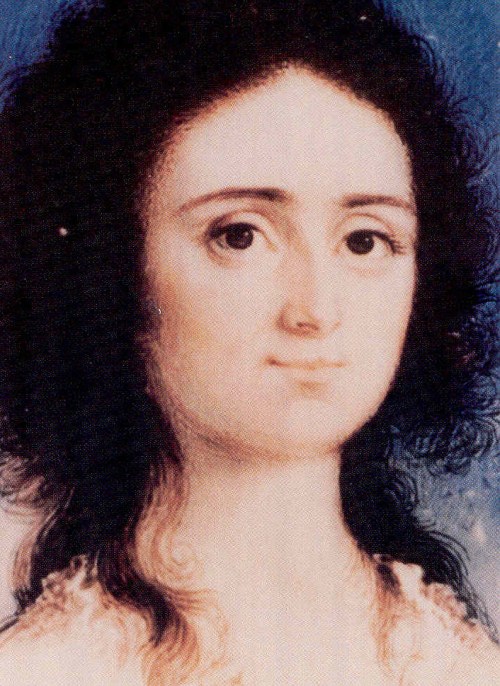
While Elizabeth would have been familiar with the works, acts, and exploits of far more individuals, and likely met at least a few more of them during her New York years, these are the Founders who definitively survived in the archival record of Mother Seton. While her personal life ended up consuming her as the Seton Maitland Shipping Company failed, her husband’s health deteriorated, and her children needed a home and to be fed, she grew more and more distant from the seat of federal power. She eventually left for Italy for a time to try and restore her husband’s health. Following her return to the U.S., she left New York forever in 1808 to begin the journey of her religious vocation. Still, she remained attuned to the growing pains of a young country whose earliest days she was fortunate enough to witness up close and personal.
Alexander Hamilton
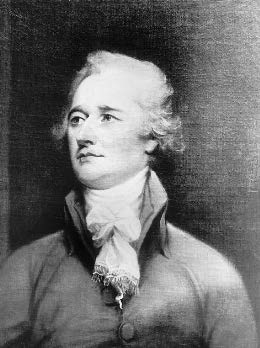
After the death of her husband while in Italy in 1803, Elizabeth and her children began staying with friends and family members farther and farther uptown. In 1804, she was living in what is today Tribeca, near the World Trade Center site. She was far away from the heart of the city on Wall Street, but still near enough to hear the bells of Trinity ring for one of the most important funerals of early American history – that of Alexander Hamilton.
Elizabeth certainly would have known Hamilton from her neighborhood, as they both lived on Wall Street. He would have walked past her house to go to work at Federal Hall. Hamilton’s own correspondence have mentions of meetings with her father. In a draft to her cousin-through-marriage John Wilkes on July 14, 1804, she described a visit of his brother Charles. Elizabeth described him as “really so affected at the tolling of the Bells for the death of poor Hamilton that he could scarcely command himself – how much you will be distressed at this melancholy event – the circumstances of which are really too bad to think of.” Hamilton had died as a result of his duel with Vice President Aaron Burr, and Elizabeth clearly feels the weight of this event. Charles Wilkes, and indeed Elizabeth’s father-in-law, had both worked for the Bank of New York, of which Hamilton was one of the founding shareholders.
George Washington
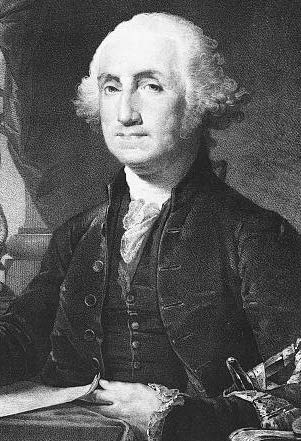
This one is a little more ambiguous, as we are not totally sure if this record refers to William Seton, Elizabeth’s husband, or William Seton, her father-in-law. By the time of George Washington’s second inauguration in 1793, the federal government had
relocated to Philadelphia. Nonetheless, balls for Washington’s birthday in 1793 were held in all major cities of the country, including New York. One of the four listed “Managers” of his ball was William M. Seton. If the organizer was William Seton the Husband, then Elizabeth would have certainly attended, and maybe even have done so if her father-in-law was an organizer.
Washington himself would only have attended in Philadelphia, however.
Benjamin Franklin
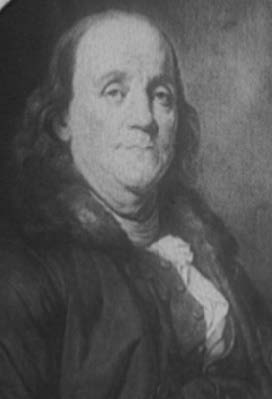
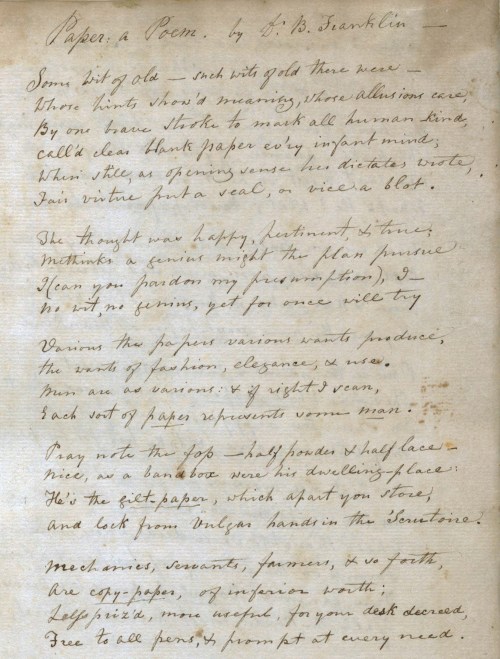
Dr. Richard Bayley inculcated a love of knowledge in Elizabeth. His background in science and medicine put him in touch with the works of the most famous American of his day, Dr. Benjamin Franklin. When Elizabeth was young, she copied passages into a Commonplace book. Among them are two works of Dr. Franklin’s: “Paper: a Poem” and a schoolgirl’s biography of the scientist, including his work on electricity and lightning. The former showed Franklin’s wit as a wordsmith that made him endlessly quotable in Poor Richard’s Almanack. The latter gave him credit for his work in establishing circulating libraries and fire companies in the American Colonies. They are estimated to be written in the early 1790s.
Elizabeth Schuyler-Hamilton and the Orphan Asylum Society
“Can I show you what I’m proudest of? (The Orphanage) / I established the first private orphanage in New York City (The Orphanage) / I help to raise hundreds of children / I get to see them growing up.”
— Excerpt from the song, “Who Lives, Who Dies, Who Tells Your Story,” sung by Elizabeth Schuyler-Hamilton in the musical Hamilton.
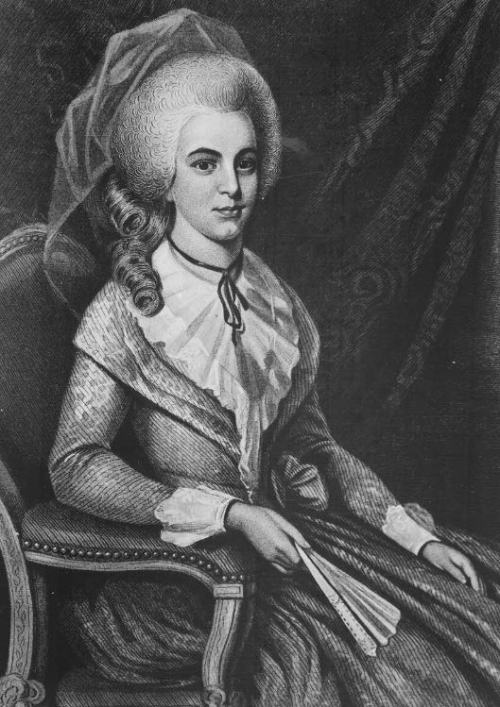
Four women — Isabella Graham, Joanna Bethune, Sarah Hoffman, and Elizabeth Schuyler-Hamilton — founded the Orphan Asylum Society of the City of New York, which cared for children without regard to religion, in direct contrast to the standard mode of the day. As cofounder Isabella Graham described it:
“…We had planned a society for the relief of poor widows with small children, [and] the success has been beyond our most sanguine expectations. We have now a hundred and ninety subscribers; at three dollars a year, and nearly a thousand dollars in donations. We have spent three hundred dollars this winter, and nearly all upon worthy objects. The poor increase fast: emigrants from all quarters flock to us, and when they come they must not be allowed to die for want.”
Elizabeth describes her first meeting with the women of the Society, likely in late 1798, which shows her growth and concern for the poor early in her life, writing:
“I have met Mrs. Platt at the Widows Society, and she showed me so many of her sweet Fascinations, that I shall be ten times more careful than ever I was, not to form opinions of people at a distance…”
Elizabeth worked alongside these women as Treasurer of the organization, a post she held until she left for Italy with her husband. Elizabeth Schuyler-Hamilton was, of course, Alexander Hamilton’s wife and early crafter of the American Revolutionary narrative. Many Founding Mothers from the New York contingency were involved with the Asylum as well, including Mary Stevens-Livingston, wife of Robert Livingston and daughter of Continental Congressman John Stevens. Today, the Orphan Home continues to operate as the Graham-Windham organization.
Robert Livingston
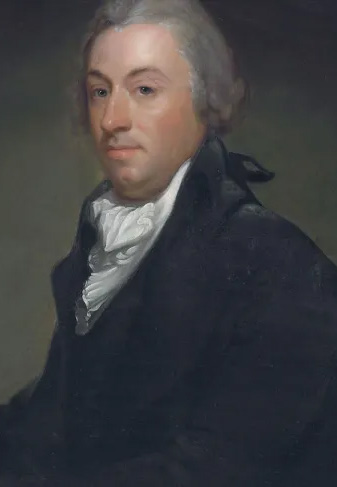
Robert Livingston was one of the hands that edited Thomas Jefferson’s original Declaration of Independence draft into the final version that the Continental Congress approved, although the State of New York recalled him before he could sign the final
document. Before the establishment of relatively similar Supreme Courts across the individual States, New York’s government
had an office called the New York Court of Chancery, headed by the Chancellor. It was in his role in this office, equivalent to a State Chief Justice, that Livingston administered the first Oath of Office to George Washington in New York City.
Livingston also makes an appearance in the Seton correspondence as a friend of the Bayleys and Setons. Writing to Eliza Sadler (a longtime friend and confidante of Elizabeth Ann) from Long Island on June 18, 1797, she describes visiting the Linvingstons for coffee:
“You may probably recollect a House of Mr. Livingston’s on the East river [sic] opposite the Battery and facing Governors Island [today part of Brooklyn] … we have as yet received nothing but pleasure and comfort from our Establishment and the offering of fresh Bread, Butter, and coffee to the dear well beloved Father of us, after a fatiguing sail in his Health Office employment is a satisfaction of which you can well form an Estimate.”
This pleasant occasion occurred in spite of Livingston running against Governor Jay, Dr. Bayley’s childhood friend who had appointed him to his health officer position.
Thomas Jefferson
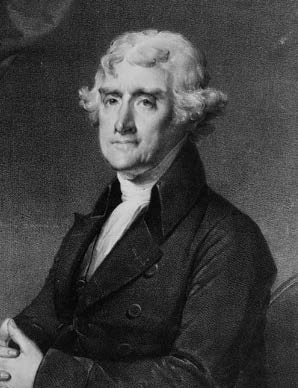
We do not know if Mother Seton ever met Thomas Jefferson in person, but letters of hers mentioning Jefferson give a rare glimpse into her political views in the early republic. In a letter to her son, William, in April 1816, she tells him “how you will be shocked to see Mr. Jefferson turned to a Joh[n] Gilpin in the papers.” John Gilpin was a comic character of nursery rhymes and children’s stories, who was always depicted on horseback, losing his wig and his hat in misadventures. In the year 1816, Jefferson had been out of office for almost seven years. Although we do not know exactly what she was referring to in the papers, she obviously disagreed with the way he was being portrayed, and writes “you must allow there is something revolting to see a chief Magistrate treated so – I do not understand politics or characters but have a horror to find our Government can countenance such a press freedom – the children read it to me for fun in our recreation, but my Bayley blood mounted. Do, my Son reflect, and be moderate in these case[s] – always take the side of Order.”
While this does not necessarily show her approval or disapproval of Jefferson, it seems that she believes there are some reasonable limits on speech and press freedoms, and that Jefferson was treated unfairly. This may be ironic, as Jefferson himself had signed the repeal of the Alien and Sedition Acts, openly encouraging more press criticism of public figures. This was apparently a common sentiment of her family and her father as the phrase “my Bayley blood mounted” implies. Whether the characterization of Jefferson is based on political matters – he was still an active figure in intellectual life in his retirement – or on personal matters, such as his aging, are also unclear.
Henry Knox
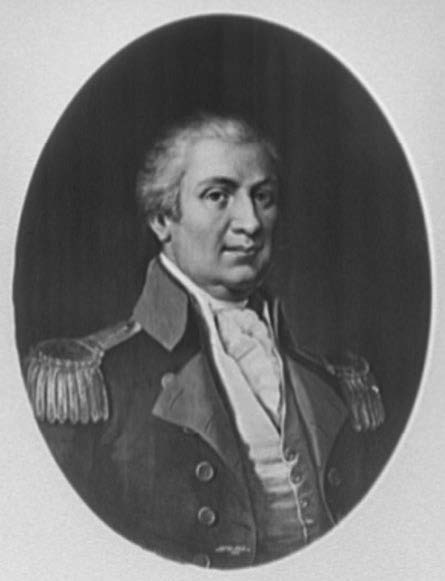
In a letter to Antonio Filicchi on September 12, 1804, bidding Filicchi an enjoyable trip with good hospitality in Boston, Elizabeth includes a note, “If you should meet with General Knox, his wife or daughter [ , ] they were kind friends to me before my connection with Seton [her marriage].” It is less clear from where Elizabeth knew the Knoxes. Henry was on hand with Washington when the American forces ousted the British from New York City after the Peace of Paris in 1783. Elizabeth perhaps shared some affinity with Lucy Flucker Knox, his wife, who, like her, had parents who were employed as Loyalists in the British military. The couple and their family lived in New York City during the New York era of the federal government before moving to
Philadelphia and then back to their native Massachusetts.
Charles Carroll of Carrollton
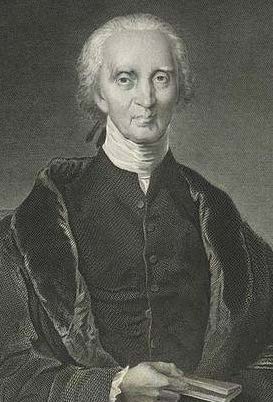
Fittingly, the last American Founder in the Province’s Archival record comes from references to St. Joseph’s Academy in Emmitsburg. Elizabeth Ann’s time as Director of the School and Community were the last era of her life, and Charles Carroll of
Carrollton was the last living member of the Founders, the longest surviving signer of the Declaration of Independence. As a delegate from Maryland, he was the only Catholic to sign the document, and several of his grandchildren were students of Mother Seton.
For example, we have record in April 1819 of Elizabeth encouraging young Elizabeth Harper to maintain concern for her extended family and write her grand Papa, “who wrote her last week that Emily and Robert were quite well, sweet Em’s eyes quite restored.” Robert Harper wrote frequent stories “some beautiful place of Papa’s which he copied after Grand Paps’s,” apparently referring to Charles’s home at Carrollton Manor.
Carrollton Manor is now a historic site, which in its active use was apparently visited by Catherine Seton, Elizabeth’s daughter in her young adult years. On May 8, 1820, Elizabeth informed her son that his sister was “now at the Manor with Catons, Carrolls and Harpers [who] caress her as much as is good for the dear creature you may depend, and her letters are so expressive of her pleasure and enjoyment that I cannot but be happy even in our separation.”
In addition to Charles Carroll, you may recognize the last name as that of the Bishop who first approved the community. Indeed, although technically not a Founding Father, John Carroll was the Bishop of Baltimore and frequent contact of Mother Seton, as
well as a cousin to Charles Carroll.
Mother Seton’s life doesn’t detail stores of the heroics of the Revolutionary War. But she lived her life in the middle of a new era in North America and moved in all the networks – even after founding her Community – that placed her in contact with many of the movers and shakers of such events!


