Rosalie Rendu: The Person Behind the Actions

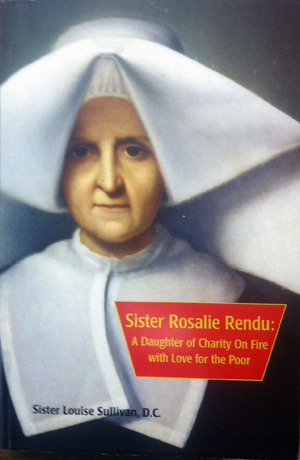
Sister Rosalie Rendu: A Daughter of Charity on Fire with Love for the Poor, by Sr. Louise Sullivan, available for research in the Provincial Archives.

Sister Rosalie Rendu: A Daughter of Charity On Fire with Love for the Poor, by Sr. Louise Sullivan, available for research in the Provincial Archives.

by Sister Louise Sullivan, D.C.

February 7 is the feast day of Blessed Sister Rosalie Rendu. The text below is taken from chapters 1 and 2 of Sister Louise Sullivan, Sister Rosalie Rendu: A Daughter of Charity on Fire with Love for the Poor (Chicago: Vincentian Studies Institute, 2006). Additional text and illustrations can be found in this presentation from FAMVIN.

As with St. Vincent and St. Louise, or in studying the life of any saint, there is the danger of losing the person behind the actions, of being so dazzled by the magnitude of their achievements that the spiritual and human motor that drove them disappears. Such has often been the case with Sister Rosalie. Sister Rosalie, the woman, is far more and far less than the sum of her actions. If she has something to say to the men and women of today, it is precisely because of the person she became by the grace of God and by her response to that grace. Who was this simple country girl who became a symbol of Our Lord’s loving mercy toward those who are poor? What would move her to dedicate her life in service of others, in contradiction to the values of our world?

Jeanne-Marie spent her early years in a profoundly Christian atmosphere. However, this did not mean that she was an excessively pious child. Armand de Melun expands upon the portrait, describing his friend as a little girl who was “pretty… energetic… impulsive… and strong-willed… mischievous… born with a lively and impetuous temperament.” He tells us that she “tried to get into all the mischief she could so that there would not be any left for her when she reached the age of reason.” He added that she “teased her sisters, liked to throw their dolls into the neighboring garden, was more interested in butterflies than in books, and that in games she was neither the last nor the least aggressive.”

Oral tradition in the village, passed on by one of Sister Rosalie’s relatives, had it that the little girl was “lively, even mischievous, but that she was very devout, had a very kind heart and already, as a child, was moved to assist those who were poor.” In fact, Rosalie’s “extreme sensitivity” to the needs of those living in poverty, and in all other things for that matter, is considered by those who study her life as “unquestionably Sister Rosalie’s dominant character trait.” Her sensitivity manifested itself early and would remain all her life, sometimes causing her suffering. Yet this trait would eventually lead her to become “a resting place where the whole weary world could lay its burdens.”

While few biographers or witnesses during the Cause of Beatification speak explicitly of Sister Rosalie’s faith, it is evident that her love for those who were poor was rooted in faith and in the conviction that it was God whom she found in them. That faith was born in the rugged terrain of the Jura Mountains in a home where God was the center and where one had to be willing to risk all, even one’s life, to remain faithful.

As Mélanie pointed out, Jeanne-Marie was “highly intelligent” but her education was essentially practical. She could read and write but spelling was largely beyond her and her correspondence reflects this. She spelled phonetically while expressing herself clearly, forcefully, and even with a certain grace. This combination of example and practical training developed her innate “bon sens paysan” or common sense, as well as her good humor. These qualities of common sense and good humor had characterized Saint Vincent de Paul before her and, as in his case, would serve her well later on.

Shortly after Sister Rosalie’s death, her cousin, Eugene Rendu, wrote of her:

“Sister Rosalie’s principal character trait was her common sense, pushed to the point of genius. Those who did not have the honor of meeting her often could not appreciate her moral supremacy and, if I may say so, her ministry to souls, which the confidence that she evoked from all gave her. Persons came from far and wide seeking her advice.”

Later in life, Rosalie seemed able to deal with everyone (whether rich or poor) equally; she became well-known and won over many hearts, even those who were apathetic or anticlerical.

Jeanne-Marie Rendu left her village for the first time, at the age of thirteen or fourteen, to begin a journey that would eventually lead her to Paris. In perhaps the most miserable slum of the French capital she would devote fifty years of her life in the struggle to bring relief to a whole gamut of human suffering … As she left the Jura for the last time, Jeanne-Marie Rendu had within her those qualities that would one day make her the “Apostle of the Mouffetard area”.

1 Comment

Filed under Feast Days, Rosalie Rendu

DCs and Presidents – William Henry Harrison, 1841

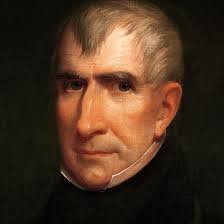
William Henry Harrison

William Henry Harrison, President, 1841


(Passages from Provincial Annals used with permission of Daughters of Charity Provincial Archives)
We continue our series on Presidents and Daughters of Charity with William Henry Harrison, who visited Emmitsburg while campaigning for the presidency in 1836. While in Emmitsburg, he visited the Central House, met with the Sisters and the students at St. Joseph’s Academy, and gave an address. The Provincial Annals of 1836 record some of the details. In the account below, “Mother” refers to Mother Rose White, then the superior of the Sisters of Charity of St. Joseph’s.

11th. Tuesday. Rev. Mr. Souring said mass. Gen. Wm Harrison, one of the candidates for the Presidency visited the Institution. Mother had received a note in the morning making know the Gen.’s arrival in town and requesting that attention would be paid him. She accordingly wrote a note inviting him to the vale. He came about 11 o’clock accompanied by Mr. Montgomery, nephew of the last Mrs. Montgomery (of happy memory) of Philadelphia. Mr. McDonough of Phil., Drs. Taney and Dr. Fields of Emmitsburg and others whose names are not know. Mother accompanied them to every part of both houses. They entered the study room, the last were the children were all assembled as the Gen. entered. Miss M. Malloy played Hail Columbia as soon as he was seated. Mrs. C. Schnabel addressed him, the piece having been composed about two hours previous by Rev. Mr. Souring. The Gen. replied, all parties appeared pleased. At parting Mother presented him with a miniature picture of the Redeemer, which had been painted by Miss Miriam Walley. The General proceeded to the Mountain where he was received with every mark of esteem & respect. He as well as those who accompanied him dined there, before the Gen. left St. Joseph’s. He granted holiday to the children.

An address of Welcome to Gen. Wm. H. Harrison by the Srs. of St. Joseph’s, Emmitsburg, MD.
Welcome! Brave Champion of thy Country’s rights! Hope of the friendly in the hour of need; when wild the cry of war arose, how off hast thou undaunted, braved the battle’s shock, to aid, defend, preserve thy Country’s Sons.

Thrice Welcome to our Vale within its calm retreat. Still lives the Memory of deeds of worth achieved by Thee! and those of kindred Soul, who for Columbia’s fame, and liberty & peace have fought and bled Health, Peach & Honor, on their steps attend and may Country’s smile & blessing be to thee but the sweet promise of that perfect bliss with which may Heaven crown our country’s serves, the great, the good, the generous, and brave.
St. Joseph’s, Oct. 11th, 1836

Harrison lost the election of 1836 to Martin Van Buren. Harrison ran again for President in 1840 and won. He did not visit Emmitsburg during the 1840 presidential race, but the Provincial Annals from 1841 do include a passing reference to his inauguration on March 4.

Thursday 4. The great day of inauguration of “Harrison” far removed from the scene of action, we happily are preserved from any of its noise and bustle.

The Provincial Annals also contain a reference to Harrison’s sudden death, barely one month after taking office.

6th, Tuesday. Rain till mass time. Rev. Mr. Flaut said mass. Cleared up at 8. Putting up scaffolding round the steeple for the printers. Report says President Harrison is dead, is it true? …

The report was true. Harrison had caught a cold that developed into pneumonia and had died on April 4, the first President to die while in office. Harrison’s one month in office is still the shortest term of any President.

2 Comments

Filed under U.S. Presidents, William Henry Harrison

The Changing Face of the New York Foundling

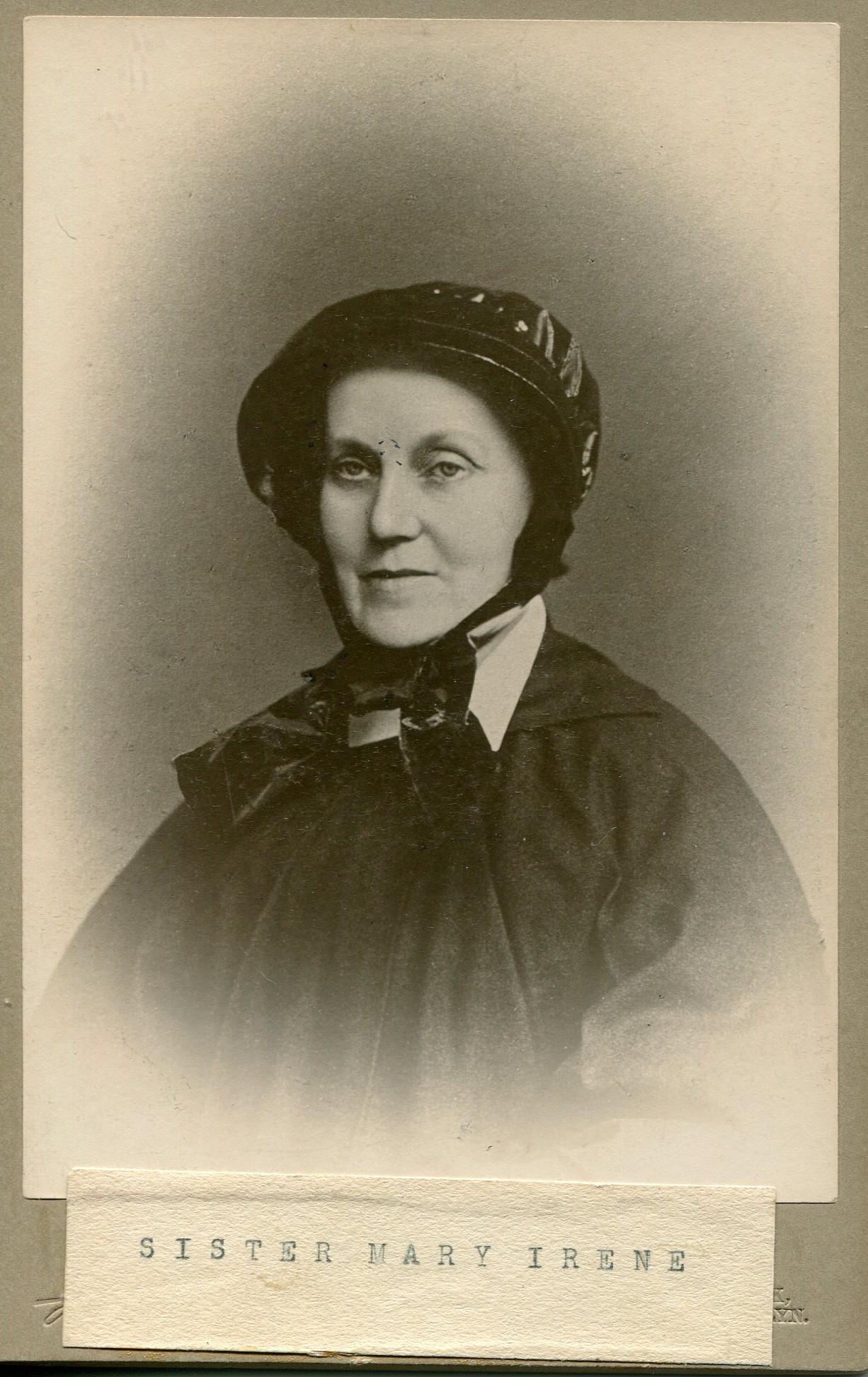
Sr. Mary Irene Fitzgibbon

Sister Mary Irene Fitzgibbon (Courtesy of Sisters of Charity of New York)

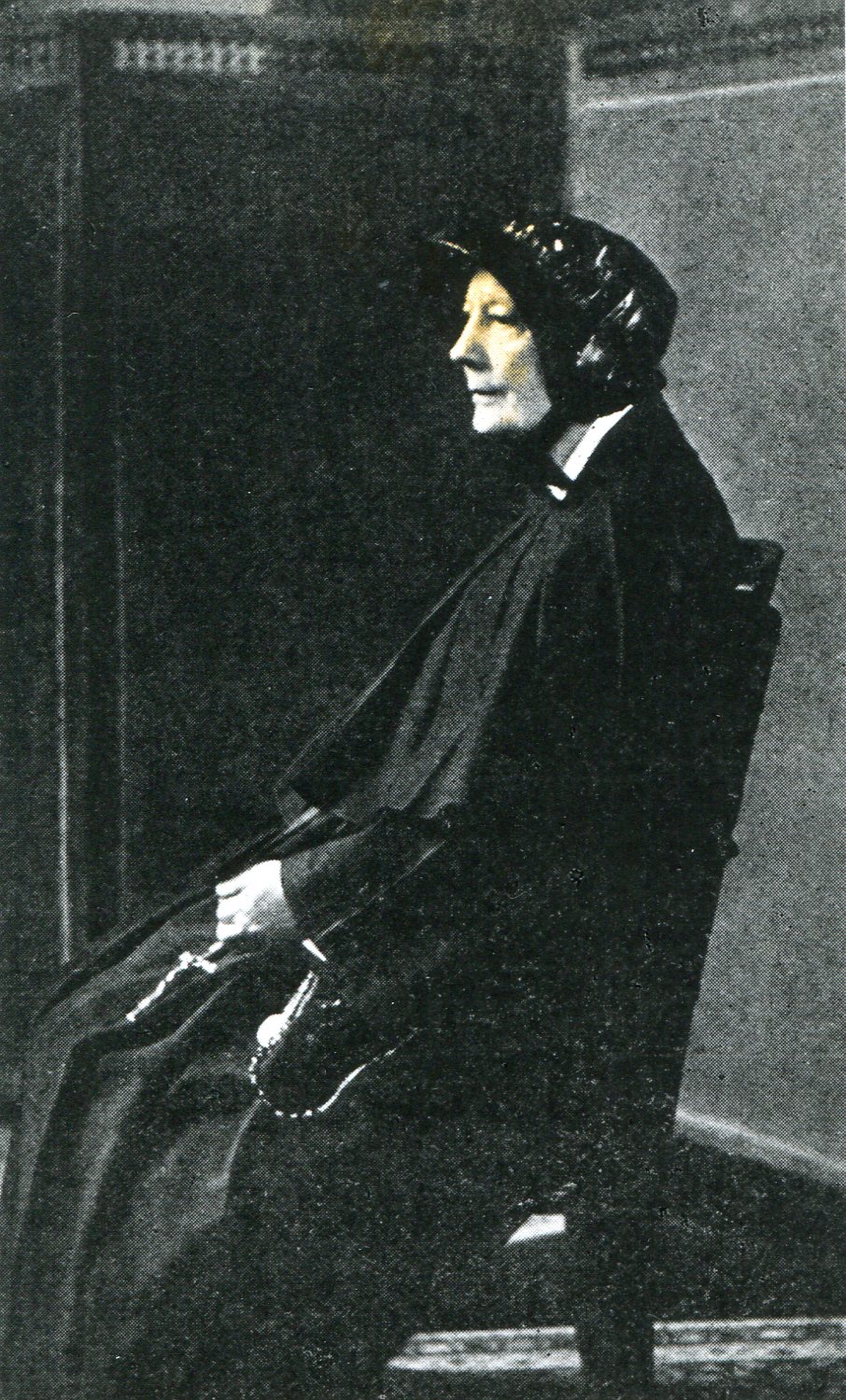
Sister Teresa Vincent McCrystal

Sister Teresa Vincent McCrystal (Courtesy of Sisters of Charity of New York)


Guest post from the Sisters of Charity of St. Vincent de Paul of New York

In 1869, because of an overwhelming number of orphans and abandoned children, Sisters Mary Irene Fitzgibbon and Teresa Vincent McCrystal asked permission to open another orphanage. Sister Mary Jerome Ely granted this permission and gave them what money she had in her pocket – five dollars. Sisters Irene and Teresa sought a suitable building, and what became known as the New York Foundling Hospital was begun. Now, 145 years later, though in a radically different form from 1869, the New York Foundling programs still flourish.

Over the years the location of the NY Foundling has changed several times as has its main purpose. Originally begun to care for orphans and place children with foster or adoptive families, many other programs have grown from the original seeds. The Orphan Trains helped to place children in Catholic homes throughout the country until approximately 1920. Sisters accompanied the children to their new homes and checked on their progress and care. Many other children were adopted by more local families.

Over the years, as needs changed, new programs were begun. One such program for pregnant teens provided shelter, healthcare and parenting education for young unwed mothers. Some kept their babies, while many others gave them up for adoption. A live-in program for older children who had not been adopted was begun where the children would go out to local schools during the day, but return “home” for supervised study, recreation, and the learning of life and social skills. As time went on, and numbers grew, group homes were begun in the outer boroughs of NYC and Westchester.
In the 1970s it was noted that some children were not “adoptable” and the Health Related Facility was formed. Here, disabled children – both physically and mentally – lived with the very best of care and attention. When the need for their education became apparent, all of the necessary steps to begin a school for them were taken. These programs, now called the Elizabeth Seton Pediatric Center and the John A. Coleman School, have separated from the NY Foundling and have become separate incorporated organizations – still sponsored by the Sisters of Charity of New York.
Another excellent program, begun by Dr. Vincent Fontana, is the Crisis Nursery. Here respite is provided for young children of distraught parents who fear they might abuse their child. The child can be placed here for a short period of time while the mother finds the means to “get herself together.” When it is deemed that the home environment is “safe,” the child will be returned to the mother. If it seems unsafe for the child to return home, other solutions for placement will be sought.

From a real need, the New York Foundling Hospital was “born.” Throughout the years there have been many turns in the road. New needs were recognized and new solutions were sought. Though the Foundling of today may look very different from that of 1869, the Sisters of Charity of New York continue to answer the call to help with any needs in their power.

img050
img051

2 Comments

Filed under Sisters of Charity Federation, Sisters of Charity of New York