
This is a guest blog post by Nathaniel Lee Rush Bentz, a graduating Senior at Mount St. Mary’s University, class of 2020. He has been an intern with the Daughters of Charity Provincial Archives for the last year.
Before the COVID-19 pandemic caused lockdowns and major distancing between everyone, there was one activity that I was honored to be a part of at the Seton Shrine Provincial Archives. I was invited to attend the Frederick Historic Sites Consortium Meeting of March 11, 2020. The attendees were historians who helped run historical organizations across Frederick County, Maryland. These organizations included historical societies, churches, heritage organizations, and museums. They were all incredibly nice and welcoming to everyone in the meeting and tried to keep things positive during the troubling times.
The meeting itself went smoothly with avid participation from everybody. There were discussions about how to handle COVID-19 concerns. One important fact that I took away that dealt with the pandemic was allowing artifacts and documents used by researchers to stay out “to allow virus to dissipate.” To the tiniest detail, these historians worked together so they can still care for both the artifacts and its researchers due to a global pandemic, which made me realize how important these meetings are in general. Moreover, from this meeting of historical institution leaders, I learned that they truly act as a team. A family. They make sure everything is okay with each other’s events and exhibits, want to gain insight on what the exhibits and events are about, and offer their constructive criticism and positive feedback about the events they were able to visit.
What I was surprised at was how many different factors were involved in running successful exhibits and hosting events around the site of their historical organizations. Some of the fascinating events I heard about include: the Frederick City 275 Anniversary events, where there was going to be a decade-by-decade showcasing about the development and history of Frederick City, and there would have been a presentation to go along with the program; there was also the event known as, History Day, and there was going to be a theme “Breaking Barriers” on March 14, 2020. To handle this, there were discussions on safety, staff, gathering applicable materials to showcase for the exhibit, and even how the other organizations can contribute to help improve the exhibit or event. This made a fellow history scholar like myself excited, because I got to see what kinds of collaborative environments and friendships I hope to gain as I continue my pathway in the archive and history fields.
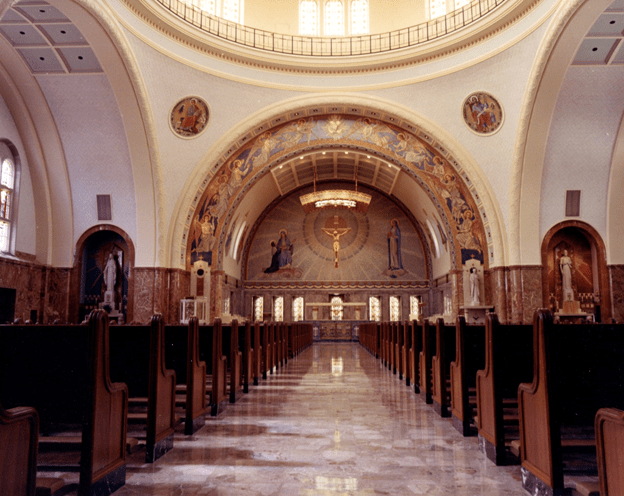
What happened after the meeting was an amazing learning experience. I was able to join a long tour of the Seton Shrine’s historical sites, this incorporated historic houses where St. Elizabeth Ann Seton resided and began her school, as well as the Courtyard of the old Provincial House, and, lastly, the beautiful Basilica. The tour was conducted by guides from the National Shrine of St. Elizabeth Ann Seton; everyone was nice and teaching me how great it is to have these meetings in the sites where other members work. Members can learn more about what their peers are preserving for the benefit of others. Another reason why the tour was grand was that I got to explore a wider scope of the historical sites on campus beyond the Archives. Learning more history about the person which the Seton Shrine is revolved around is enlightening. Overall, I gained insight on how well-organized historical societies are and how much they support one another by choosing to get together through these meetings about any updates with their organizations and societies. The people were fun to talk to and listen to when they discussed pertinent matters. Also, I gained another opportunity to be with people who have the same history-based interests as myself. This meeting and tour were rare opportunities that I am grateful to have been invited to before the COVID-19 pandemic became too strenuous for everyone.






 docarchivesblog.org