Beatification of Rosalie Rendu, November 9, 2003

Rosalie Rendu

Blessed Sister Rosalie Rendu, D.C.

(Images of Rosalie Rendu and Rosalie Rendu beatification program, 2003, used with permission of Daughters of Charity Provincial Archives)
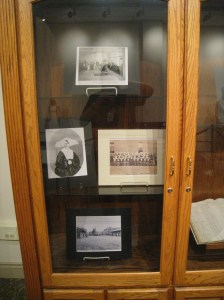
November 9, 2013 marks the 10th anniversary of the beatification of Sister Rosalie Rendu, D.C., whose image is seen on the left. The image on the right is the cover of the program from Sister Rosalie’s beatification ceremony. The biography of her life which follows is based on the biography which appeared in the beatification program.

Jeanne Marie Rendu was born September 9, 1786, the eldest of four girls. Her Godfather by proxy was Jacques Emery, a family friend and future Superior General of the Sulpicians in Paris. She was three years old when the Revolution broke out in France. From 1790 it was compulsory for the clergy to take an oath of support for the civil Constitution. Numerous priests refused to take this oath. They were chased from their parishes, some were put to death, and others had to hide to escape their pursuers. The Rendu family home became a refuge for these priests. It was in this atmosphere of faith, always exposed to the dangers of denunciation, that Jeanne Marie was educated. She would make her first communion one night by candlelight in the basement of her home. This environment forged her character.

Rendu beatification program, cover

Cover of the program from Sister Rosalie’s beatification, November 9, 2003


The Daughters of Charity had been suppressed during the French Revolution; the Seminary (novitiate) re-opened in December of 1800. In May of 1802 Jeanne Marie Rendu arrived at the Mother House to begin her initial formation as a Daughter of Charity. When she completed her Seminary formation, she was given the community name of Sister Rosalie and sent to the Mouffetard District, where she served for the next 54 years. In 1815 Sister Rosalie was made the Superior of the Daughters of Charity house at Mouffetard.

The Mouffetard District was one of the poorest districts in all of Paris, and Sister Rosalie served the poor in many ways. She visited the sick and poor. She opened a free clinic and pharmacy. She opened a free school and taught reading and catechism in the school. She started a child care center, a youth club for young workers, and a home for the elderly. Thanks to Sister Rosalie, a whole network of charitable services were put in place to serve the poor.

Her reputation grew quickly in all the districts of Paris and beyond. Sister Rosalie knew how to surround herself with dedicated collaborators who supported her work both with their time and with funds. These collaborators included bishops, clergy, the Ambassador of Spain, and even Emperor Napoleon III. Students from the universities in Paris sought Sister Rosalie out as well; one of those students was Frederic Ozanam, who would go on to found the Society of St. Vincent de Paul. During Sister Rosalie’s years in the Mouffetard District, there were many hardships, among them civil uprisings in 1830 and 1848 and cholera epidemics in 1832 and 1846; during the cholera epidemics she was often seen picking up dead bodies in the streets.

Sister Rosalie Rendu died on February 7, 1856. Her death was mourned throughout Paris. Thousands attended her funeral at St. Medard Church and her burial at Montparnasse Cemetery. Today her tomb is marked by a cross bearing the inscription, “To Sister Rosalie, from her grateful friends, the rich and the poor.”

Leave a comment

Filed under Rosalie Rendu

New Exhibits, November-December 2013

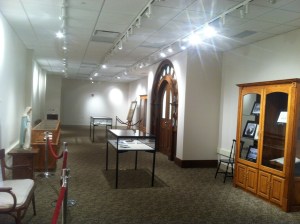
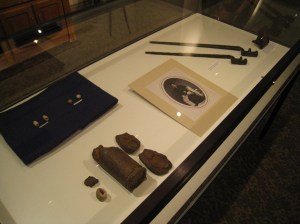
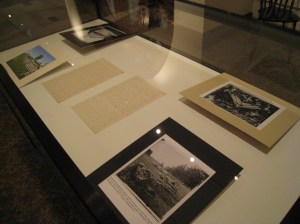
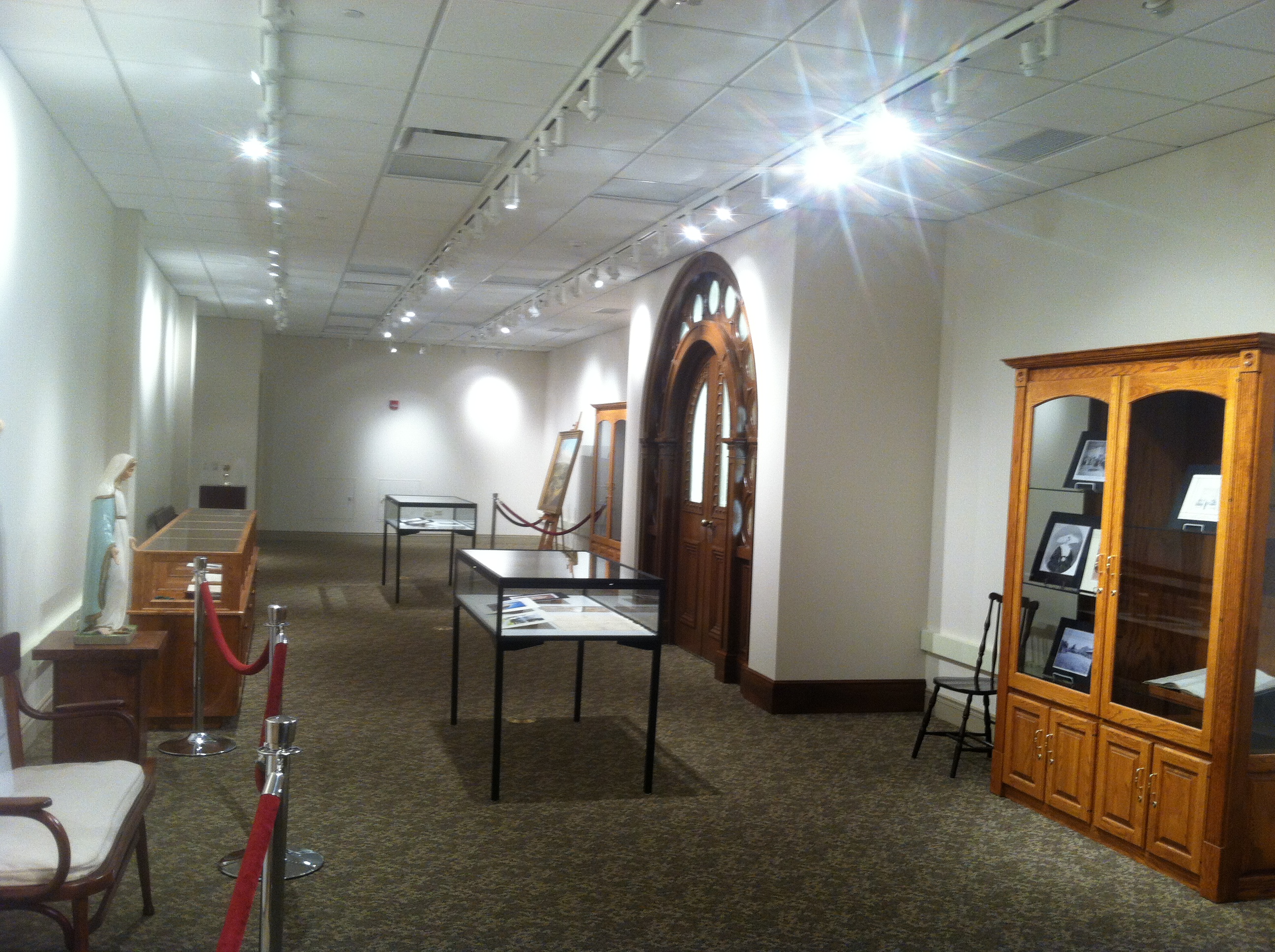
New exhibits in the Provincial Archives November and December 2013. OH MARY CONCEIVED WITHOUT SIN and CALLED TO BEAR THE LOVE OF GOD

The Daughters of Charity celebrate three important feast days at the end of November: feast of Our Lady of the Miraculous Medal (Nov. 27), feast of Catherine Laboure (Nov. 28), and anniversary of the founding of the Daughters of Charity in 1633 (Nov. 29). We’ve mounted two new exhibits to celebrate these three feast days. They are:

“Oh Mary Conceived Without Sin”: Catherine Laboure and the Miraculous Medal

“Called to Bear the Love of God”: The Foundation of the Daughters of Charity

Both exhibits will be on display in Gallery 2 of the Provincial Archives, November 7 through December 31.

2 Comments

Filed under Announcements, Exhibits

DC Ministries, St. Vincent Orphan Asylum, Philadelphia

St. Vincent Orphan Asylum Philadelphia

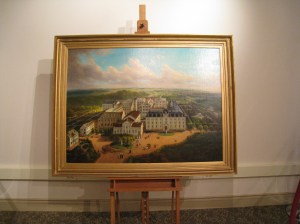
Architect’s drawing of St. Vincent Orphan Asylum, Philadelphia, 1920

(Photo of St. Vincent’s Orphan Asylum, Philadelphia, 1920, used with permission of the Daughters of Charity Provincial Archives)

St. Vincent’s Orphan Asylum in Philadelphia was begun by a small group of laymen in 1850. Bishop John Neumann requested Daughters of Charity to take over the work in 1855 and in 1858 St. Vincent Orphan Asylum was incorporated in the State of Pennsylvania. In 1920 the orphanage moved into this building, located on a 33 acre site at Garrett Road and Lansdowne Avenue. Completion of the building was delayed by the outbreak of World War I; the dedication of the building took place on May 9, 1920. The dedication ceremonies were witnessed by an estimated 116,000 spectators, making it the largest gathering in the state of Pennsylvania up to that time.

By the late 1940s, St. Vincent’s housed approximately 90 boys ages 4-7 and 350 girls. Over its first century more than 13,500 children lived there. However, a new trend towards foster home care for dependent children was gradually reducing the number of children cared for at St. Vincent’s, reflecting a pattern seen all over the country. Meanwhile there was an increased need for additional facilities for the ever growing Catholic High School population.

In 1953 children living at St. Vincent’s were transferred to Our Lady of the Way, St. David’s and the orphanage was converted to Archbishop Prendergast High School for Boys. Upon the completion of Msgr. Banner High School in 1956, the building became Archbishop Prendegast High School for Girls.
In 1958 St. Vincent’s Home merged with Gonzaga Home in Germantown.

3 Comments

Filed under Ministries, Social Work