Category Archives: Baltimore

Feast of St. Joseph

(portions of the text below are based on research by Sr. Betty Ann McNeil, D.C.)

March 19 marks the feast of Saint Joseph, a saint who was especially dear to the heart of Elizabeth Ann Seton.

During her year in Baltimore, Elizabeth discovered the significance of Saint Joseph. The Sulpicians obtained the first statue of Joseph for their newly dedicated chapel at Saint Mary’s Seminary (Paca Street). Saint Joseph was also gaining prominence on the liturgical calendar. No doubt his guardianship of the Child Jesus must have been consoling to Mrs. Seton as a widow and sole parent of five young children. According to tradition, Mother Seton named the area where she settled Saint Joseph’s Valley, and the area is still informally known by that name.

Mother Seton originally planned to name her community Sisters of Saint Joseph. After arriving in Emmitsburg she chose the title Sisters of Charity of Saint Joseph’s. This legal name was used by the Province of Emmitsburg until 2011 when it combined with three other former provinces to create today’s Province of St. Louise.

The building known today as the White House was built by Mother Seton in 1810 and originally known as Saint Joseph’s House. It was the Mother House for her community until ca. 1845. Saint Joseph’s Central House, headquarters from 1845-1964, is now the site of the National Emergency Training Center, part of FEMA. Headquarters for the Emmitsburg Province from 1964 to 2011 was St. Joseph’s Provincial House, the building we occupy today. The building, known today as St. Joseph House, houses the Provincial Archives, the National Shrine of St. Elizabeth Ann Seton, active communities of Daughters of Charity, retirement facilities for Daughters and lay people. The life of Saint Joseph is depicted in stained glass windows located in the foyer of the Basilica at the Seton Shrine.

Mother Seton instructed Saint Joseph’s Class, comprising pupils from the Emmitsburg area. Her school, founded 1810, became Saint Joseph’s Academy. The current Mother Seton School traces its roots to her establishment. Developing from Saint Joseph’s Academy, Saint Joseph College was a liberal arts college for women which chartered in 1902 and served until 1973. The college grounds are now part of the National Emergency Training Center.

On the feast of St. Joseph in 1885, a fire broke out at St. Joseph’s Central House. Seminarians from Mount St. Mary’s, along with townspeople and fire companies, worked together to put out the fire. Since then, seminarians from the Mount have been invited to a special dinner on the campus on St. Joseph’s feast day in gratitude for their help in putting out the 1885 fire. Learn more about the 1885 fire

Leave a comment

Filed under Emmitsburg, Feast Days, Paca Street, Sisters of Charity of St. Joseph's, Sulpicians

Star Spangled Banner 200th Anniversary

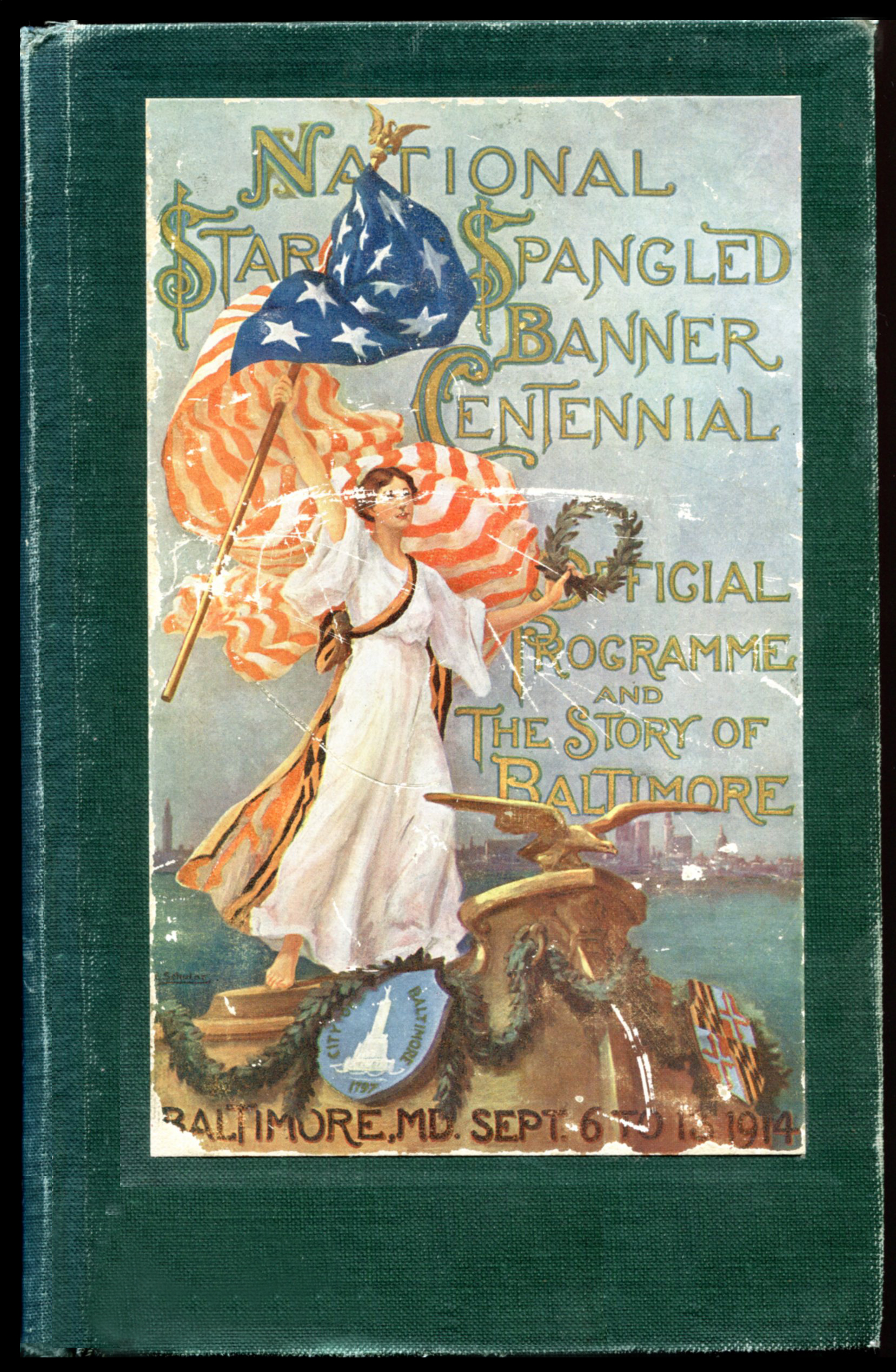
Program for the celebration of the 100th anniverary of the Star Spangled Banner, 1914 (courtesy Daughters of Charity Provincial Archives)

Program for the celebration of the 100th anniverary of the Star Spangled Banner, 1914 (courtesy Daughters of Charity Provincial Archives)

On September 14, 1814, U.S. soldiers at Baltimore’s Fort McHenry raised a huge American flag to celebrate a crucial victory over British forces during the War of 1812. The sight of those “broad stripes and bright stars” inspired Francis Scott Key to write a song that eventually became the United States national anthem. The image above shows the cover from the program for the celebration marking the centennial of the battle at Fort McHenry and the writing of The Star Spangled Banner, a copy of which can be found in our library collection.

We consulted with Loras Schissel, of the Music Division of the Library of Congress, concerning the history of The Star Spangled Banner and of To Anacreon in Heaven, the tune on which The Star Spangled Banner is based. According to Schissel, The Star Spangled Banner, as sung, is the only national anthem that ends in a question mark. It’s not a drinking song, but was written as a “club” song for the Anacreontics and was writen to show off the good voice and range of one of the singers.

In 1931 President Herbert Hoover signed legislation which made the Star Spangled Banner the United States’ official national anthem. When Irving Berlin was asked if he thought God Bless America should be national anthem, he said, “we already have one … and it’s a darn good one.”

Learn more about the history of the Star Spangled Banner in this website from the Smithsonian’s National Museum of American History.

Leave a comment

Filed under Baltimore, U.S. History

“A mortuary chapel of gothic”

(All images and passage from the Provincial Annals of 1873 used with permission of Daughters of Charity Provincial Archives)

History is everywhere on the Emmitsburg Campus. The Daughters of Charity (and the Sisters of Charity of St. Joseph’s before them) have occupied this site continuously for over 200 years. The sense of history is especially evident in the two beautiful cemetery plots on the campus grounds. The older of the two is known as St. Joseph’s Cemetery. The site for St. Joseph’s Cemetery was selected soon after Mother Seton and her companions arrived in Emmitsburg. Their superior, Fr. William DuBourg, having just given a retreat for the Sisters, invited them to walk the grounds and select a place for a burial ground and to select locations for their own burials. The journal of Mother Rose White records that the Sisters chose a spot under some of the beautiful trees that then adorned the grounds. St. Joseph’s Cemetery still resides on the original site chosen by Mother Seton and her early companions.

The Provincial Annals from October 1873 noted:

If there is a spot on earth that tells of rest when the life work is over, it is the graveyard at St. Joseph’s: a mortuary chapel of gothic would mark the spot where Mother Seton sleeps, awaiting the day wherein shall be rewarded the works that followed her. Around her lie the first companions of her charity, and again, other crosses tell of succeeding generations of the great family, whose privilege it was to have been gathered in, from afar & near, amid the many works of the Sisters of Charity, to rest under the old oaks of the graveyard.

St. Joseph's Cemetery ca. 1890s

St. Joseph’s Cemetery, ca. 1890s

St. Joseph's  Cemetery 2014

St. Joseph’s Cemetery, 2014


Seen here are photographs of St. Joseph’s Cemetery. When the earlier picture was taken the Mortuary Chapel, built in the 1840s, did indeed house the remains of Mother Seton. Today her remains reside in the Basilica at the National Shrine of Saint Elizabeth Ann Seton. You can see in the later picture some of the succeeding generations of Sisters who now rest here.

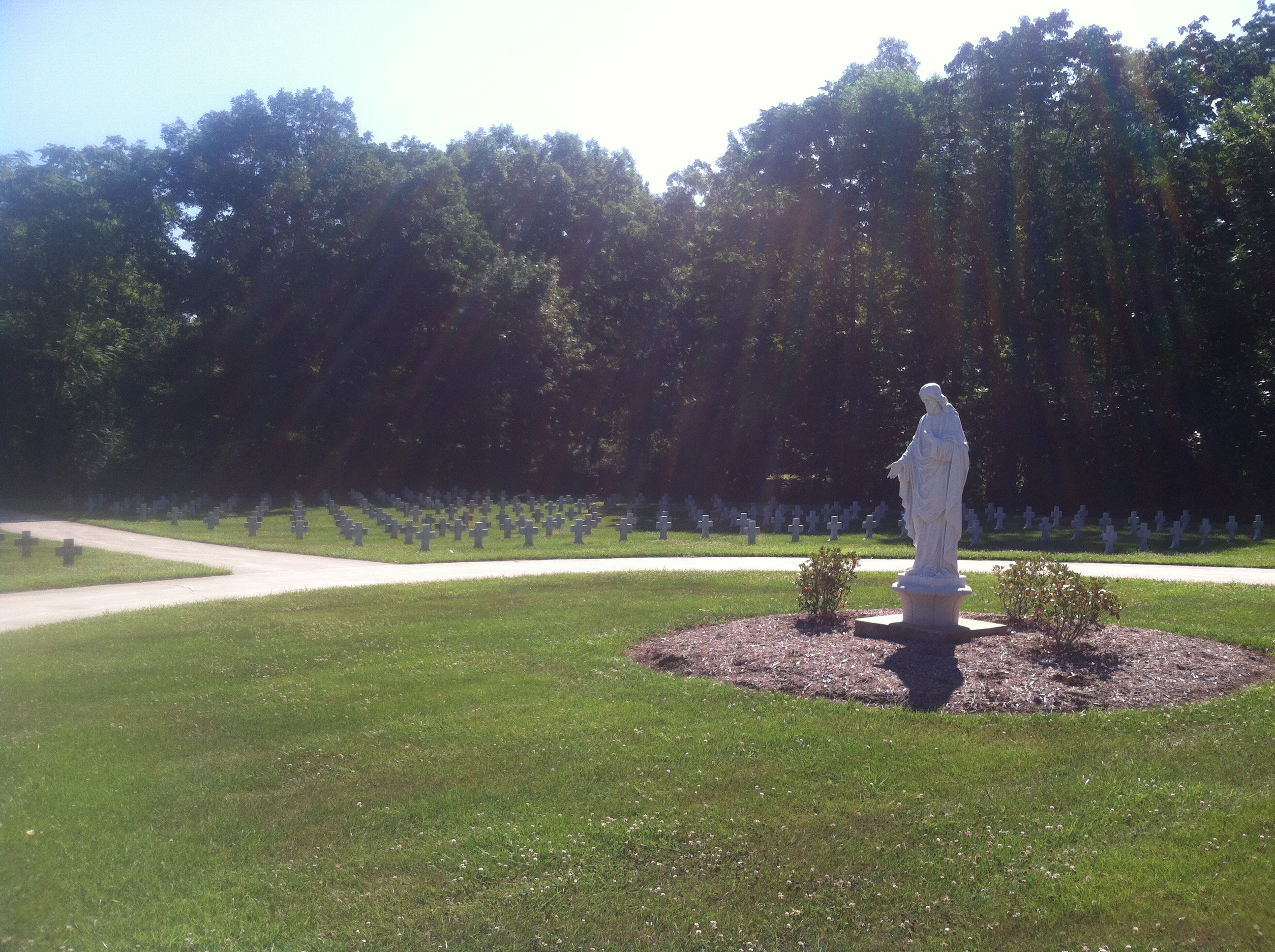
In 1972, the Daughters of Charity closed the Villa St. Michael, a residential facility in Baltimore which cared for retired Sisters, and transferred the care of Senior Sisters to Emmitsburg. The bodies of all of the Sisters buried at the Villa in Baltimore were transferred to a new plot on the Emmitsburg campus, located east of St. Joseph’s Cemetery. This plot, known as Sacred Heart Cemetery, is where Sisters are buried today.

Sacred Heart Cemetery

Sacred Heart Cemetery

Sacred Heart Cemetery

Sacred Heart Cemetery

1 Comment

Filed under Baltimore, Deceased Sisters, Elizabeth Ann Seton, Emmitsburg, Sisters of Charity of St. Joseph's