Tag Archives: Archives

New Accession: Carney Hospital, Boston

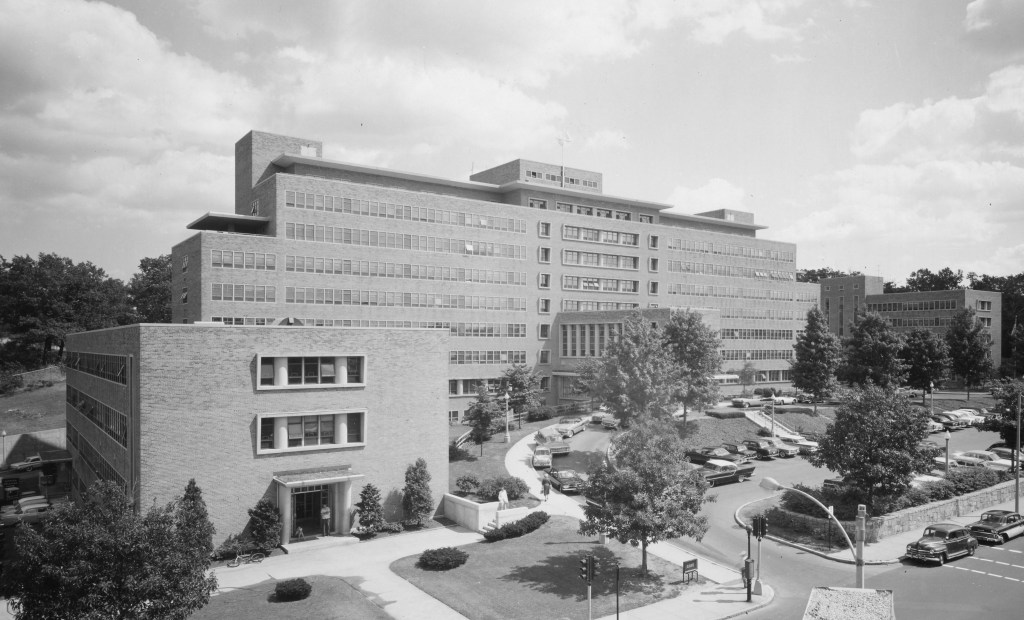
Carney Hospital, circa late 1950s

Materials that are no longer in active or even inactive use by members of the community or at sponsored works of the community steadily make their way to the archives. Sometimes, however, materials get left behind. Sometimes they get left behind for a LONG time.

The Daughters of Charity sponsored and operated Carney Hospital from 1863 until 1997, when administration was transferred to the non-profit health care system run by the Archdiocese of Boston, Caritas Christi.

Before leaving Carney Hospital, Sister De Chantal La Row, the last Daughter of Charity Administrator of the Andrew Carney Hospital, supervised the process of organizing and labelling the collection of archive boxes and memorabilia for shipment. The Archdiocese, through Caritas Christi, was instructed to then ship the collection to The Provincial Archives of the Daughters of Charity for the Northeast Province, located at that time, in Albany, New York. In 2011, the entire archive of the Northeast Province was shipped to Emmitsburg, MD as part of the creation of the Province of St. Louise, including the Carney Hospital collection. It currently consists of 46 archival boxes, nearly 3 dozen oversized pieces, and nearly a dozen artifacts.

100th anniversary banquet of Carney Hospital, oversized and matted (and water damaged)

For reasons unknown, the entire collection never made its way to Albany, and several boxes of records got left behind. From 1997-2015, first Diane Loupo and then Ann Hart monitored the records as they traversed various storerooms around the Hospital, where they lived at the mercy of leaking pipes, hot Boston summers, cold Massachusetts winters, and poor ventilation. In 2018, Ann intervened before the garbage trucks could destroy the materials that never managed to make their way to Albany.

Binders of newspaper clippings from the new accession

About 18 months ago, Sister Maryadele Robinson, a Daughter of Charity for 37 years, who currently serves as Director Emeritus of Laboure Center in Boston, learned from about a room full of archival materials from Dr. James Morgan, the Chief of Cardiology at the now Steward Carney Hospital. They informed Emilia Pisani, archivist for Laboure Center, about the materials. These are the individuals, along with Ann Hart, to whom we at the Daughters of Charity owe a debt of gratitude as archivists and those concerned with preserving the history of the community.

On Friday, October 9, after a year and a half delayed by meetings, staff changes, and the logistics of a global pandemic, the material finally made it to Emmitsburg, all 157 boxes and items of it.
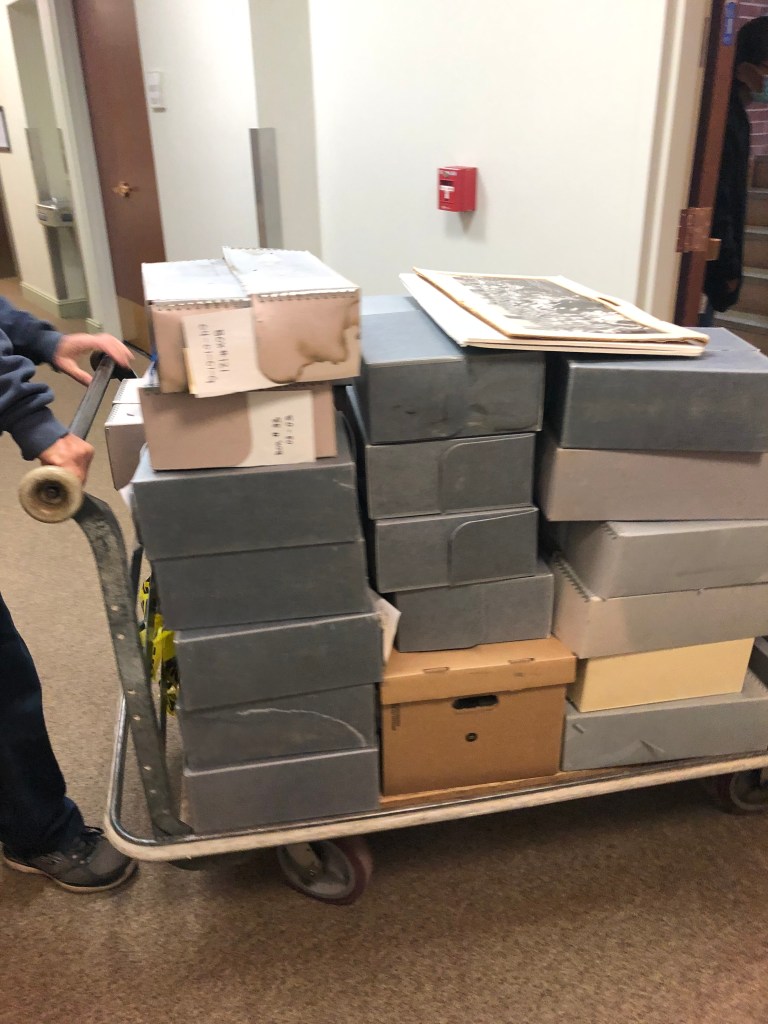
Moving the collection into quarantine

Emilia worked hundreds of hours to prepare an inventory of the materials, through acidic folders and deteriorating boxes. Thanks to the inventory that Emilia created, we can catch some glimpses of what is in the collection. The oldest materials date to 1850, although the bulk comes from the period of 1950-1997. Not only does this collection provide insight into the business operations of the hospital, but it also documents the surrounding community of Dorchester as population and demographics changed in the community over 150 years. It will also provide vital importance to genealogists researching family members who worked at the hospital, as these materials contain employee lists and roles that the archives had previously thought long lost. In fact, the overwhelming majority of the materials are, as far as we can tell now, original, worth preserving, and not duplicates of materials already in the archives.

After two weeks in quarantine, we have seen no signs of mold or pests, and we have allowed any chance of COVID on the boxes to die off. We may not get to processing this material for some time, but once we do, we will determine whether we can add this material to the current Carney collection — with a note documenting that it came long after the creation of the initial Carney collection, and with a note of thanks to everyone who made it possible — or if it warrants a complete re-processing of the collection.

Regardless, it has been a long process to acquire this material and begin to preserve it for the future, but even an initial glance shows that it will be worth it.

All 157 boxes and items in the quarantine space

The Daughters of Charity, particularly members of the archives staff, would like to thank Ann Hart, Diane Loupo, Dr. James Morgan, and Sister Maryadele Robinson for their devotion to the poor and to Carney over the years, and for their role in securing this collection. We would particularly like to thank Emilia Pisani, for everything she has done for the last 18 months (including input for this post). She has gone above and beyond anything we would have ever asked of her. When the COVID crisis has passed, she is welcome here in the archives, truly, at any time. Copies are on us.

2 Comments

Filed under Carney Hospital

Joining a Meeting of Historians

This is a guest blog post by Nathaniel Lee Rush Bentz, a graduating Senior at Mount St. Mary’s University, class of 2020. He has been an intern with the Daughters of Charity Provincial Archives for the last year.

Before the COVID-19 pandemic caused lockdowns and major distancing between everyone, there was one activity that I was honored to be a part of at the Seton Shrine Provincial Archives. I was invited to attend the Frederick Historic Sites Consortium Meeting of March 11, 2020. The attendees were historians who helped run historical organizations across Frederick County, Maryland.  These organizations included historical societies, churches, heritage organizations, and museums. They were all incredibly nice and welcoming to everyone in the meeting and tried to keep things positive during the troubling times.

The meeting itself went smoothly with avid participation from everybody. There were discussions about how to handle COVID-19 concerns. One important fact that I took away that dealt with the pandemic was allowing artifacts and documents used by researchers to stay out “to allow virus to dissipate.” To the tiniest detail, these historians worked together so they can still care for both the artifacts and its researchers due to a global pandemic, which made me realize how important these meetings are in general. Moreover, from this meeting of historical institution leaders, I learned that they truly act as a team. A family. They make sure everything is okay with each other’s events and exhibits, want to gain insight on what the exhibits and events are about, and offer their constructive criticism and positive feedback about the events they were able to visit.

What I was surprised at was how many different factors were involved in running successful exhibits and hosting events around the site of their historical organizations. Some of the fascinating events I heard about include: the Frederick City 275 Anniversary events, where there was going to be a decade-by-decade showcasing about the development and history of Frederick City, and there would have been a presentation to go along with the program; there was also the event known as, History Day, and there was going to be a theme “Breaking Barriers” on March 14, 2020. To handle this, there were discussions on safety, staff, gathering applicable materials to showcase for the exhibit, and even how the other organizations can contribute to help improve the exhibit or event. This made a fellow history scholar like myself excited, because I got to see what kinds of collaborative environments and friendships I hope to gain as I continue my pathway in the archive and history fields.

What happened after the meeting was an amazing learning experience. I was able to join a long tour of the Seton Shrine’s historical sites, this incorporated historic houses where St. Elizabeth Ann Seton resided and began her school, as well as the Courtyard of the old Provincial House, and, lastly, the beautiful Basilica. The tour was conducted by guides from the National Shrine of St. Elizabeth Ann Seton; everyone was nice and teaching me how great it is to have these meetings in the sites where other members work. Members can learn more about what their peers are preserving for the benefit of others. Another reason why the tour was grand was that I got to explore a wider scope of the historical sites on campus beyond the Archives. Learning more history about the person which the Seton Shrine is revolved around is enlightening. Overall, I gained insight on how well-organized historical societies are and how much they support one another by choosing to get together through these meetings about any updates with their organizations and societies. The people were fun to talk to and listen to when they discussed pertinent matters. Also, I gained another opportunity to be with people who have the same history-based interests as myself. This meeting and tour were rare opportunities that I am grateful to have been invited to before the COVID-19 pandemic became too strenuous for everyone.

Courtyard of the Emmitsburg campus, the former St. Joseph’s Provincial House
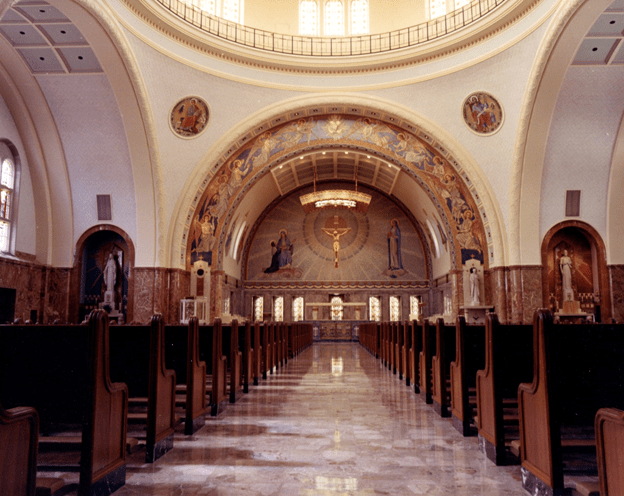
Basilica of Saint Elizabeth Ann Seton
Daughters of Charity Archives Entrance

Leave a comment

Filed under Frederick County, Maryland

An Update from the Archives during the COVID-19 Pandemic

For the safety of our staff and visitors, the Archives is currently closed to the public. And although a reopening date remains unknown, we look forward to welcoming visitors and researchers to our campus soon.

Meanwhile, Archives has been keeping busy! Requests have continued to come in from researchers, and while lay staff has been working remotely, the Sisters who live on campus have served as wonderful facilitators with the ability to scan a file or a folder in response to a request. Materials already digitized are easily accessible, and we can quickly forward on this material. For the more complicated request, we have compiled a running list that we will address and answer once back on campus. You may send requests to archives@doc.org

Under normal circumstances, archivists need access to the physical materials to do their work, which are safely kept in our lower level repository. Without access to these documents, we are somewhat hampered in addressing all needs. But Sisters still working in Archives on campus are adding materials to the digital collections, which in turn have become usable to researchers. Lay staff have also made the rare decision to allow a few materials, in good condition, to travel home with them, with the promise that they be kept safe from archival scourges such as wandering cats or open mugs of coffee that are prone to spill.

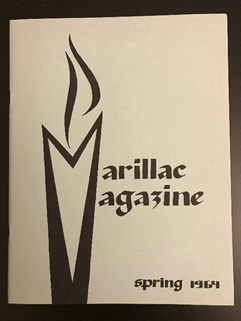
Other special projects currently underway include, 1) a staff member is creating an index for the newsletters and literary journals taken from Marillac College in St. Louis, the former college run by the Daughters of Charity exclusively for members of women’s religious communities. These newsletters serve as both campus newspaper and a place for commentary on the events of the world in the 1960s and 1970s as related by the women religious at the time.

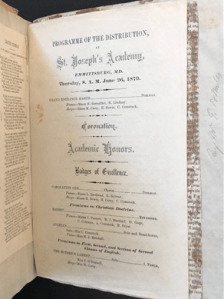
2) Staff members have been transcribing valuable historical materials, such as Sister Mary Raphael Smith’s scrapbook; a book that contains the writings of sisters and students of St. Joseph’s Academy and information on 50 years of community and school life during the 1800s.

3) We have also been busy creating indexes and transcriptions of some of our legacy oral history collections; the fascinating stories of the lives of Sisters and the times in which they lived and served.  Many of these histories were recorded on cassette tapes, and we have been working diligently in digitizing them to ensure their preservation. These stories provide a fuller picture of both the ministries of the Sisters and the society in which they lived.

We remain available and committed to assisting you and fulfilling requests as best as we can for now, and we are looking forward to serving you and seeing you in the near future on Emmitsburg campus!

Be safe and well.

2 Comments

Filed under COVID-19 Pandemic, Provincial Annals