
France went through four revolutions in 100 years. This blog discusses the last of the four, known in history as the Franco-Prussian War, from July 19, 1870 to May 10, 1871.
In 1871, after going through several governments – republics, radical revolutionary assemblies, empires, and restored monarchies – the Empire of Napoleon III moved once again to restore France’s place in the European Balance of Power. Their chief rival in this quest was the Empire of Prussia, led by Chancellor Otto von Bismarck.
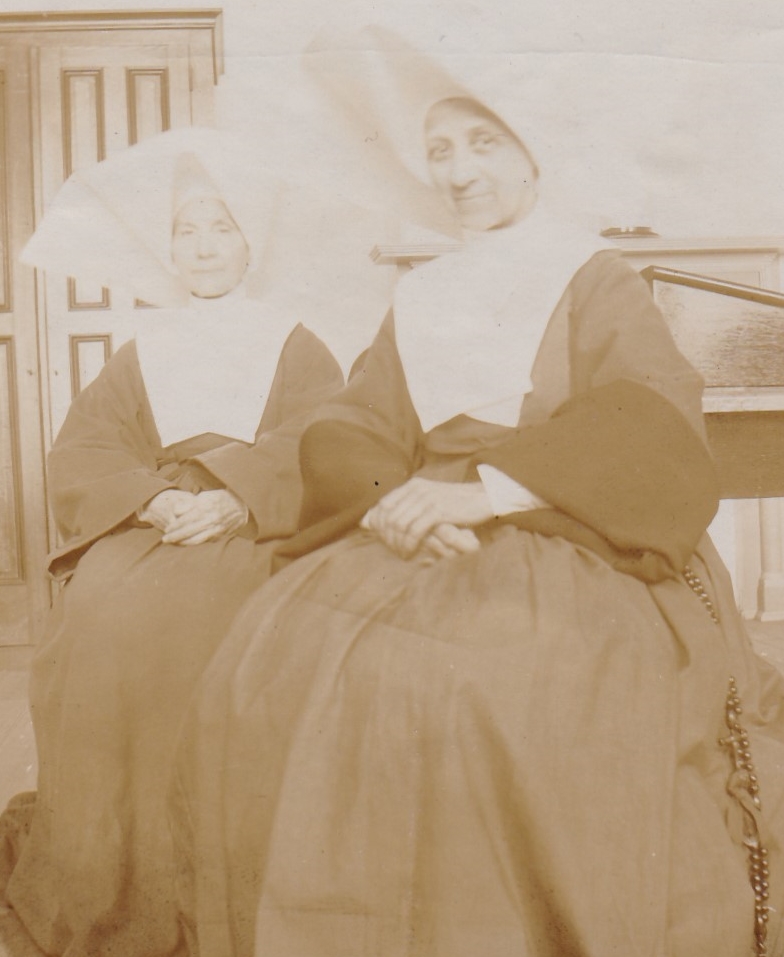
In 1867, a few years before the war, Sister Alix Merceret, originally a native of Nantes, France who grew up in Baltimore, was missioned as corresponding secretary for the English-language world at the Motherhouse of the Daughters of Charity in Paris. When the War began, she wrote back to the United States with updates of the War, the German siege of the city, and the Paris Commune of 1871, when the people of France, for the final time, deposed a monarch.
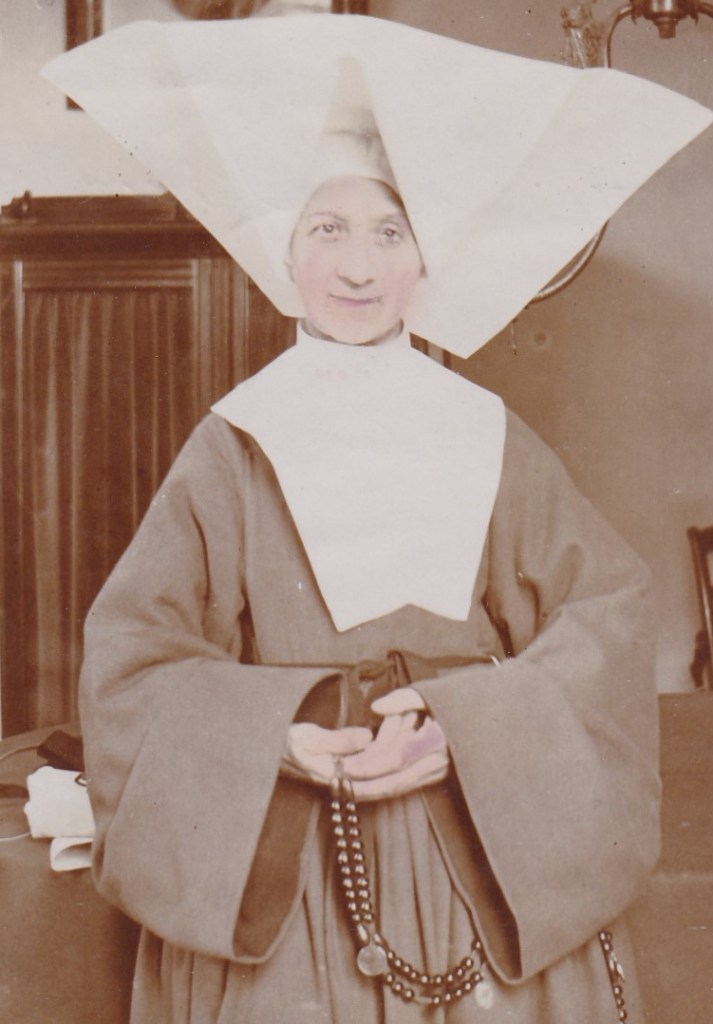
The French military was on the retreat from the very start of the war. Her first update on the movement of Prussian troops came on August 31, 1870; two days later, Napoleon III surrendered and was taken prisoner. A new Government of National Defense was proclaimed in Paris under a republican system, and on September 19 they began to face their task of defending the city from the Prussian siege. The bombardment that Paris faced was one of the largest in world history prior to World War I. The French government sued for armistice on January 26, 1871, facing the threat of starvation.
On February 2, Sister Alix wrote to Mother Euphemia Blenkinsop in the United States of their state:
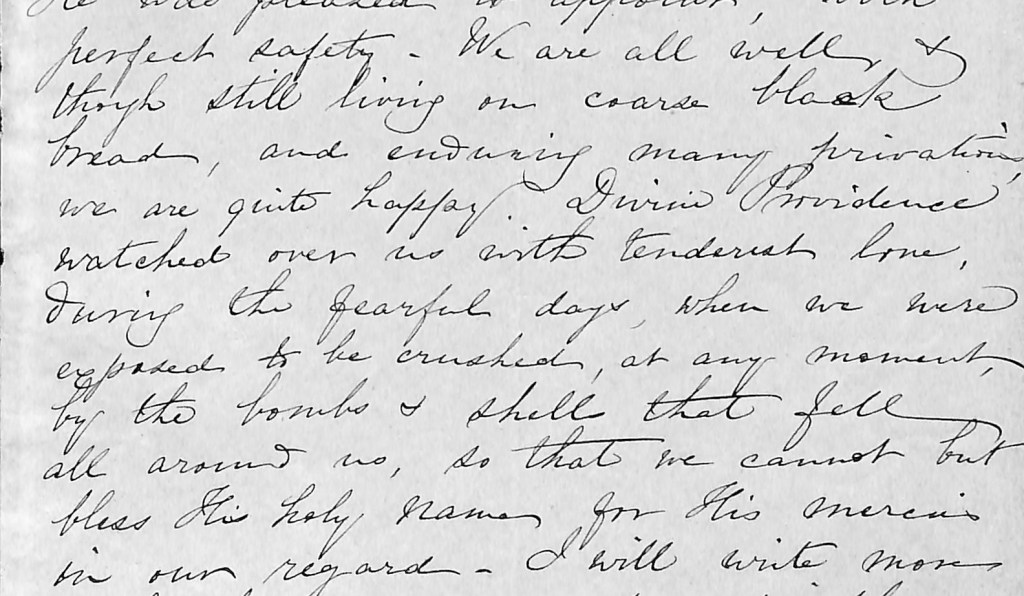
We are all well, & though still living on coarse black bread and enduring many privations, we are quite happy. Divine Providence watched over us with tenderest love during the fearful days when we were exposed to be crushed, at any moment, by the booms & shells that fell all around us, so that we cannot but bless His holy names for His mercies in our regard.”
Her next letter described how she had taken up a temporary position at the military hospital, as well as the state of the Daughters in Paris:
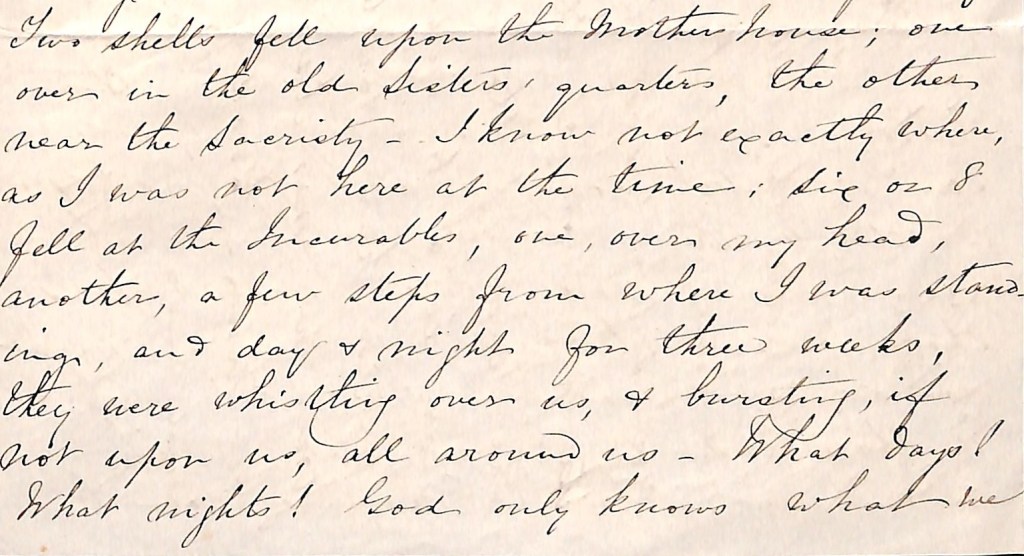

“Two shells fell upon the Mother House; one over the old Sisters quarters, the other near the Sacristy. I know not exactly when as I was not here at the time. Six or 8 fell at the Incurables, one over my head, another a few steps from where I was standing, and day & night for three weeks, they were whistling over us & bursting, if not upon us, all around us. What days! What nights! God only knows what we went through, but his eye was upon us, in the midst of the trials & his arm kept the bombs from touching us.”
She goes on to describe life under siege:


“During the siege how changed it was – not a carriage to be seen in the streets, not a dog or horses & dogs only to be seen in butchered shops, no happy children escorted .by their nurses, no fashionable promenaders, stores closed, even bakers’ shop, towards the last, no gas at night, you cannot imagine what Paris was in those sad days, nor is it much gayer now; it would amuse you to watch the crowds standing before meat and bread shops. They look exactly like a set of hungry dogs, ready to spring upon their food.“
In the armistice agreements, the Prussians were allowed their brief days to parade in triumph through the city, beginning on March 1. Writing on the 3rd:

“The Prussians are in the city since the 1st inst., the newspapers must have apprised you of it, great trouble was anticipated when they entered, now, it is hoped they will meet with no molestation from our citizens, and that they will leave us as peacefully as they came. Meanwhile, Paris is looking more desolate every day, there is a great deal of sickness, 52000 soldiers have died within its walls, since the 17th of Sept. up to March1st & 47000 persons besides. At the Incurables, there were 600 deaths from Jan. 1st to Feb. 28, of course, that is a hospital, but it is an unusual mortality. At the Mother House, too, there have been a great many deaths, from consumption, typhoid fever, etc., both among the young and old. There were eight funerals in one week towards the end of last month.”
On March 18, the Revolution of disgruntled soldiers and working-class Paris occurred and the Paris Commune declared, which would govern the city until its destruction by the regular army ten weeks later. The memories of the martyred Daughters during the first French Revolution and the resurgence in anti-religious sentiment did not endear Sister Alix to their cause:

“The city is in the saddest state of disorder; it is truly the kingdom of Beelzebub, divided against staff, the cannon is fired now and then, at various hours of the day & night, men are shot down in the street at midday, like dogs, there is neither law nor police and God only knows what will become of this triumphant ‘Republique.’”
The final week of May 1871 is simply referred to in the French history books as “Bloody Week,” when the military fought with brutality, executions, and fires, and the revolutionaries fought with their own summary executions, including of the Archbishop of Paris himself. Sister Alix on June 10:

“I was recalled from the invalids yesterday, and I avail myself of the first leisure moment to write you a few lines, in addition to the interesting document here with enclosed giving a correct account of most of the incidents committed with our deliverance from the fearful reign of the Commune. Oh! what agony we went through, from May 20th to the 25th! Words cannot describe such things. God alone can understand them, as He alone, can give strength to endure them. Paris is pretty quiet now, though, in a sad state yet as it must be until the government is solidly, permanently, organized, which cannot be done all of a sudden. Indeed the whole country is in an awful state.”
In spite of all this, including the anti-religious sentiment, Sister Alix’s letter on July 10 also contains this telling line, pointing to a future for the French Daughters, just as there had been after three prior revolutions:

“In spite of the Red Republicans, there is a demand for Sisters in many places.”
The Treaty of Frankfurt, which ended the original Franco-Prussian War, was signed 150 years ago today on May 10, 1871. One of the spoils of war for the new German Empire was the handing over of the states of Alsace and Lorraine, a key point in the leadup to two more wars between the nations. On the final day of 1872, Sister Alix talks about her present view of the issue and seems to telegraph the future, always with an eye toward service to others:

“I have been so busy for the last two weeks, that I have not had a moment’s leisure, and things look as if my work were going to increase. Here is the new task that fallen to my lot. A charitable society of Ladies & Gentlemen has been gotten up for the relief of the Alsaciens, who have left their country, rather than submit to the Prussian yoke. Many of these poor people don’t speak a work of French, nothing but German, yet they consider themselves French citizens, & hate the German nation. Crowds of them have taken refuge in Paris, & are literally starving, as they cannot find work as means of subsistence. Of course they excite great sympathy in the hearts of patriotic, persons, and large sums have been subscribed in their behalf.”
The archives contain nearly 100 surviving pieces of correspondence, plus extensive detail of her final visit to the United States in 1900. Ten of the letters were written between 1870 and 1872.






 docarchivesblog.org