
(Images used with permission of the Daughters of Charity Provincial Archives)

Mother Elisabeth Montcellet, Superioress General of the Daughters of Charity at the time of the Civil War
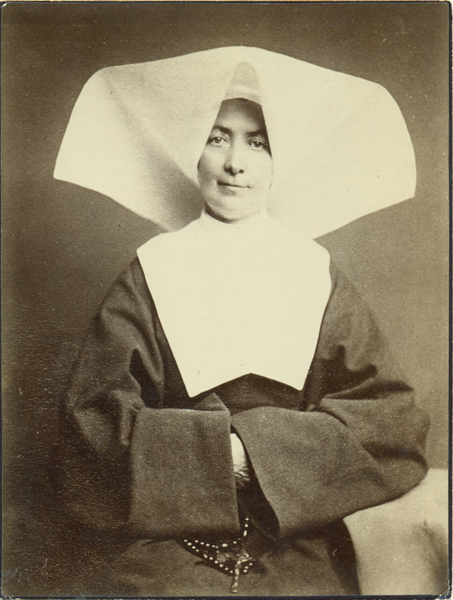
Mother Ann Simeon Norris, Visitatrix of the U.S. Province at the time of the Civil War
Part 4 discussed the change from black cap to cornette and how the difficulties of importing material from France led to a gradual change to the cornette in the United States. The problem of importing material from France surfaced again during the Civil War. In 1864 Mother Ann Simeon Norris, Visitatrix of the US Province, sent a petition to Congress asking that the material for the Sisters’ clothing be exempt from import duties. Her petition read:
“The Sisters of Charity most humbly represent to the Senate and House of Representatives of the United States that the uniform worn by them, being only manufactured in France, they solicit the favor of having it admitted free of Duty.
They have been advised to make the appeal by His Excellency the President to whom they applied some time since for said favor. He very kindly replied: That in consideration of the service the Sisters had rendered the Union Soldiers in the different Hospitals of the United States, He would most willingly grant them this favor, but that the law required an act of Congress in such matters. He therefore recommends us to lay the case before your humble body.
Armed with his powerful influence, we confidently hope, you will grant our Petition.”
Here is an image of Mother Ann Simeon’s letter to Congress.

Mother Ann Simeon Norris’ letter to Congress, 1864.
Mother Ann Simeon’s petition did receive attention from Congress. In late December 1864 a bill was introduced in the Senate (S. 366) which would have remitted duties paid by the Sisters. Unfortunately, S.366 died in committee and never made it to Lincoln’s desk.
From The Senate Journal of December 20, 1864, p.37:
Mr. Hale presented the memorial of Sister Ann Simeon Norris, Mother Superior of the Sisters of Charity, praying that the material for the manufacture of the uniform worn by the Sisters of Charity may be imported free of duty; which was referred to the Committee on Finance.
From The Senate Journal of December 21, 1864, p.42:
Mr. Hale asked, and by unanimous consent obtained, leave to bring in a bill (S. 366) to remit certain duties on clothing materials imported for the use of the Sisters of Charity of St. Joseph; which was read the first and second times, by unanimous consent, and referred to the Committee on Finance.
From The Senate Journal of January 6, 1865, p.52:
Ordered, That the Committee on Finance be discharged from the further consideration of the bill (S. 366) to remit certain duties on clothing materials imported for the use of the Sisters of Charity of St. Joseph. [note 1]
100 years later, in September of 1964, the Daughters of Charity set aside the much-recognized and much-beloved cornette, as part of the sweeping changes of Vatican 2. Our final post will focus on that change.
Notes
note 1. The complete text for the Senate Journal showing action on the Sisters’ petition is available online at
A Century of Lawmaking for a New Nation: U.S. Congressional Documents and Debates, 1774-1875, part of the Library of Congress American Memory Project. To find the text concerning the Sisters of Charity petition, select “Senate Journal”, then search on “Sisters of Charity”.



 docarchivesblog.org